

Weed or Not?
The shame of my asparagus bed

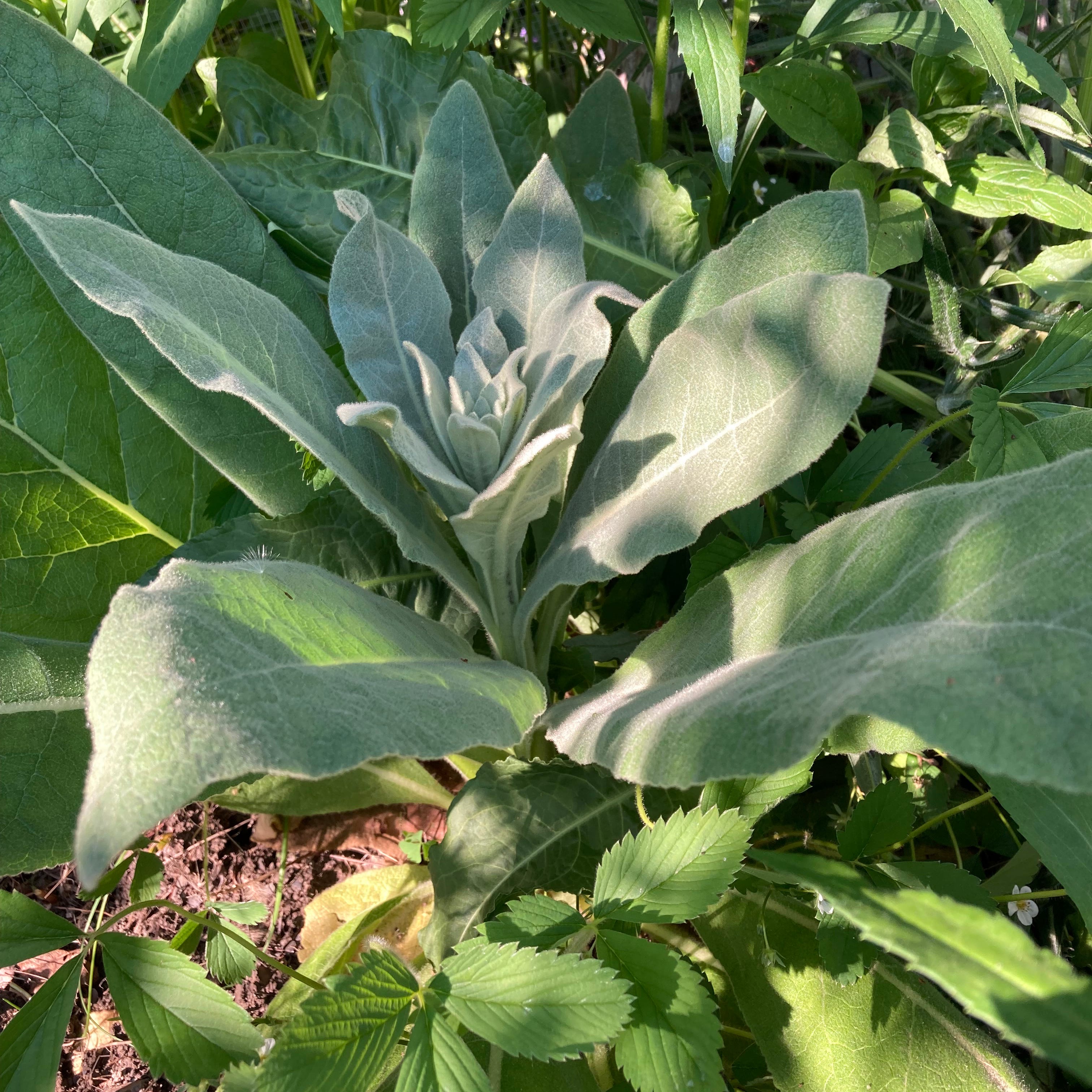
My asparagus beds are in such sad condition it’s embarrassing. It’s hard, at this point, to even call them asparagus beds, since the weeds so heavily outnumber the asparagus. The time to start weeding them was long past due. Some interesting plants turned up in the process, though. Mullein is a wonderful plant, with its plush velvet leaves. In summer it sends up an impressive flower stalk, which has to be cut down before it scatters seeds everywhere. A native of Europe, Asia and northern Africa, it has long been used to relieve coughs and colds that settle in the lungs. I haven’t reached this part of the bed yet, and when I do, I will dry and save the leaves for herbal tea.
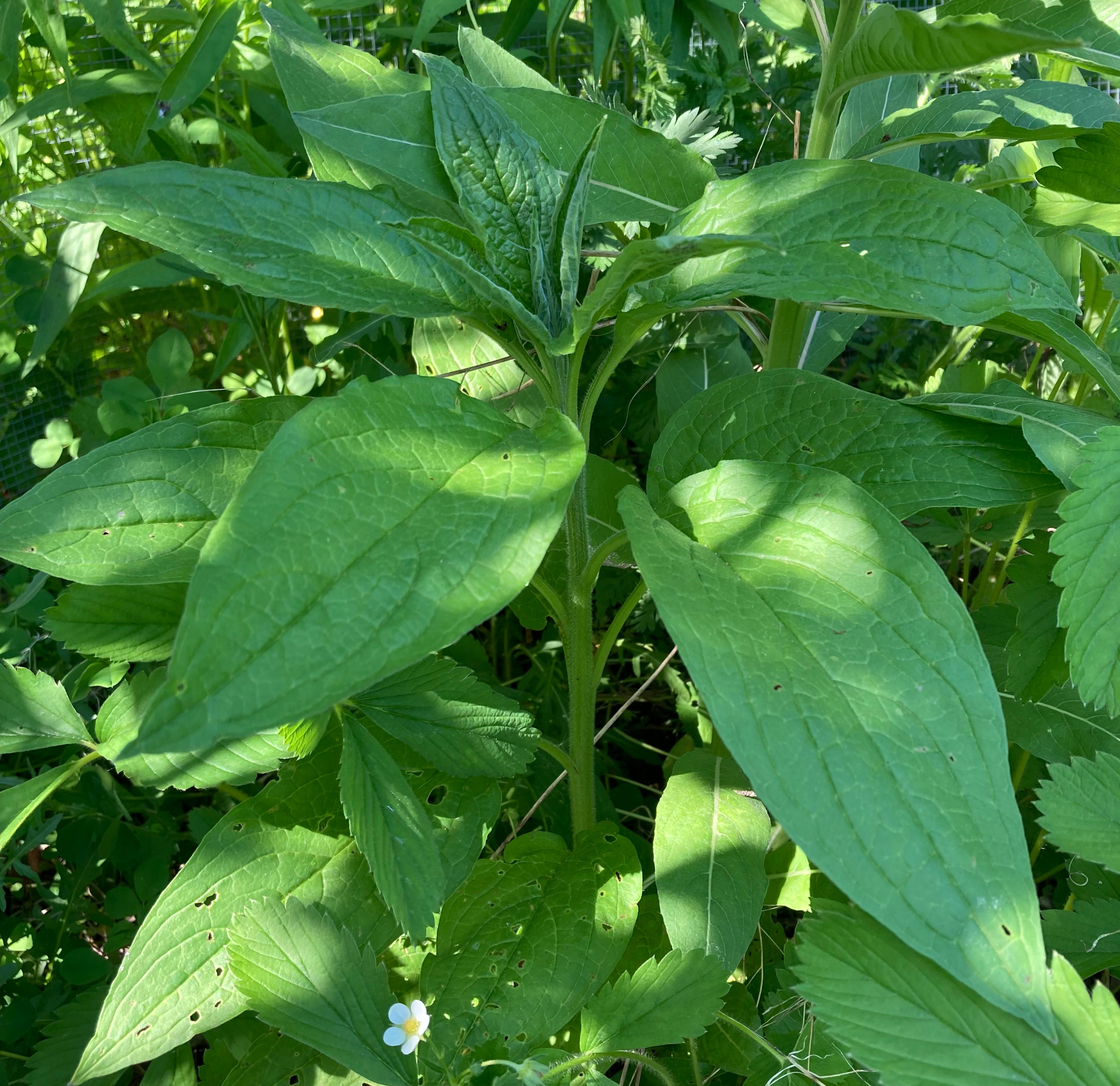
You can tell from both its common name and its Latin name that Virginia stickseed (Hackelia virginiana) is native to the eastern U.S. There are a few states in which it is considered imperiled—even, in Vermont and South Carolina, critically imperiled. However, it is secure in New York State, and I don’t want it anywhere in my garden, much less in my asparagus bed. Native Americans sometimes used it as a love charm, and I can see why. Its seeds are very small burs that imbed themselves in clothing, especially sweaters, and have to be pulled out laboriously, one at a time.
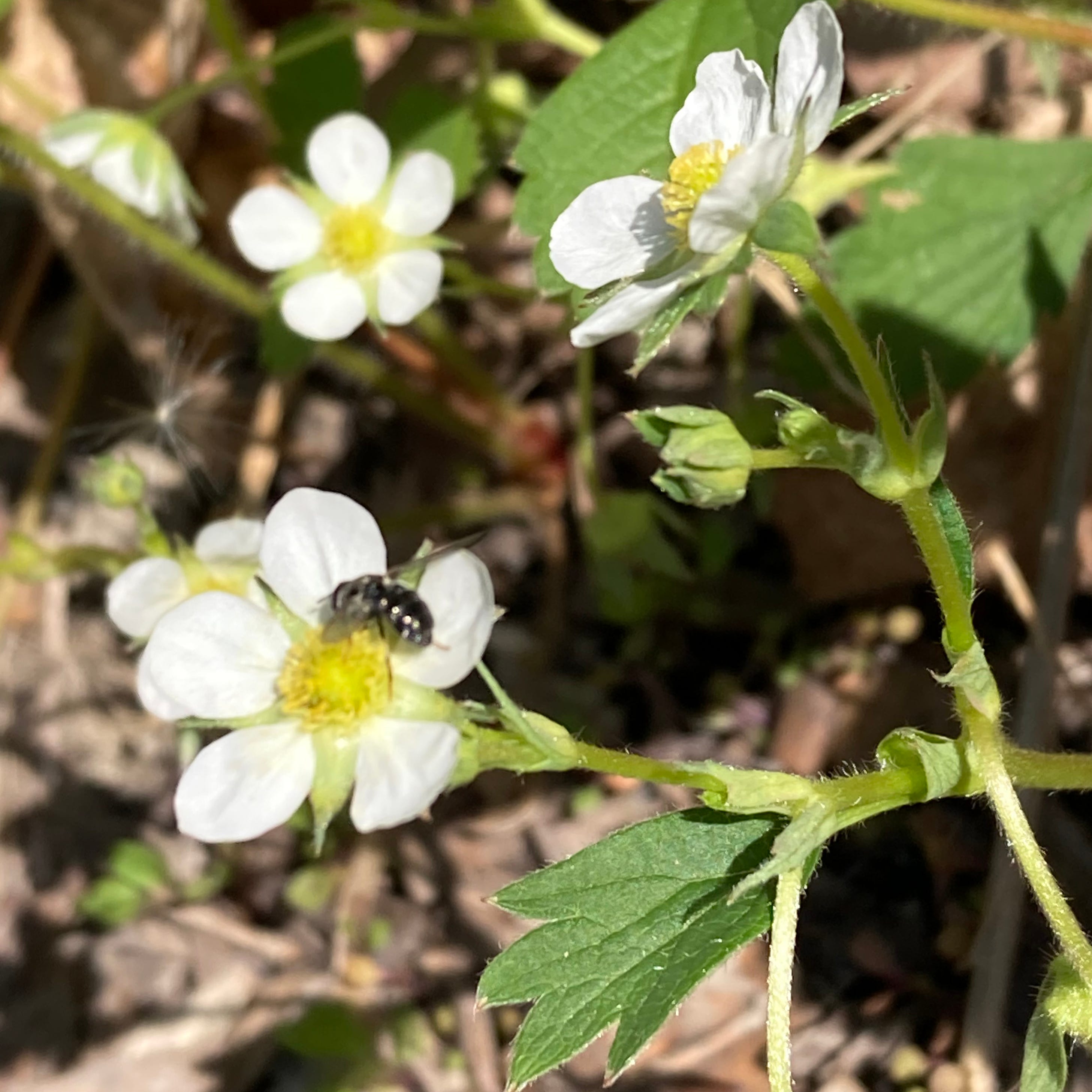
What about the alpine strawberry plants, though? A seed company sent me a free packet of seeds for these, which I planted at the edge of the vegetable bed under the highly mistaken impression that, like the white alpine strawberries I also planted from seed, they would not produce runners. Ha! In shade, they don’t produce a lot of berries, and what they do produce are not especially sweet. In sun, there are more and tastier berries, but the sunny parts of my vegetable garden are in short enough supply that I don’t want these strawberries to take over, as they seem intent upon doing. However, I will wait a few weeks before I take out the plants in the sunny areas, to enjoy the berries. If I had an enormous garden, I would not consider these weedy and would let them ramble—though probably with a good barrier at the edges of the vegetable garden.
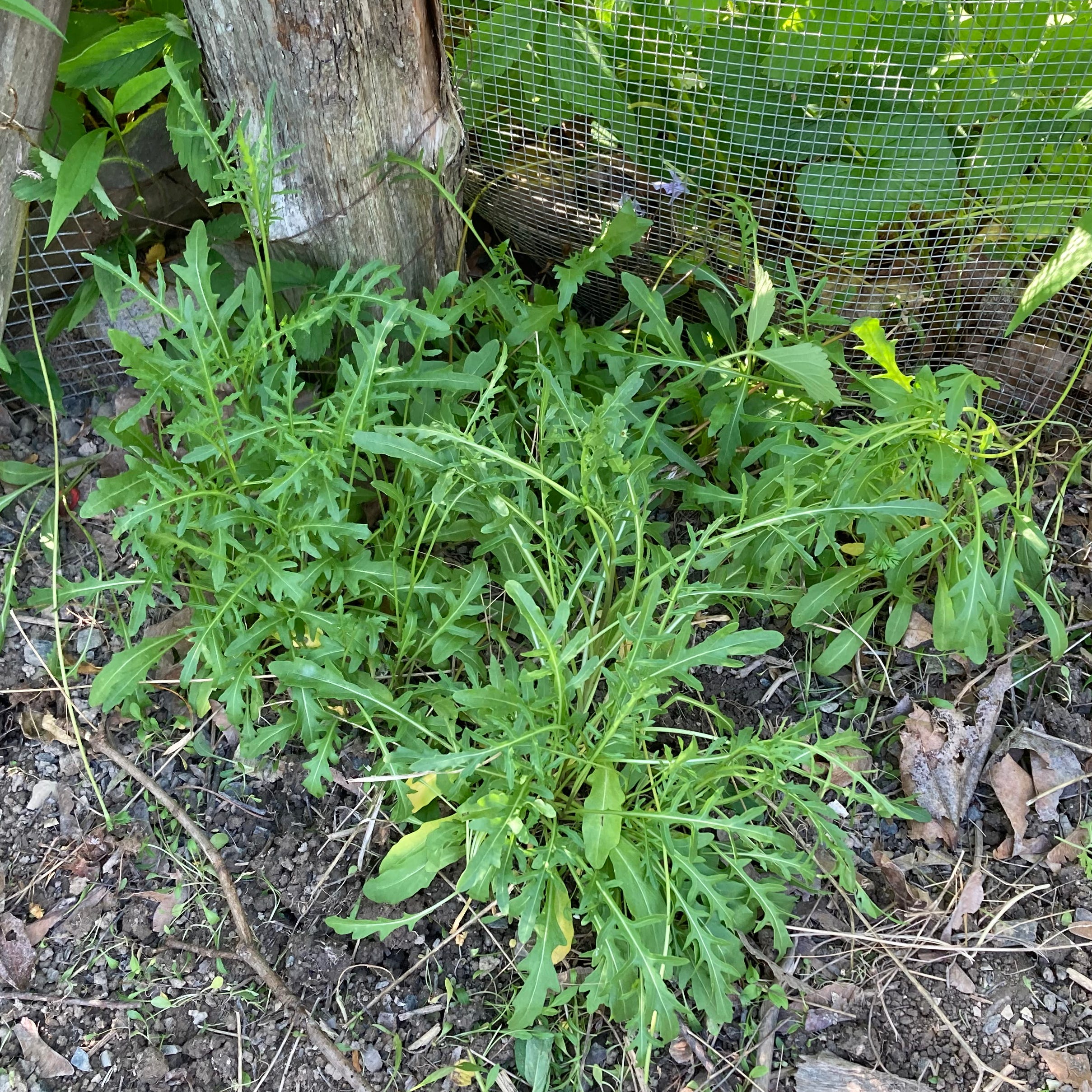
And what about the wild Italian arugula I planted a few years ago that has seeded itself around the garden? It’s delicious, with a stronger flavor than the usual garden arugula, and wonderful in salads. I like it uncooked with eggs for breakfast. (Cooking blunts the flavor.) Unlike some salad greens that turn bitter and unpleasant when they bolt, this arugula stays as tasty as ever—although it’s wise to remove the flowering stalks before they go to seed. The plants are perennial, so there’s no need to save seed, unless you want to expand your patch or share seeds with a friend. This group of arugula plants at the very corner of the asparagus bed seem relatively inoffensive, so I let them stay.
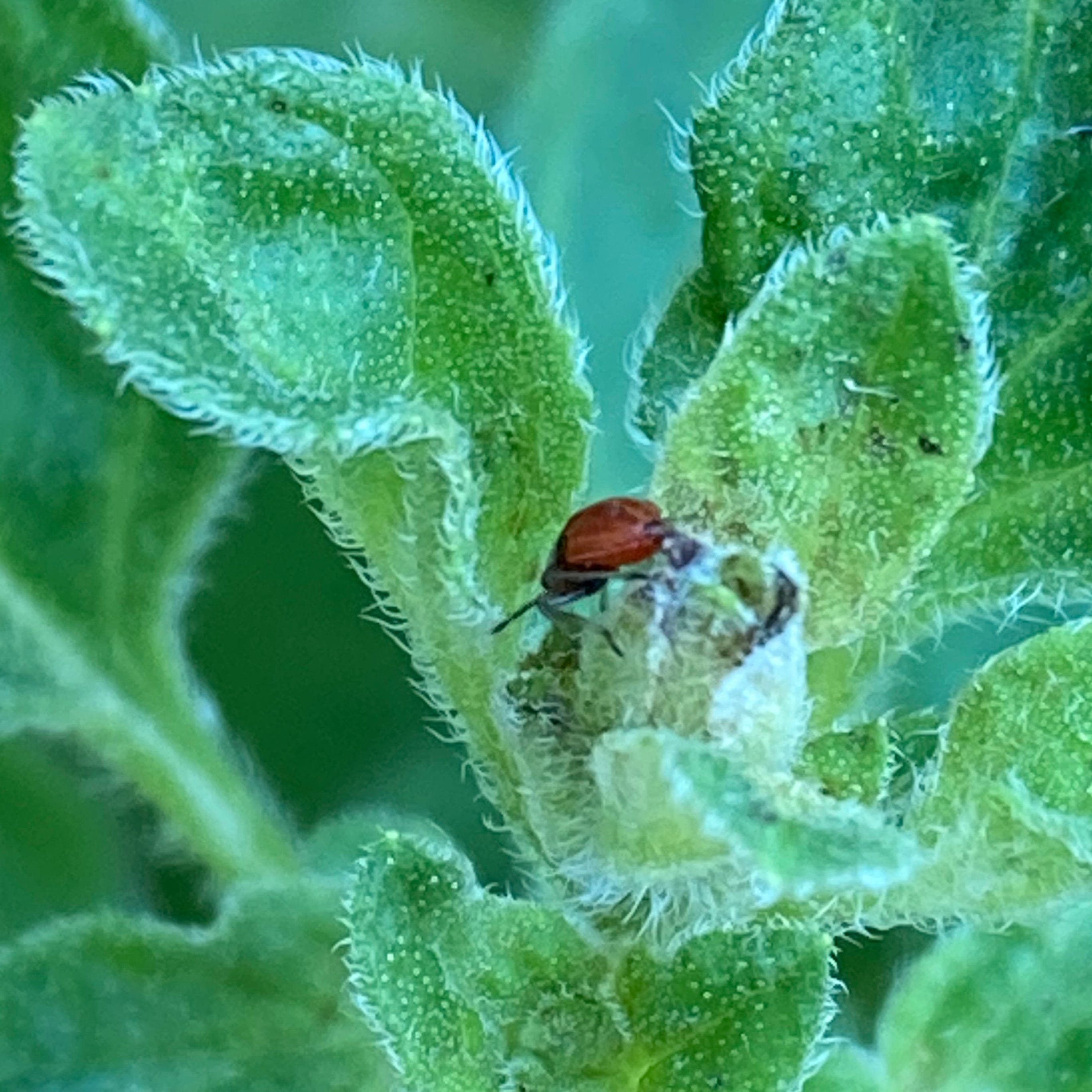
Thanks to iNaturalist and a bit of online sleuthing, I believe I have at last correctly identified the tiny red bugs that hang out on my oregano plants and make unattractive brown spots in the leaves. They are fourlined plant bugs (Poecilocapsus lineatus). When they grow up, they develop yellow and black stripes on their wing covers and are still small enough that they don’t eat very much. They are native in the U.S. and Canada, so I’m inclined to leave them alone. In any case, my oregano plants seed themselves around to the extent that I weeded a few plants out of the asparagus bed, including the one this nymph was feeding on.
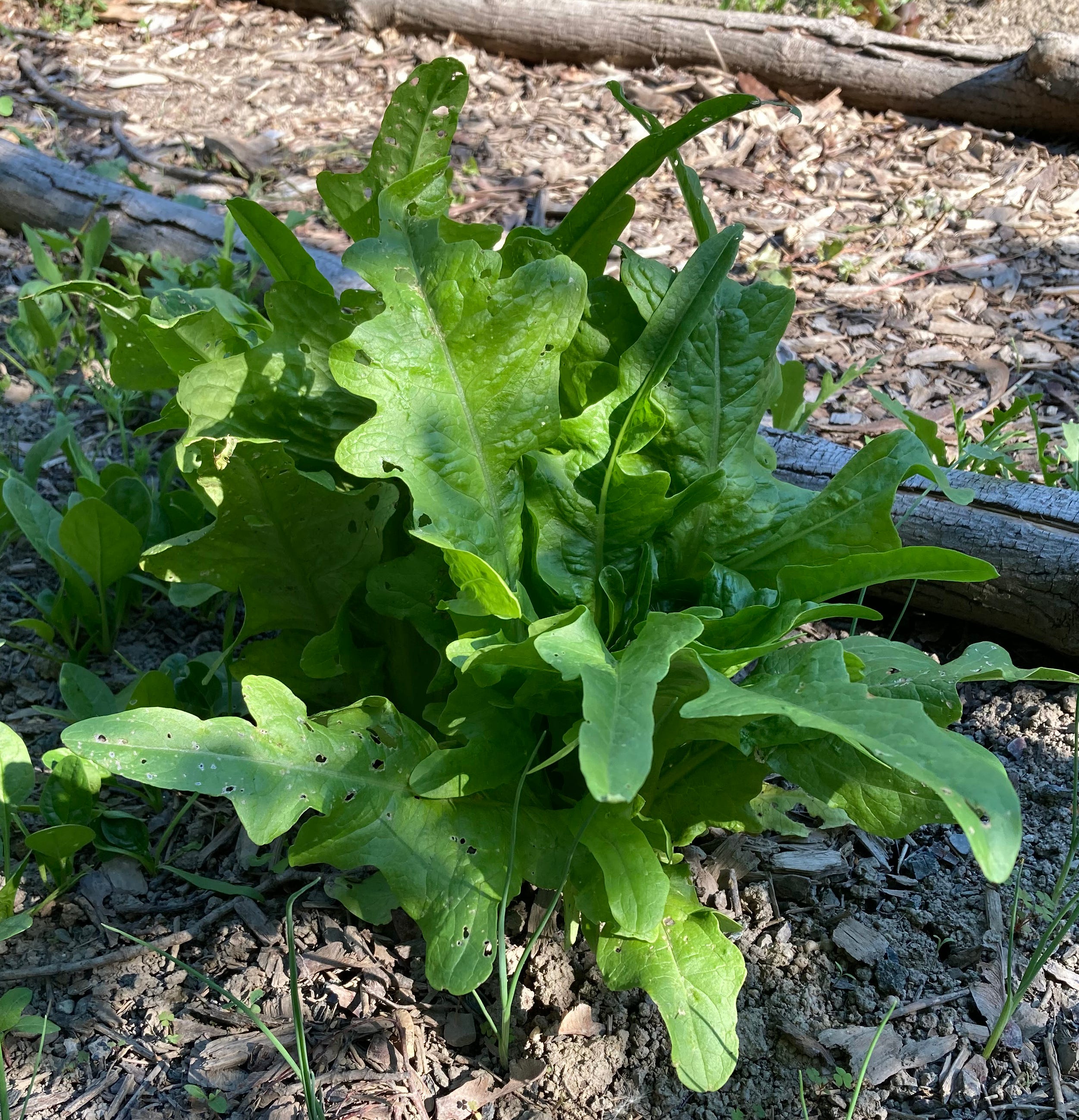
We will have garden lettuce very early this year, because I let some lettuce plants to to seed last year so I could experiment with saved seed, and some escaped seeds planted themselves in a bed next to the asparagus bed. Definitely not a weed! I harvested it for salad.
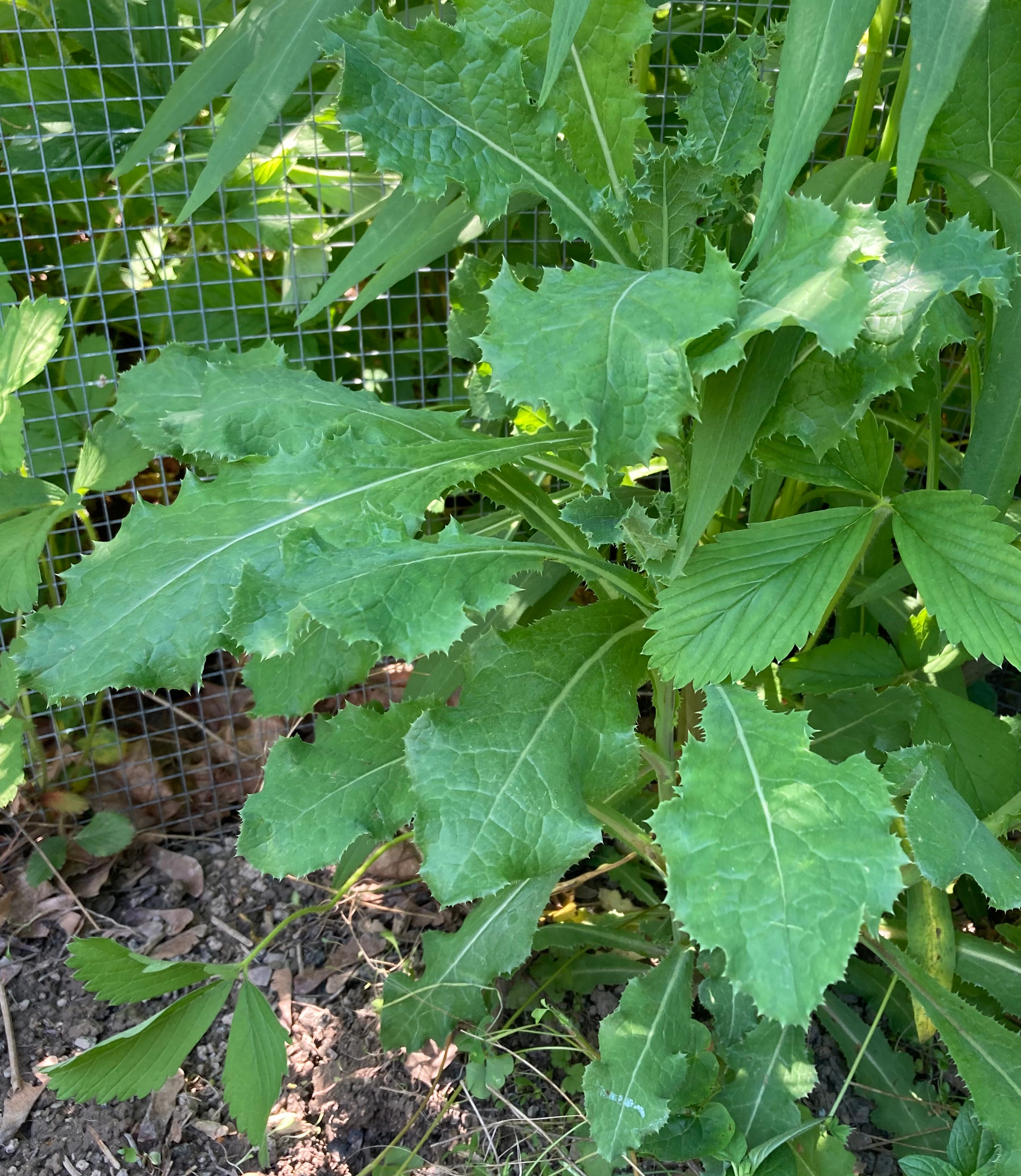
A few weeds I have never seen before were growing vigorously in the asparagus bed. When I checked this one with iNaturalist, the app could not definitively identify a few of them. It suggested the one above was in the Lactuca genus, possibly prickly lettuce (Lactuca serriola), the closest wild relative of our garden lettuces. Perhaps one of the seeds from my garden lettuce reverted to its wild origin? Prickly lettuce was used as a mild sedative in medieval Europe. Its sap contains lactucarium, a compound with properties similar to opium, but a great deal milder.
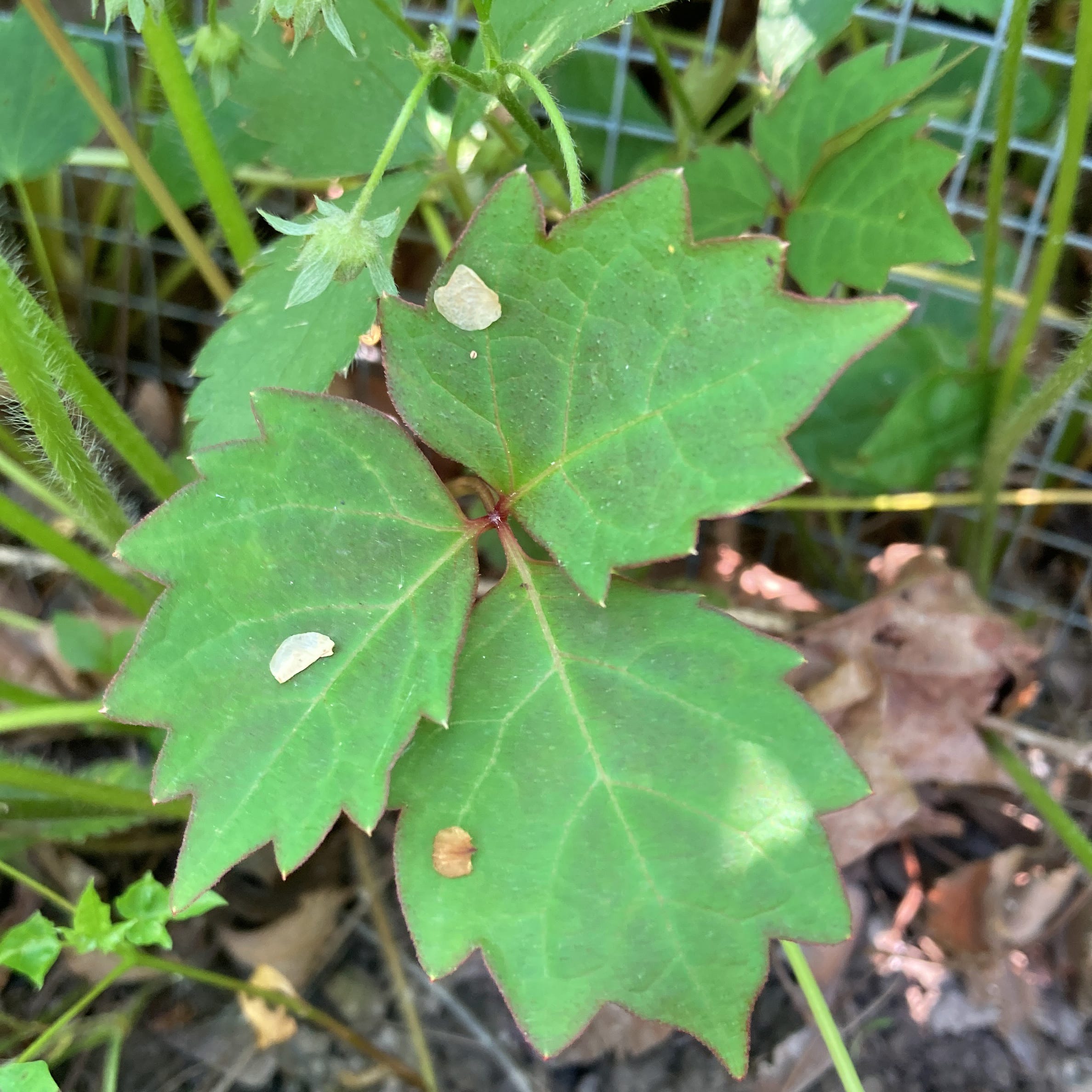
At first I steered clear of another weed I found, because it resembled poison ivy. But unlike poison ivy, the central leaf in the group of three does not have a stem attaching it to the rest of the group. Also, the leaves are about as wide as they are long. So what is it? The iNaturalist app suggested it might be sorrelvine (Cissus trifoliata), with a low degree of certainty. Although a web search turned up pictures of sorrelvine that look very similar to the plant in my garden, sorrelvine is a native of the southern U.S. The state closest to New York where it grows is supposed to be the southern fringe of Missouri. Although we’ve been getting temperatures this week that are much higher than normal temperatures in May in the Hudson Valley, it seems unlikely this plant would so quickly have leapfrogged up here. So the mystery remains.
Are you seeing any unusual or unfamiliar weeds in your garden this spring? Leave a comment and let us know!