

Tiny Creatures
The tumbling flower beetle and others

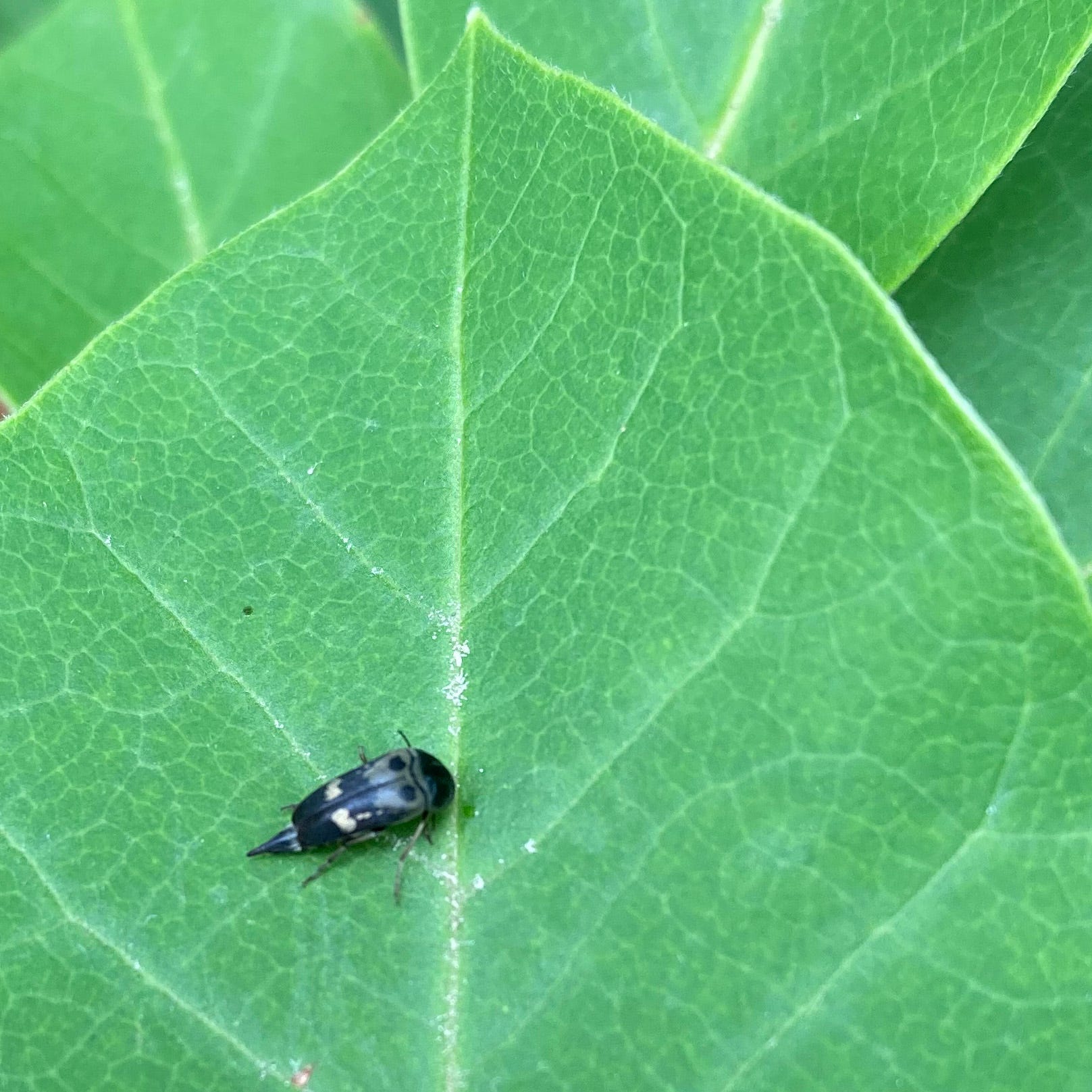
In a perfectly ordinary garden in a perfectly ordinary part of the country, what a surprise to discover a tiny creature called the tumbling flower beetle (Glipa oculata). It gets its name because it feeds on the nectar and pollen of flowers, and because when threatened it rolls over and jumps to escape predators. Pollen sticking to their bodies when they fly from flower to flower plays a role in pollination. They also prey on aphids, so are welcome in my garden any time. Tumbling flower beetles are fairly common in the eastern half of the country, so if you live there and grow flowers or have aphids, you may well see them during an attentive stroll around your garden.
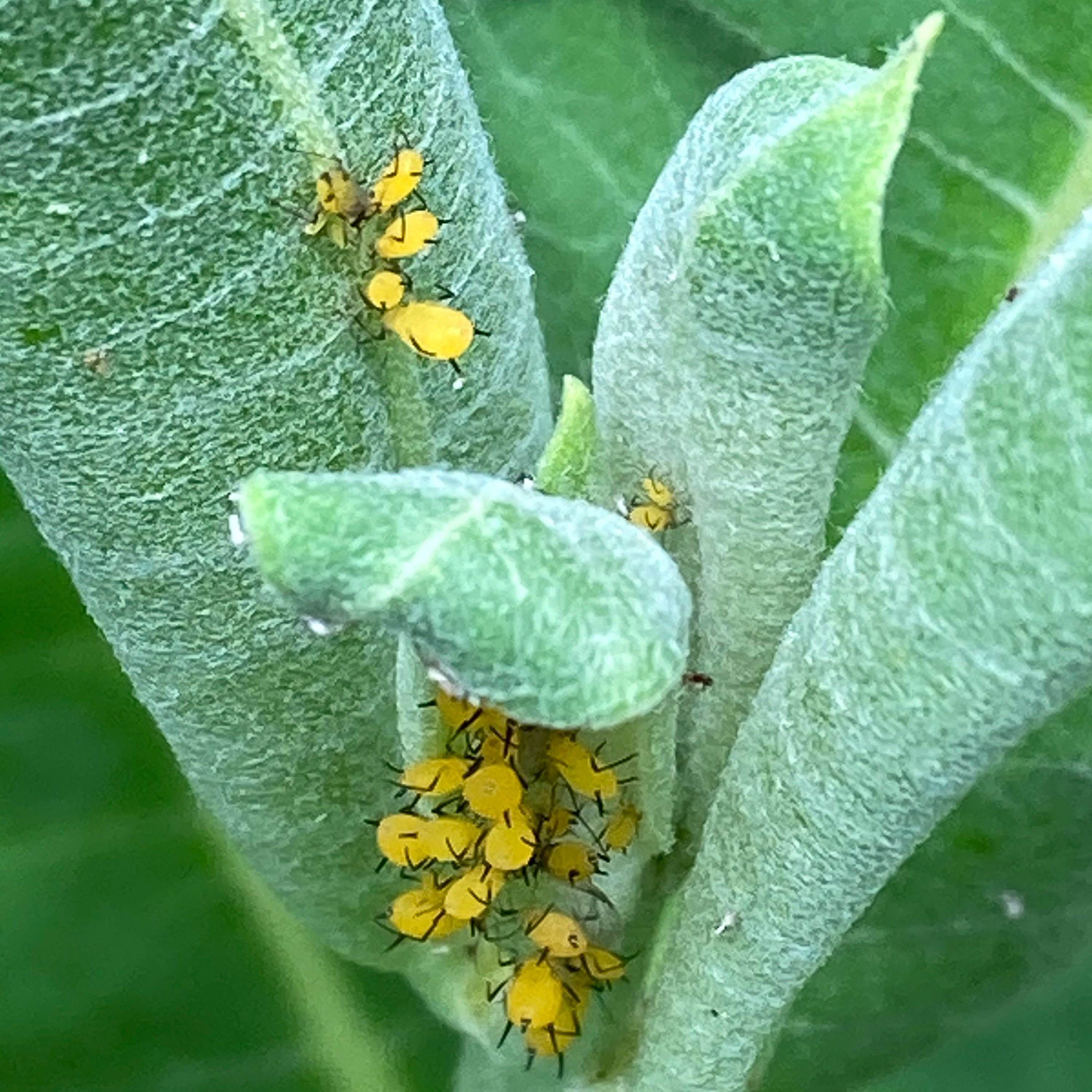
Aphids are easy to identify as aphids, given their size and the way they cluster together while sucking plant juices. These amazing yellow aphids are oleander aphids (Aphis nerii) feeding on common milkweed. These particular aphids are not native, but were introduced with imported oleander plants. However, they are not seriously harmful to the milkweed, and spraying pesticides to get rid of them would harm any monarch butterfly caterpillars that might also be feeding on the milkweed. Aphids can reproduce wildly fast, because female aphids do not need males to give birth to clones of themselves, and their young can be born already pregnant. In the late autumn, they can give birth to both males and females who can mate and reproduce in the usual way. To survive, they need to reproduce in these large numbers, because so many other creatures eat them, most notably lady beetle larvae.
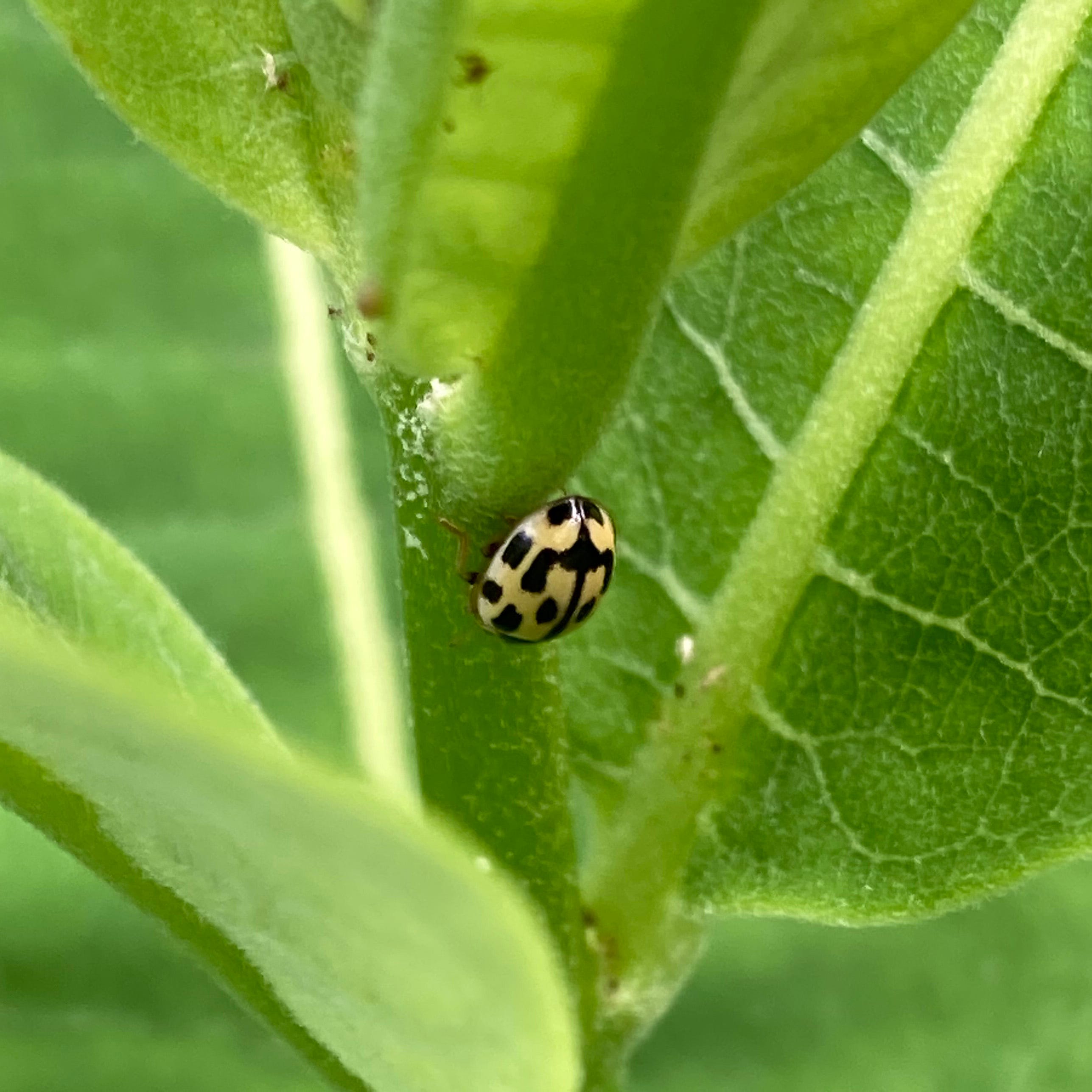
Oleander aphids may get some protection from predators because of their feeding habits—oleanders and milkweed both have toxic compounds in their sap, which may be distasteful or toxic to predators that eat aphids. However, I found this fourteen spotted lady beetle (Propylea quatuordecimpunctata) on my milkweed the other day, so perhaps there are exceptions. This particular lady beetle, distinctive because of its yellow or light orange color (never red) is also non-native, having been deliberately introduced from Europe and Asia in order to control the Russian wheat aphid (Diuraphis noxia), another non-native species that was devastating Texas wheat crops in the 1980s.
Keep reading with a 7-day free trial
Subscribe to The Generous Garden to keep reading this post and get 7 days of free access to the full post archives.