

Squirrels in Winter
How do they survive?

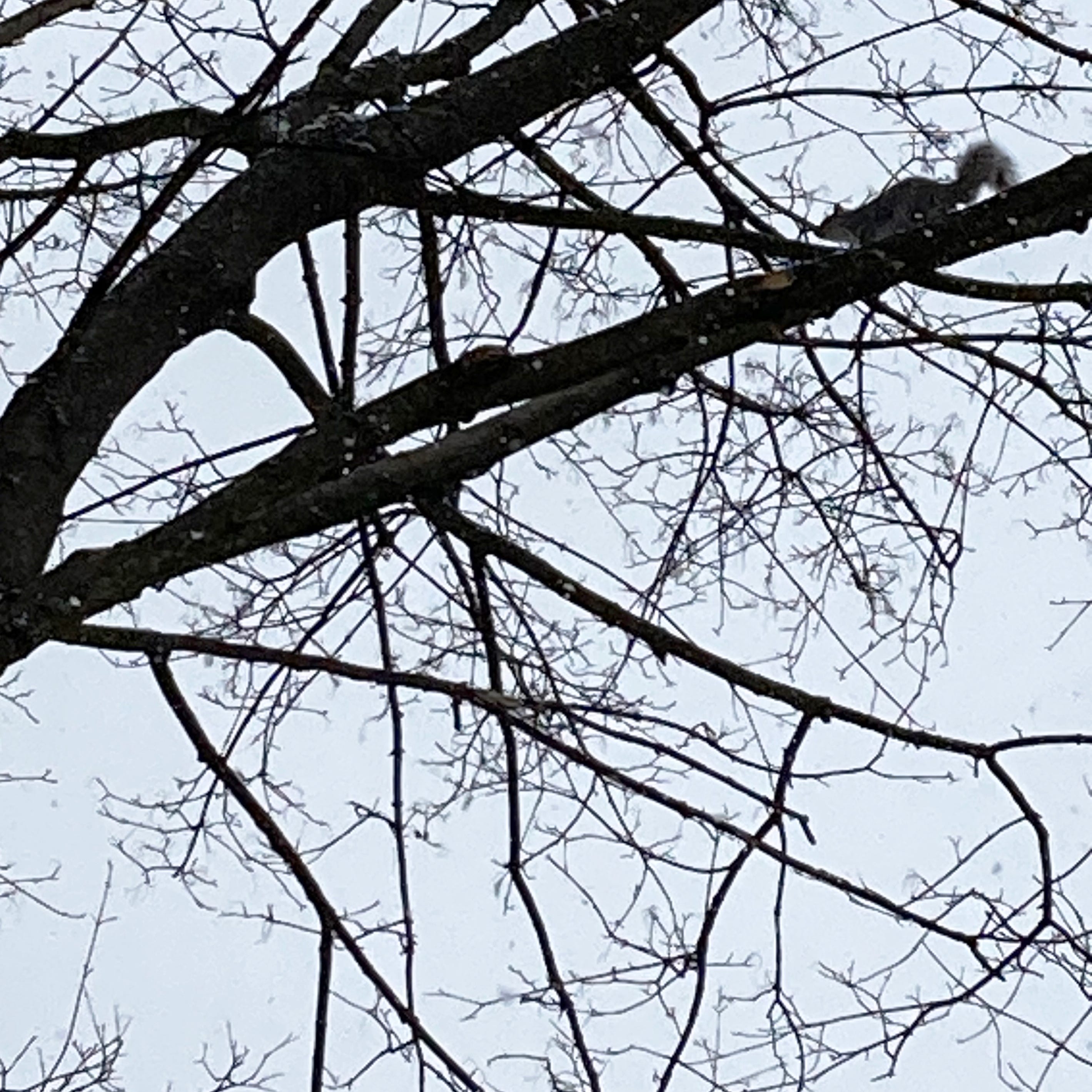
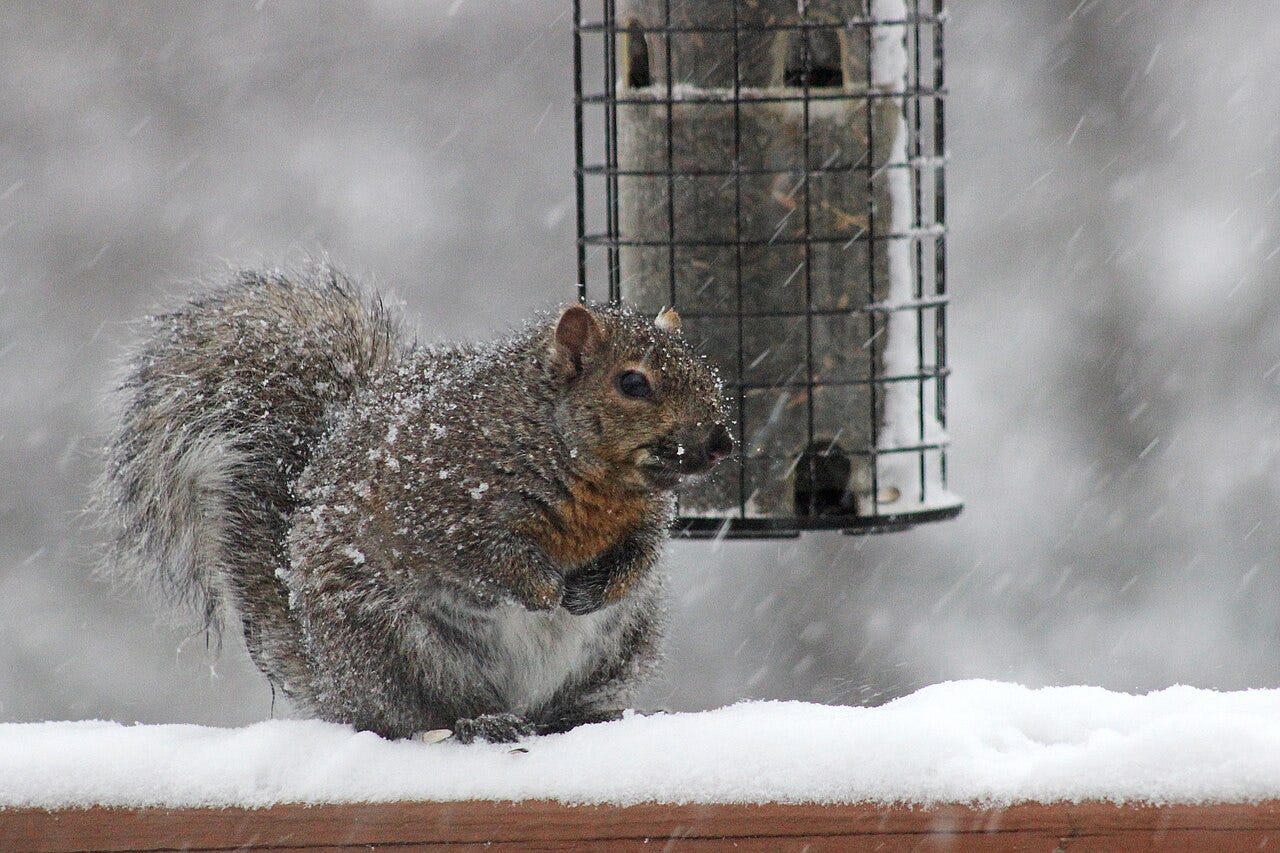
Although our resident groundhog is in hibernation, every morning when I look out the kitchen window, I see squirrels in full cavort. They are Eastern Gray Squirrels (Sciurus carolinensis), such adept survivors that they have spread far beyond their native habitat all the way to the West Coast. I watch them chasing each other round and round tree trunks and leaping from branch to branch high in the treetops. They blaze paths through the snow with their dirty feet as they cross the back yard to my neighbor’s birdfeeder. I can’t help but admire their ebullient persistence. How do they survive when so many other creatures must migrate or hibernate?
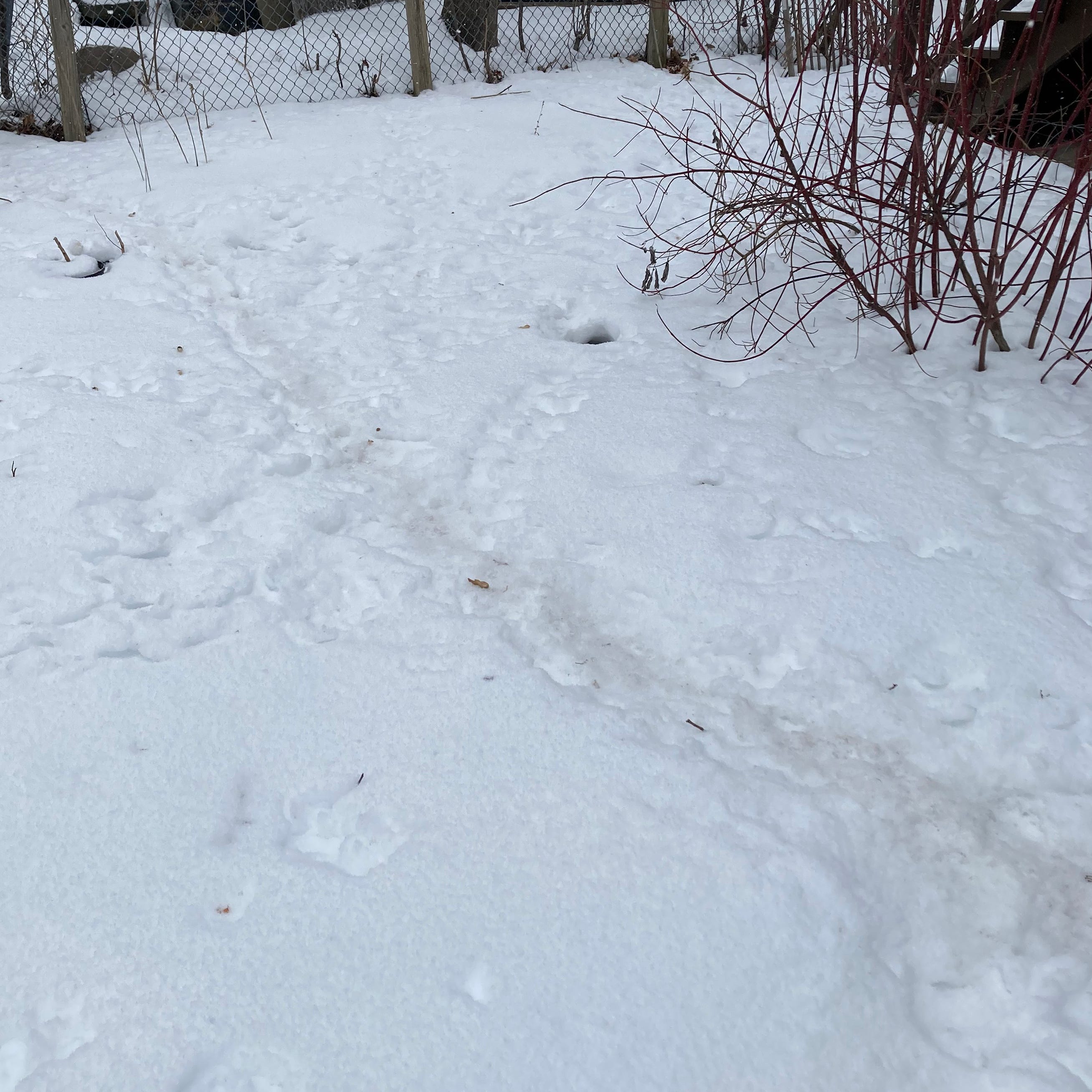
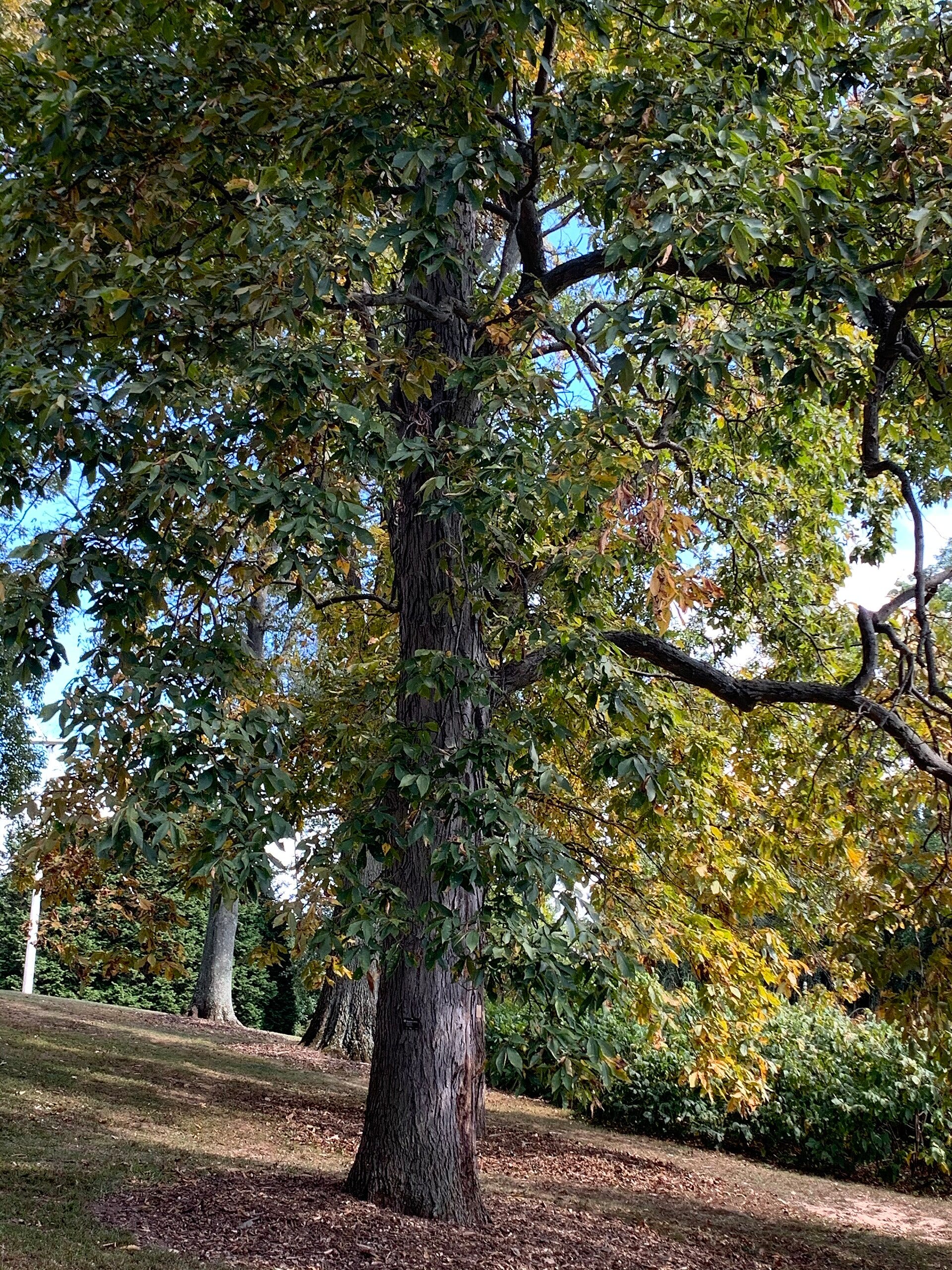
Squirrels eat a lot in the fall. They like the hickory nuts from a tree in one of my neighbors’ yards, and I often find the emptied shells in my yard. Hickory nuts are rich in fat. In human terms, a one-ounce serving contains 28% of the recommended daily value of fat, most of it monounsaturated. Squirrels need to bulk up before winter so they can survive the cold, and most of the fat they put on in the fall is brown fat, a dense form of fat that activates in cold weather to warm the body. Exercise can turn less healthy white fat into beige fat which can function similarly to brown fat. The squirrels in our yard certainly get plenty of exercise.
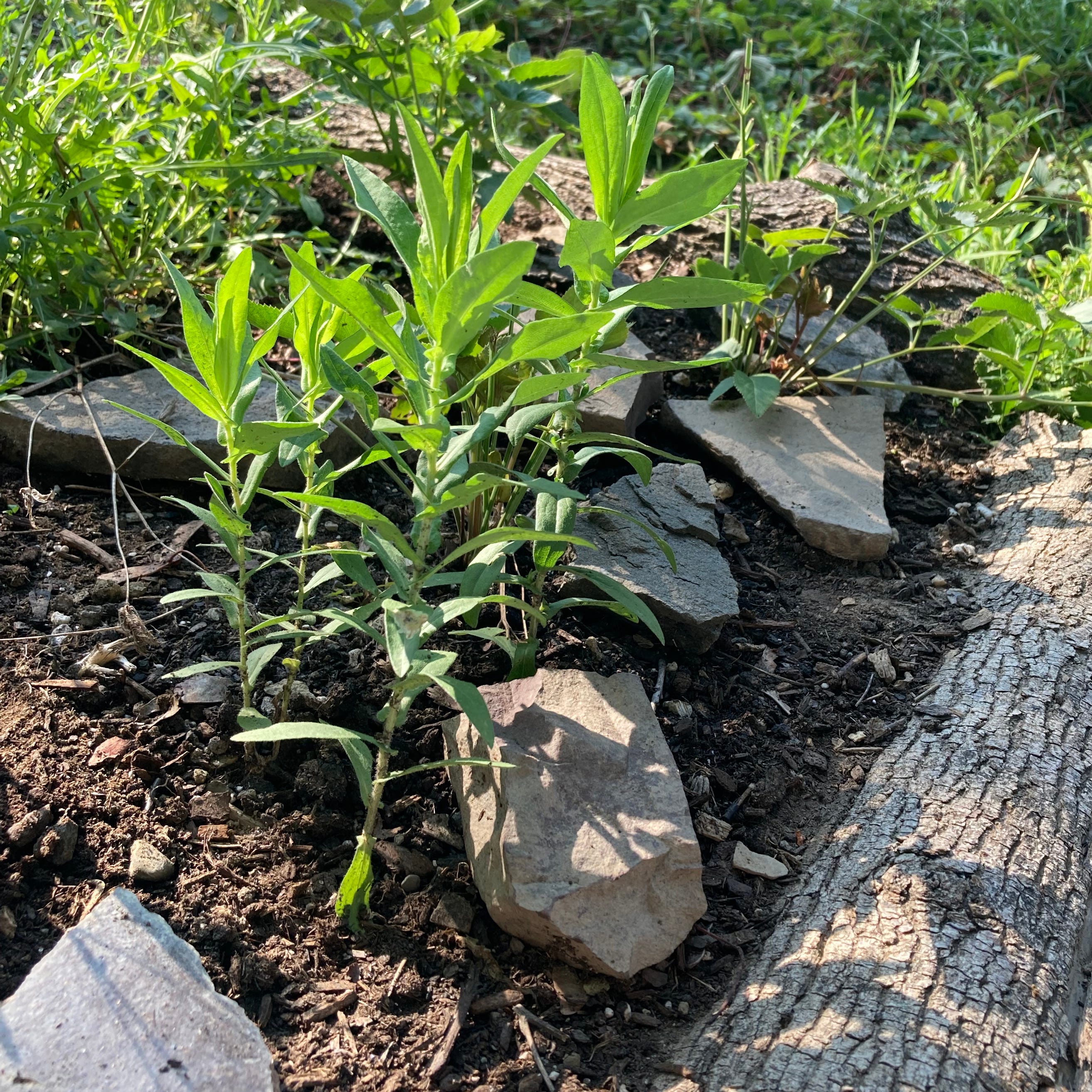
To save food for winter, squirrels cache nuts during the summer and fall. In addition to hickory nuts, they also cache acorns, another high-calorie food. They do this so vigorously in my yard, evidently delighted by the soft soil wherever I’ve just planted something, that I have to protect new plantings with bricks or heavy rocks.
Squirrels can remember where their caches are, and will sometimes trick other squirrels by pretending to bury a nut but hanging onto it until they can bury it somewhere more private. They also have a keen sense of smell and can detect the scent of nuts even through snow cover. Of course, if someone has hung out a birdfeeder full of nutritious sunflower seeds, that’s an easier but still very sustaining meal.
On very cold days, squirrels will gather in dens or dreys to keep warm. A den is a nest cavity in a tree, perhaps a cavity hollowed out by a woodpecker. A drey is a nest made of leaves tucked into the crotch of some tree branches.
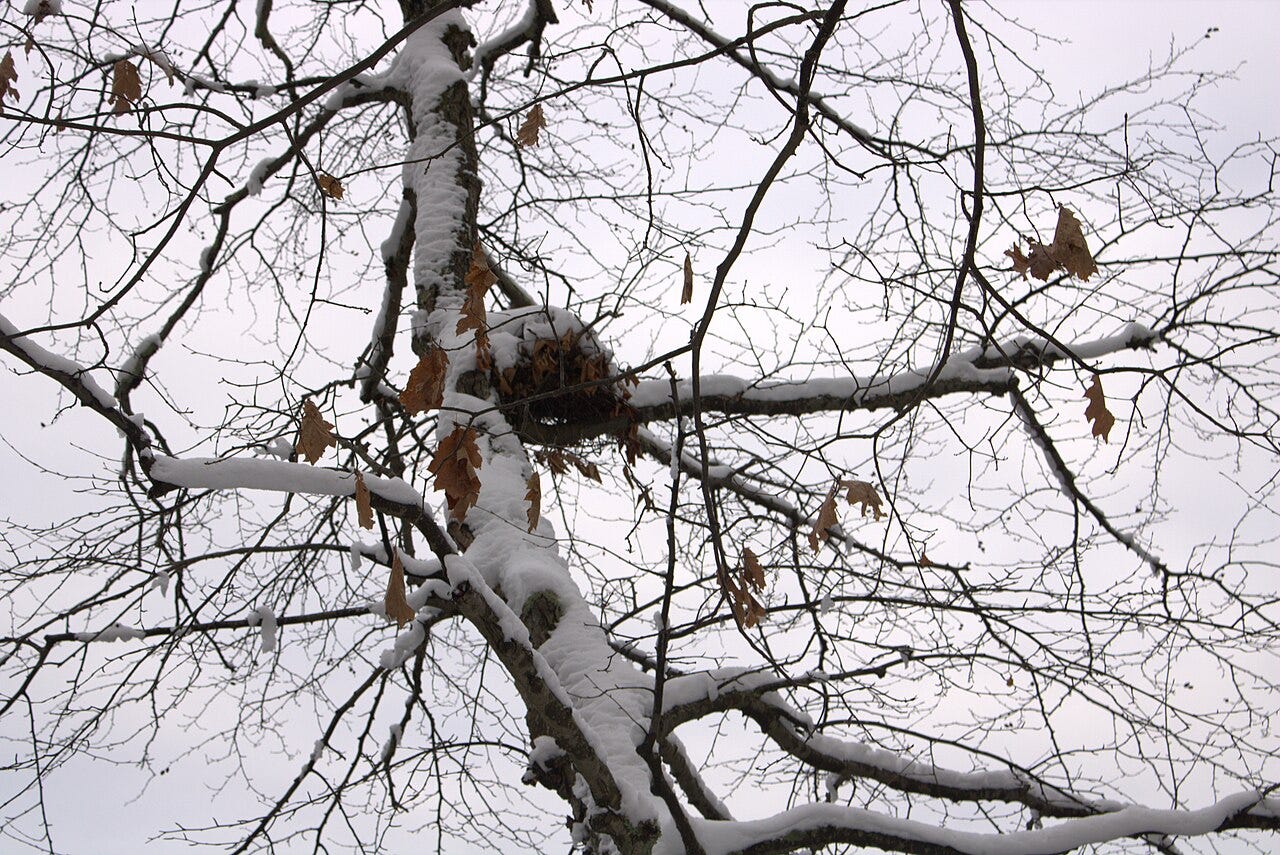
Squirrels may well be using these in our neighborhood. There may or may not be a small drey in a maple tree that overhangs our yard.
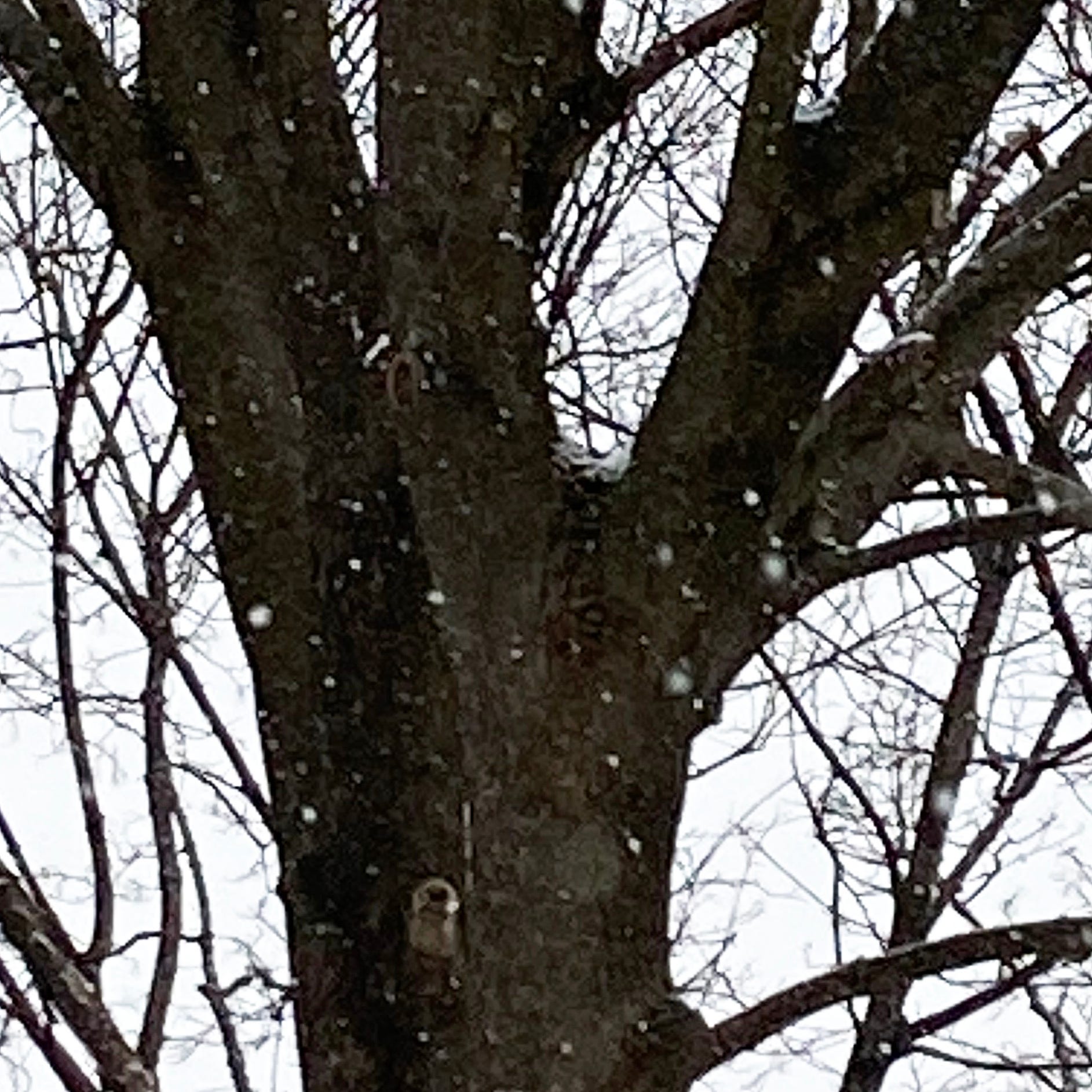
Over the last few weeks, a persistent polar vortex has sent temperatures in eastern North America plummeting. We have had overnight lows below zero degrees on many nights, but the frigid weather does not seem to have harmed the squirrels, whether or not they have a den or drey nearby. Good for them!
What are the squirrels in your neighborhood up to? Leave a comment and let us know!
I'm going to have to try your rock trick. 2 years ago I secured garden webbing over all the crocus and hyacinth bulbs using tent stakes. Since then I've lost any new bulbs I've planted to my hungry little friends, because i wasn't vigilant. I love my little squirrel friends as much as any flower or vegetable in my garden. I spoil them with sunflowers every day, and the ones with white tummies are getting fat and sassy. I'll start a rock collection for any spring bulbs I have this year, and I'll stay optimistic. Thanks for the tip.
I love my squirrel friends, too, and would spoil them with sunflowers if only they wouldn’t pull them out of the ground before they’re a foot high! Maybe the secret is to plant so many they can’t get to them all?