

Spherical flowers
Weird and wonderful

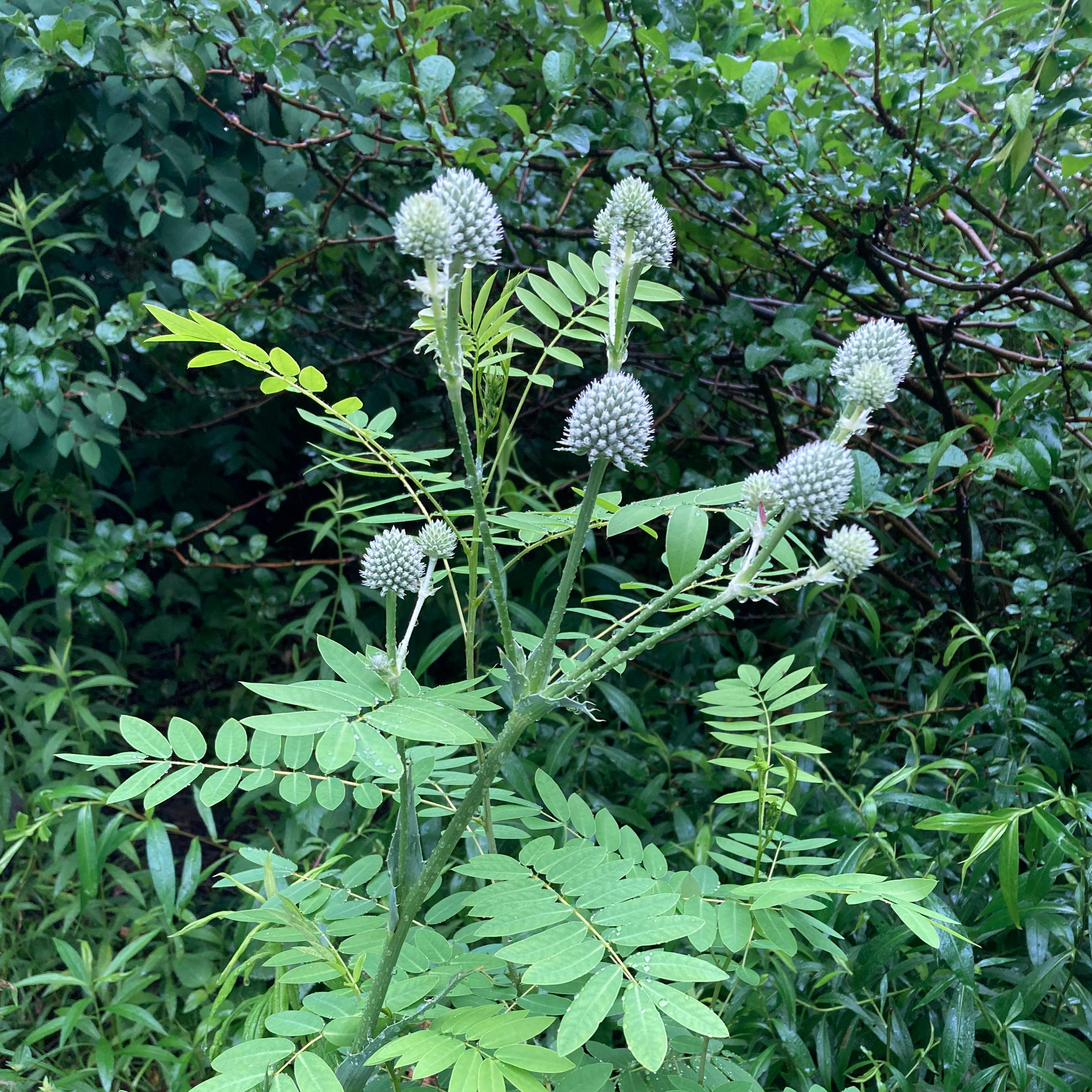
Two days ago, under an oppressive heat dome, I thought I would write today about how afraid I am of what global warming will do to the world if the people with the power to do something serious about it, fast, don’t wake up and do it.
Today, with a steady, soaking rain cooling things down to a refreshing 70 degrees or so, I feel less frightened, with the emphasis on “feel.” Rationally, I still think we may still be in deep trouble, but my fear doesn’t help. I will keep voting for better leaders and keep gardening, which in itself can help slow down the global warming process, especially if a lot of us start planting more trees, more native wildflowers, and growing more of our own fruits and vegetables instead of getting them shipped across the country.
So, spherical flowers!
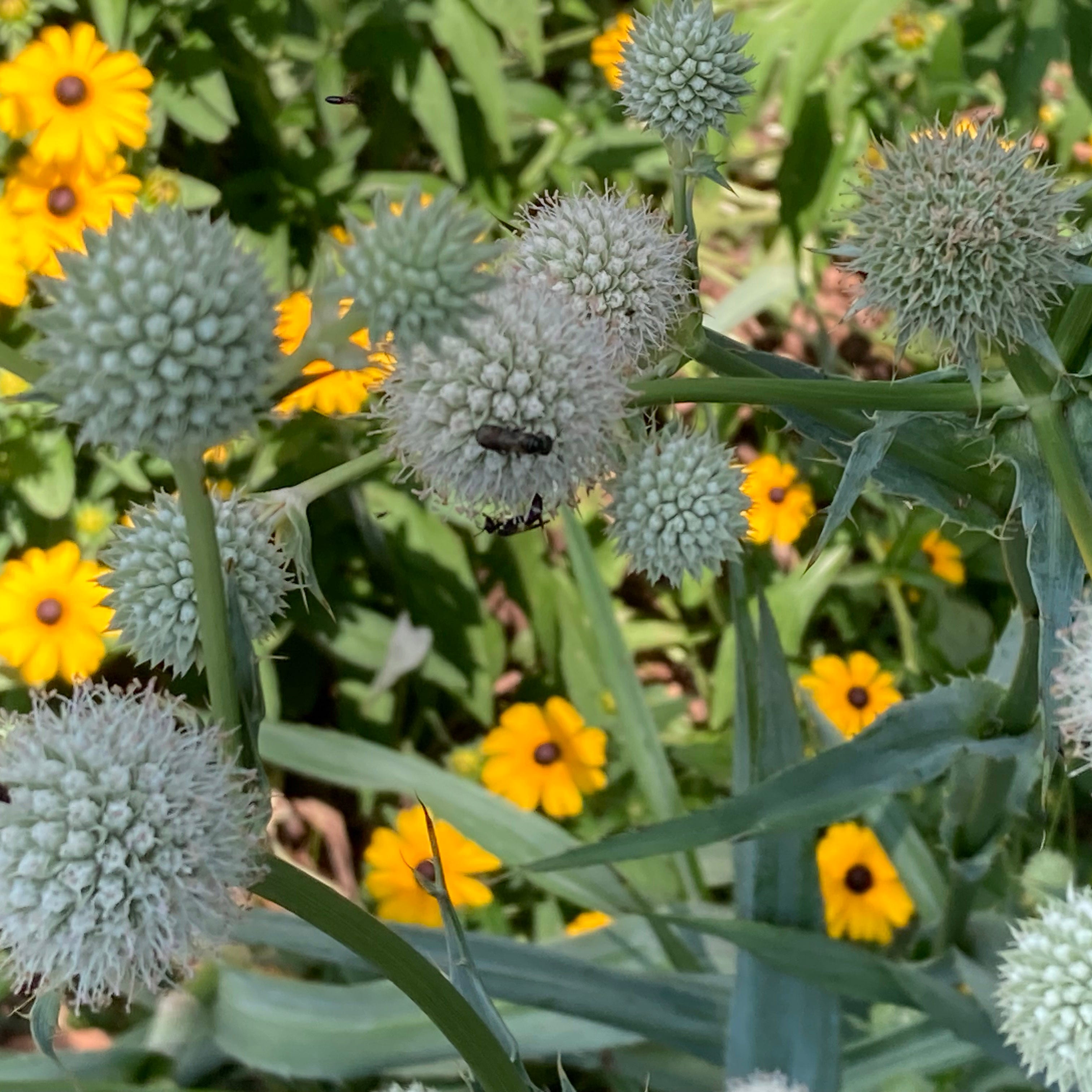
I first discovered rattlesnake master (Eryngium yuccifolium) at the Beattie-Powers pollinator garden in my hometown of Catskill. Here it is, with pollinators clambering over the flowers, and some coreopsis in bloom behind it. This photo includes the foliage that gave it its Latin species name, yuccifolium, because of its resemblance to yucca, a genus of plants native in desert areas. Rattlesnake master’s native territory in the Southeast reaches as far northward as Camden County, New Jersey, so southern New York is not so very far out of its home range, and our pollinators appreciate it.
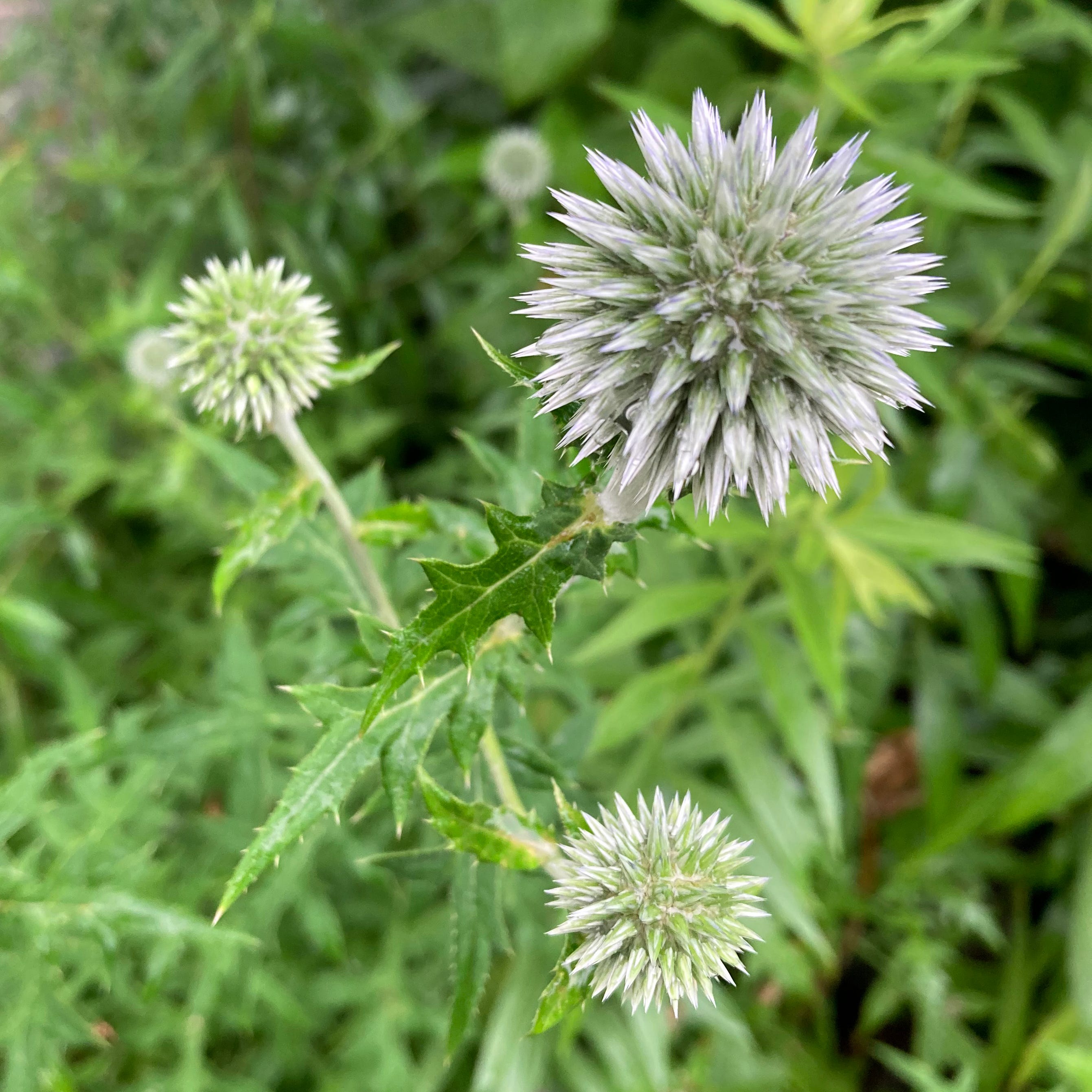
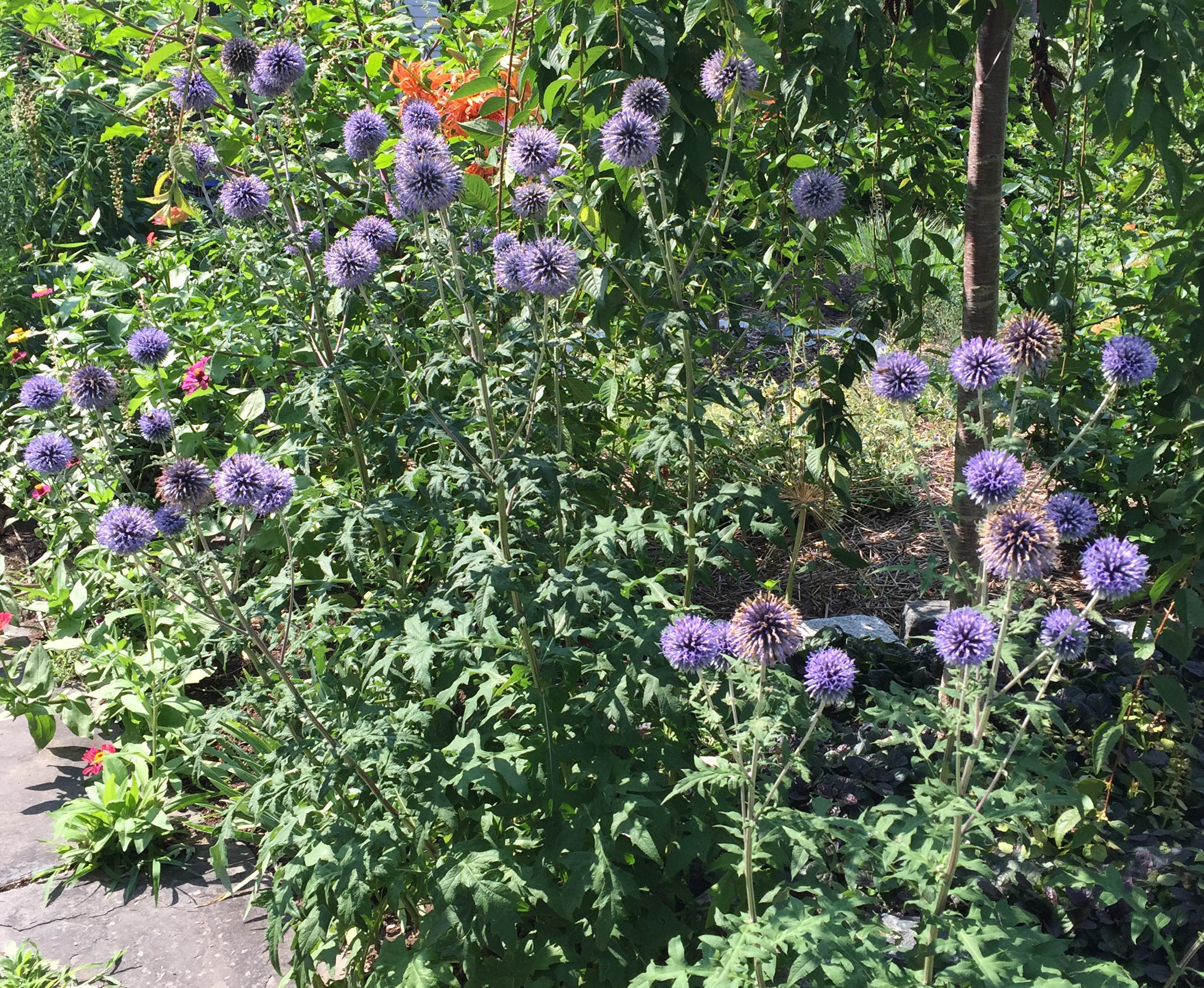
The blue globe thistle, entirely unrelated to thistles, is native in southern Hungary and nearby parts of Serbia and Romania. Blue flowers are relatively rare—most of those we call blue are really a bluish shade of violet. Blue globe thistles are, I would say, a violet-tinged shade of blue, with the “Blue Glow” cultivar one of the stronger blues. I planted it from seed before I realized how vigorously it self-seeds. It now grows thickly in parts of the front garden, where I regularly pull a few plants to keep it from crowding out other plants. It’s a wonderful echo to the rattlesnake master, though, and I love the blue flowers in the middle of a hot summer.
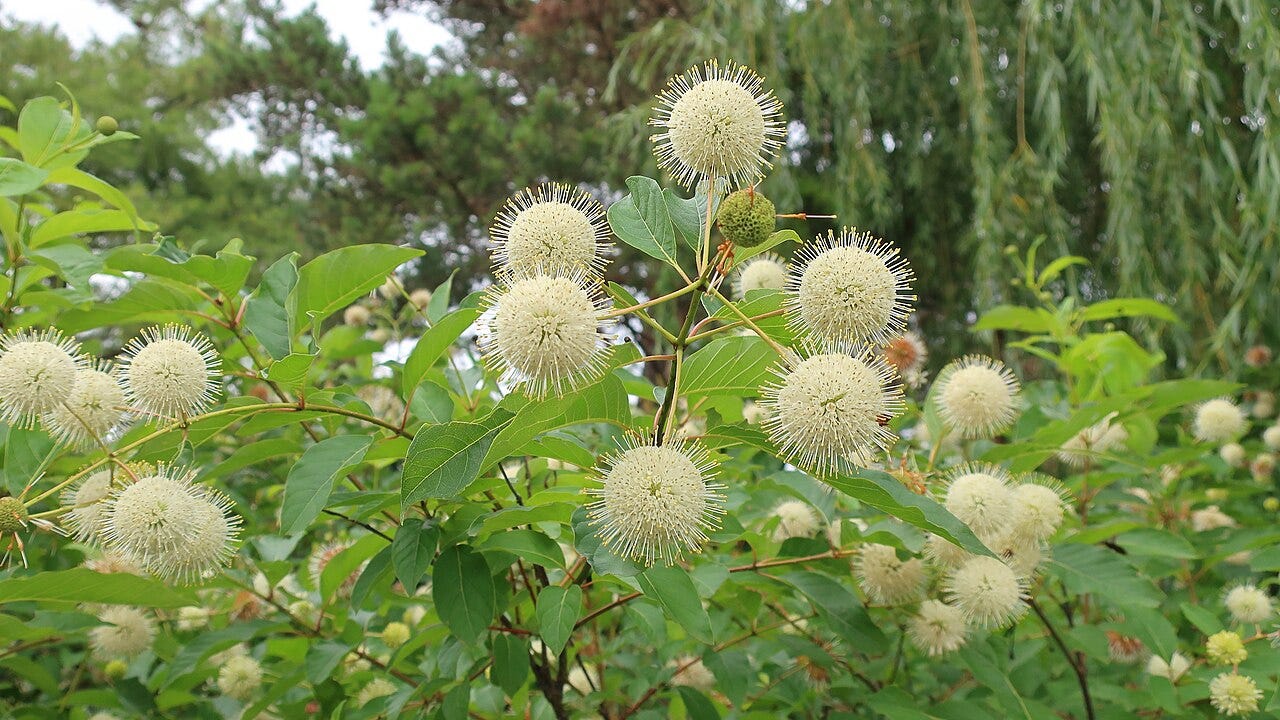
Another plant with spherical blooms is buttonbush (Cephalanthus occidentalis). This one is native to the Hudson Valley and, indeed, in Greene County where I garden. We planted a small buttonbush last year, and ours has yet to flower, but it’s growing vigorously and I’m hoping it will flower next year. Buttonbush starts flowering in June and continues through midsummer, attracting numerous pollinators, including some flashy butterflies.
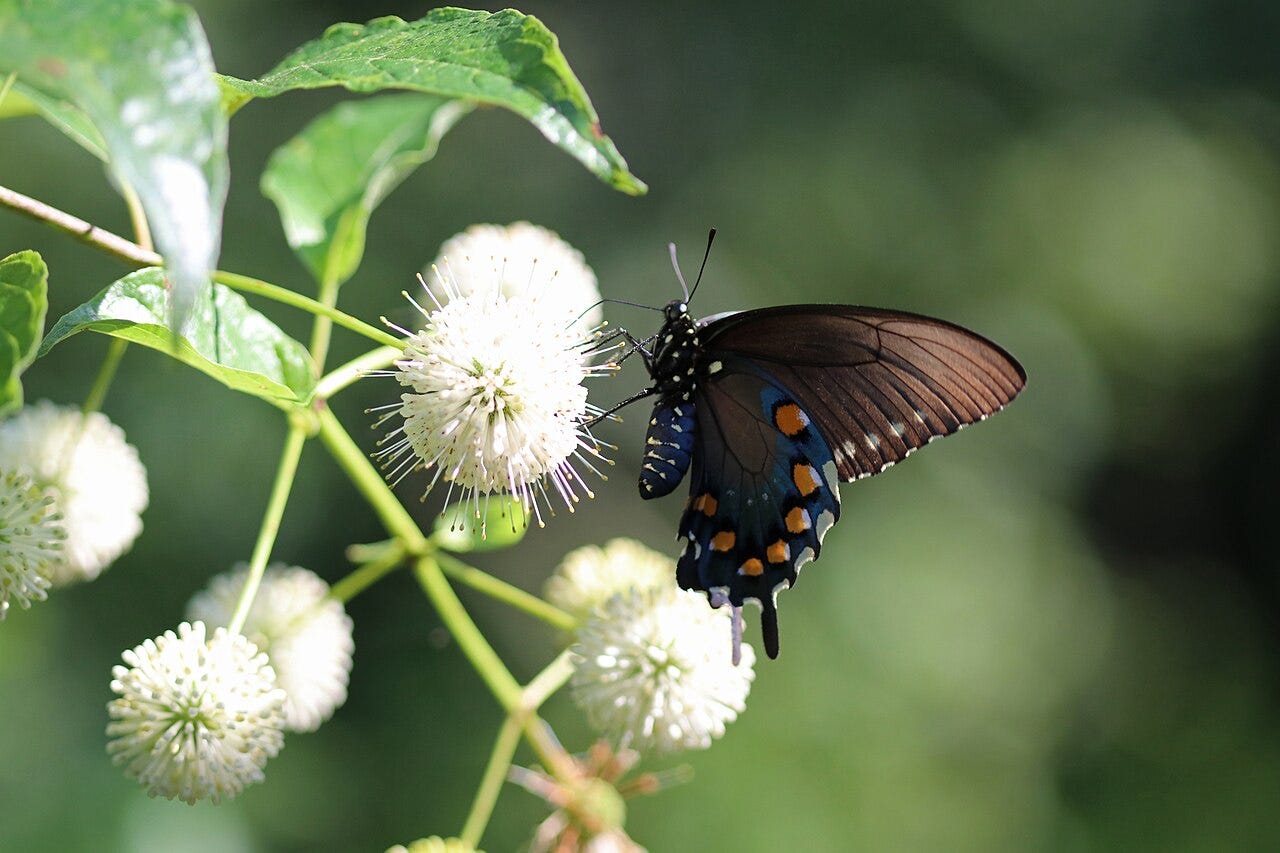
Buttonbush is a wonderful plant along creeks and streams or low-lying garden areas, because it thrives even in areas where standing water collects. When established, it can also tolerate periods of short-term drought. It’s a great plant for bioswales that divert water from other parts of the garden and direct it into the soil, as well as for more casual plantings in wet parts of the garden where it can soak up excess water.
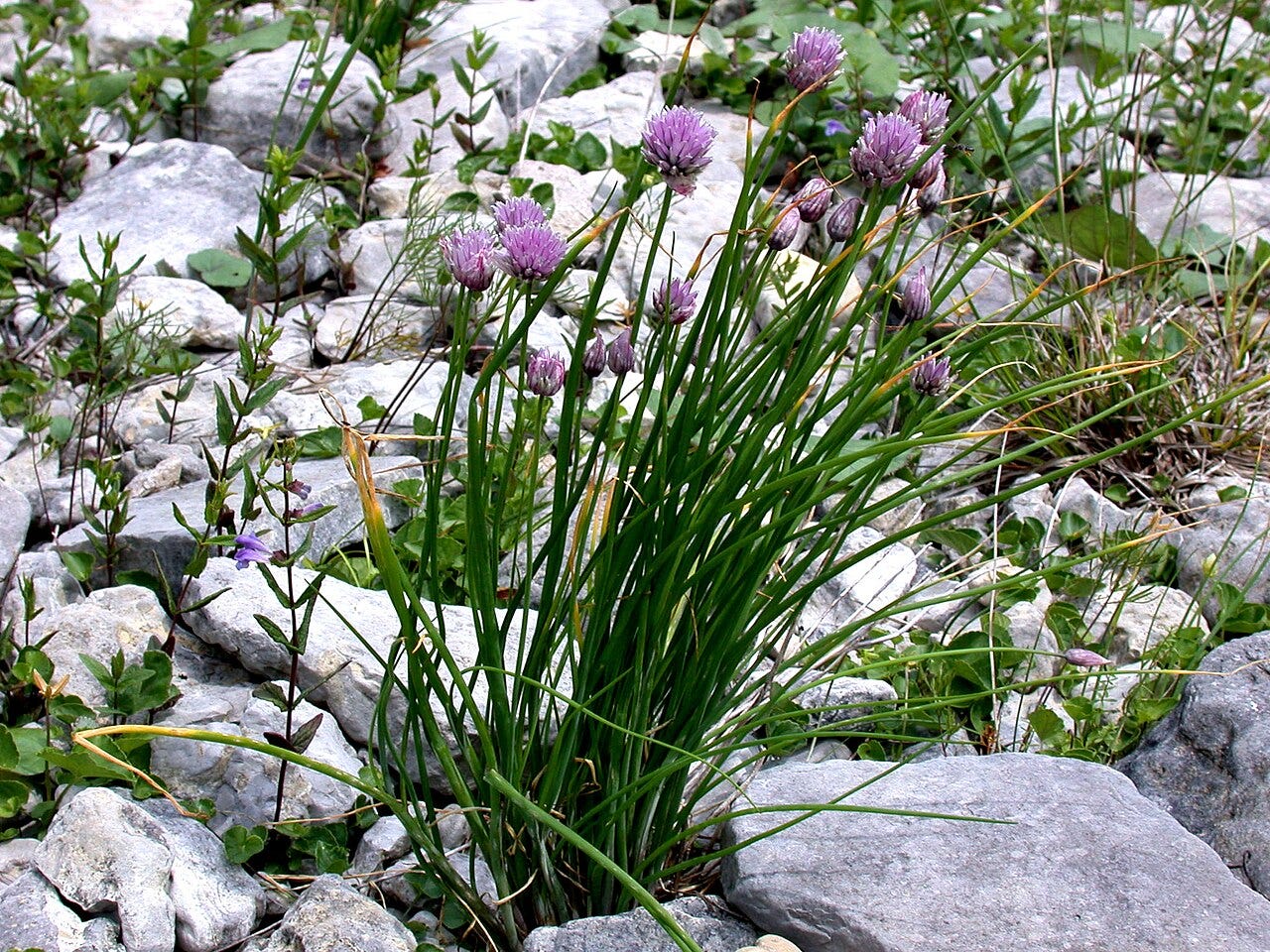
I’ve mostly abandoned common chives (Allium schoenoprasum) in favor of garlic chives (Allium tuberosum). Our garden has an abundance of the latter—too many, really—and I think they’re more delicious. But there is a small leftover clump of common chives in the herb garden, which might be better moved to a spot where their ornamental value might be better appreciated. Schoen means beautiful in German, which is apt, but the scientific name actually comes from the Greek for sharp, also schoen, and prason, meaning leek. Chives are native in a surprising number of places, including parts of North America as well as in Europe and Asia. The picture below shows common chives growing wild in France.
We do have other alliums in our garden, including nodding onion (Allium cernuum), native to much of the US including parts of New York (though not Greene County), and the spectacular Allium giganteum “Globemaster,” a cultivar of an Asian native, and the festive Allium schubertii, native in Libya and the western Mediterranean. Unlike some alliums, these two are not invasive, though they will multiply slowly by bulb offsets if planted in conditions that suit them.
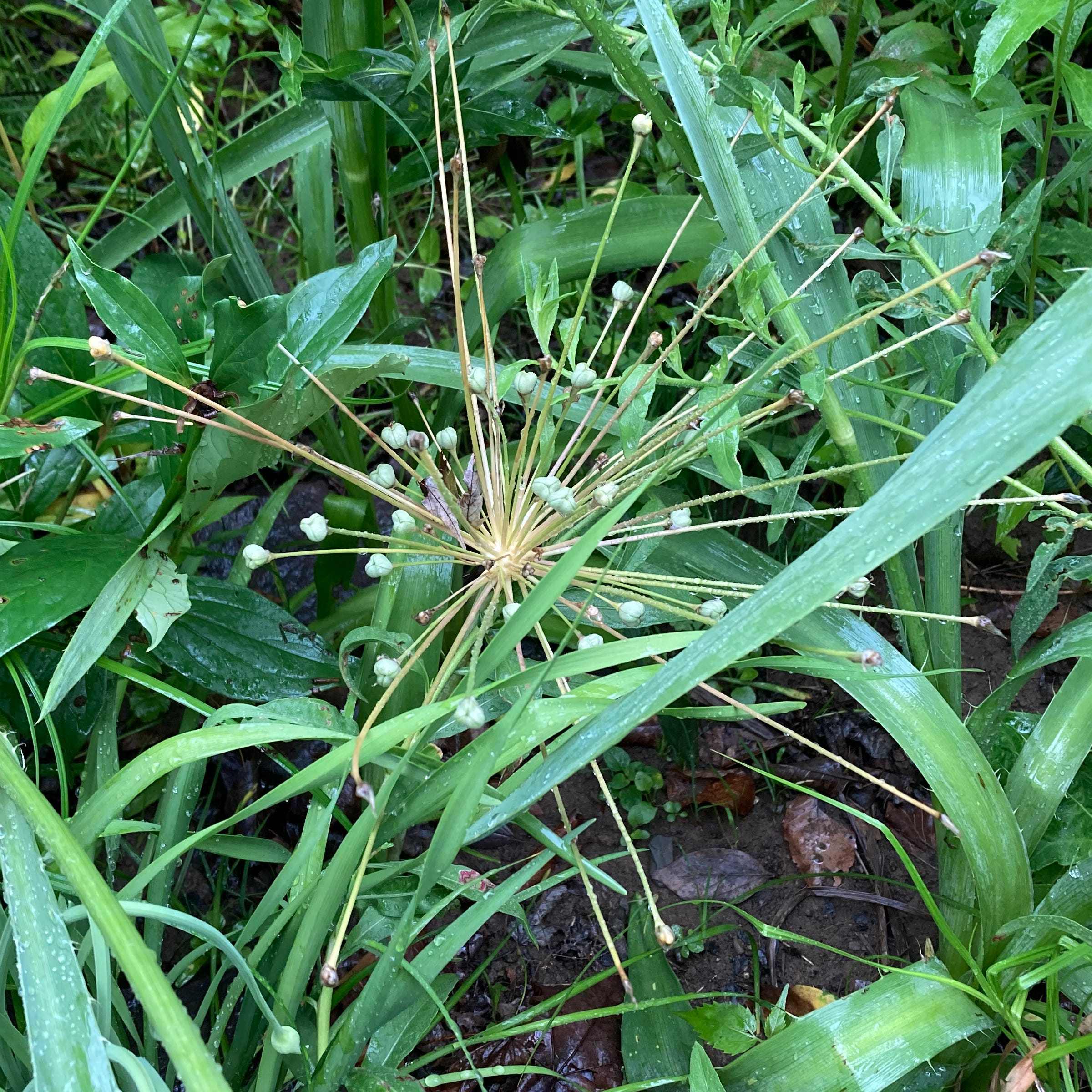
The Allium schubertii in the photo below is past its prime and overshadowed now by rattlesnake master, mountain mint and the foliage of some leftover peonies. I wish I had taken a picture a couple of weeks ago, while the two natives were still relatively low to the ground, the peony was more upright, and the allium was in its glory. That said, I do like a garden stuffed with plants so that as some fade, others spring up to take their place.
It might be fun to plant a sphere garden. All of these plants bloom at more-or-less the same time in June and July, and all tolerate general garden conditions, even if the rattlesnake master and alliums do best in dry conditions and the buttombush in wet. But as a garden design principle, it usually works better to vary the shapes, sizes and architecture of the plants.
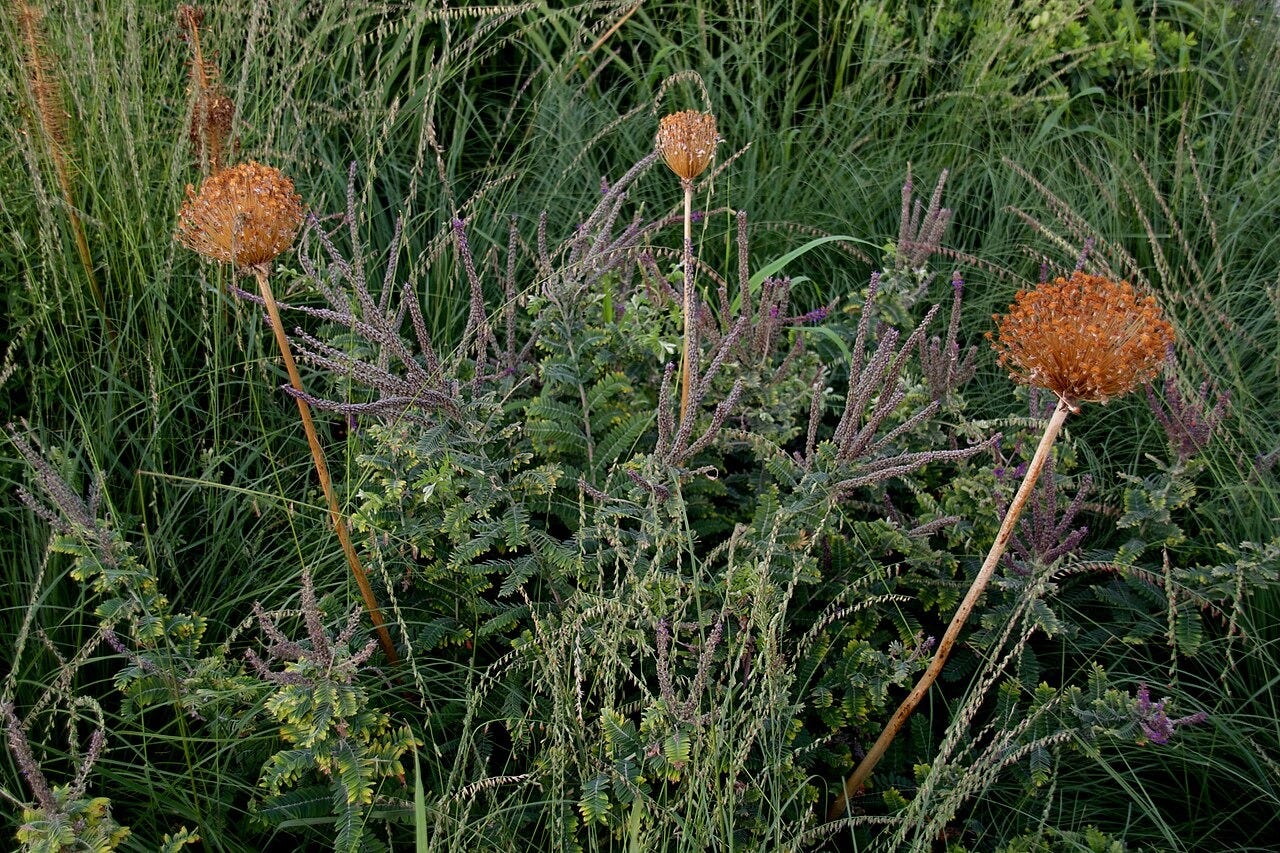
In the photograph above, the rusty-brown heads of the alliums, going to seed in July, stand out prominently against the ferny green leaves and purple flowerheads, just beginning to open, of the lead plant. Behind them, the slender, upright lacework of what look like some native sedges, fill the picture with a textural contrast to the alliums and lead plant, showing them off rather than competing with them. Piet Oudolf, who designed the High Line gardens, is world-renowned for his brilliance as a garden designer. I’m still learning. But there are masters out there to learn from!