

Prairie Smoke
An early garden delight

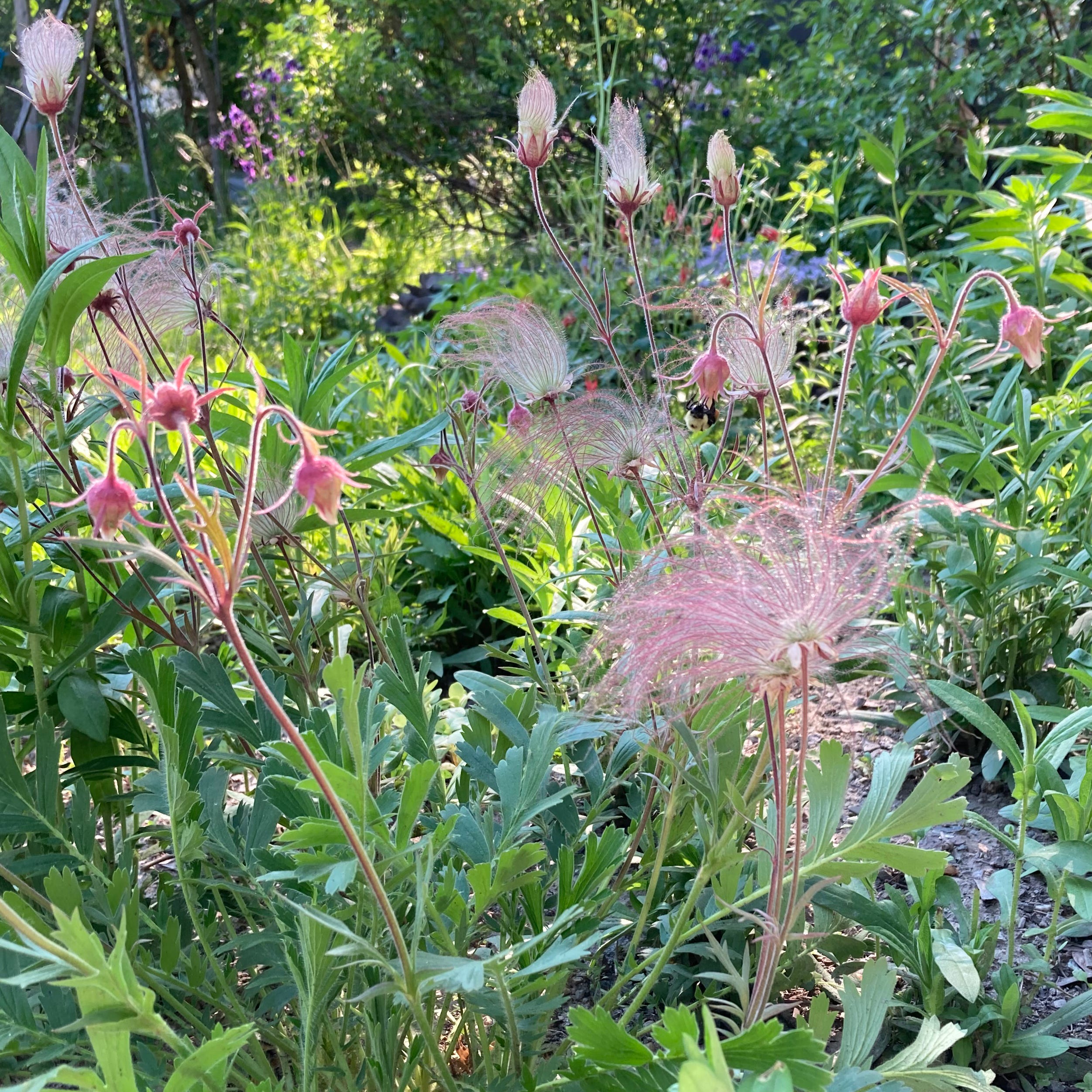
The lovely seedheads of prairie smoke (Geum triflorum) give it its common name, but its flowers are interesting and unusual. The petals close around its stigma and stamens, reserving its pollen for the few bees capable of pollinating it. Only bumble bees can buzz pollinate, perching upside down on the flower, prying it open, and vibrating their wing muscles to shake the pollen loose onto their bodies. They sweep much of the pollen into the pollen baskets on their hind legs, but some escapes and is transferred to the next flowers they visit. Because prairie smoke blooms so early, it’s especially valuable to queen bumble bees, who emerge in early spring before looking for nectar to feed their larvae.
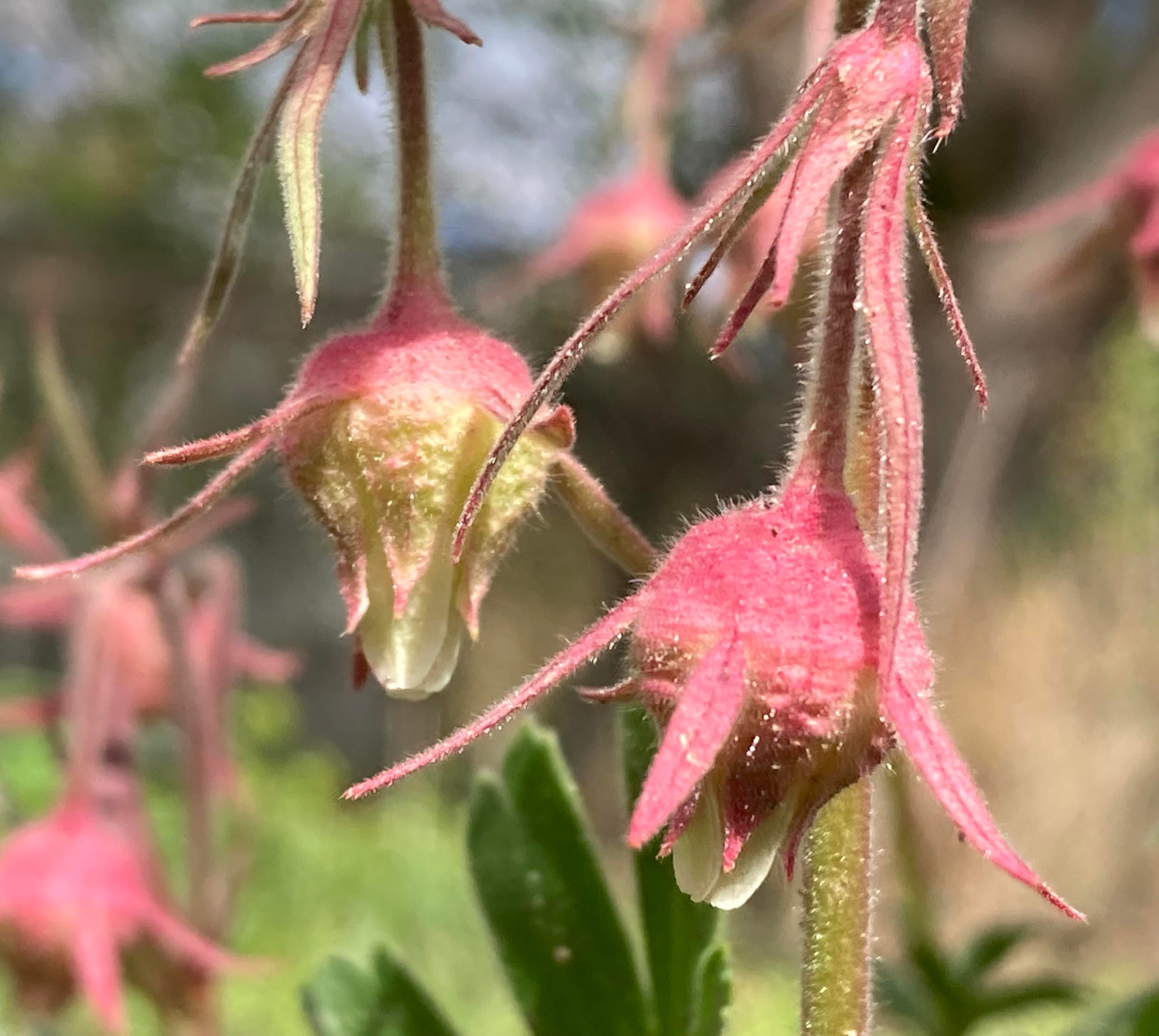
A few insects, other species of bees, as well as some beetles and wasps, rob nectar from these flowers, cutting slits near the stem and reaching in with their tongues to get to the nectar, bypassing the pollen. Ants can then access the nectar by crawling in through the holes, and may do some pollinating while they’re at it.
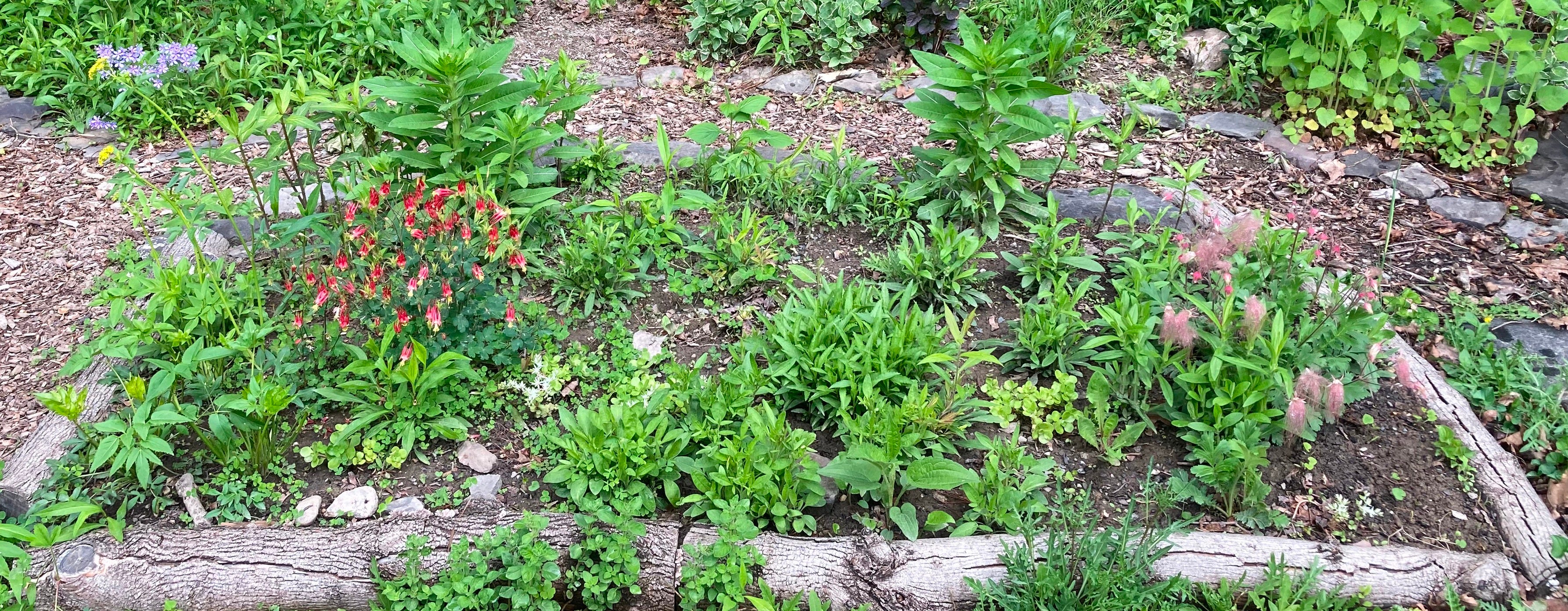
To tell the truth, I was not all that interested in adding prairie smoke to my garden until my husband, who loves unusually shaped flowers and seedheads, brought some home one day in gallon pots from the nursery. I put them in one corner of the new wildflower bed where, although they’re supposed to prefer dryish soil, they drooped and struggled, clearly wanting more water than they were getting from my frequent visits with a watering can. One plant didn’t make it. One plant managed to get by and looks like it will do well as time passes. The third is flourishing, and has made me fall in love with prairie smoke.
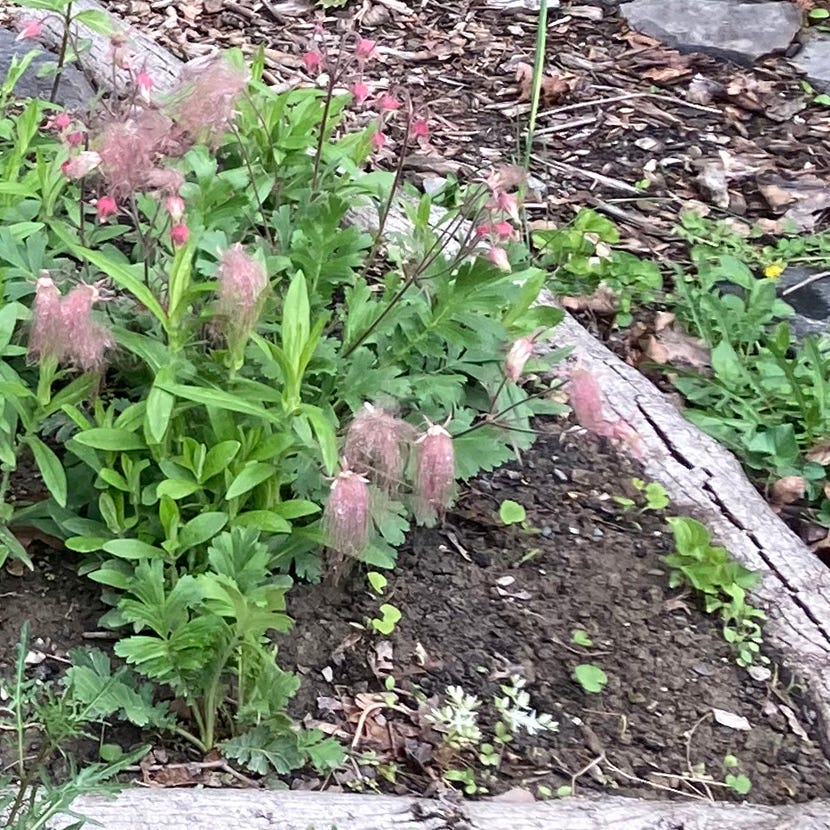
The flowers may not be big-petaled glamour girls, but they are such a bright pink and bloom so early in the season that they call a lot of happy attention to themselves. They are best appreciated in person, since photographs don’t always capture the three-dimensional charm of the flowers. Of course, any gardener who loves bumble bees will be delighted by the attention these flowers get from the queens long before most other bees are out and about.
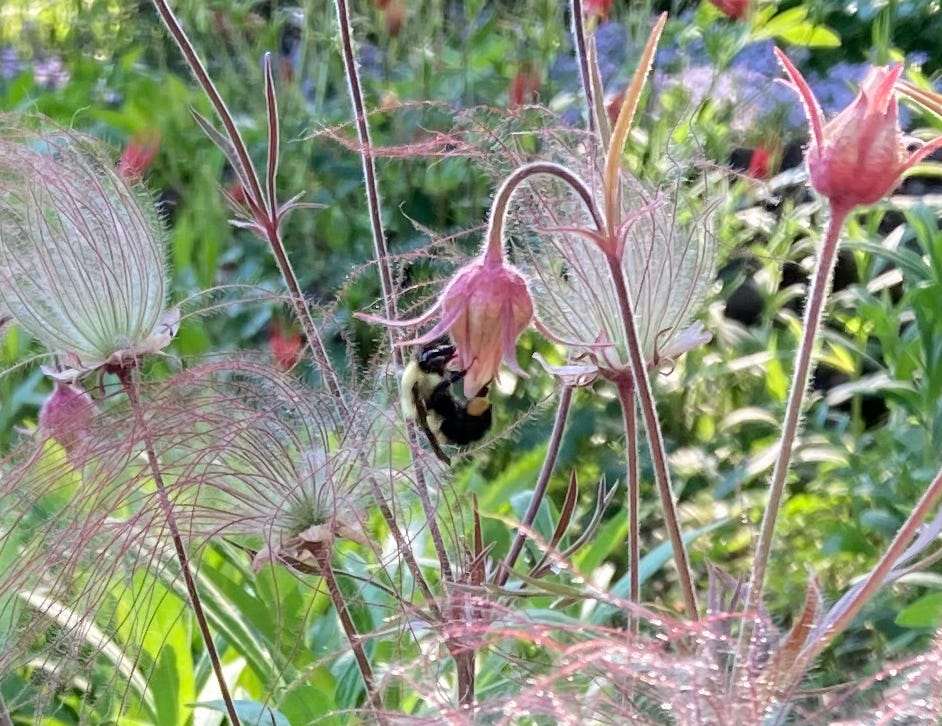
Although native in parts of New York bordering Lake Erie, it’s not native to Greene County, where I live. In the wild, this plant seems to prefer Canada and the northern states, as well as the mountain West. That doesn’t seem to bother the queen bumble bees in my garden, probably the common eastern bumble bee (Bombus impatiens), native throughout the eastern US. I’m happy to indulge them.
Are you seeing queen bees in your garden? Leave a comment and let us know!