

Plants Sprouting
The Impatient Gardener rewarded

The Impatient Gardener is at her most impatient in spring when waiting for seeds to sprout. Since she often plants old seed in order to use up a leftover packet, some natural suspense exists over whether the seeds will sprout at all. But hallelujah, some seeds began sprouting this week—including one I’ll get to at the end that shouldn’t have sprouted at all until next year.
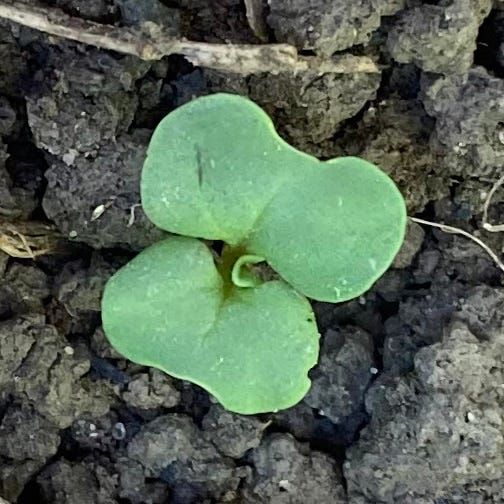
Senposai is an Asian green that grows reliably for me and which I find delicious. A hybrid developed in Japan between two members of the Brassica family, cabbage and komatsuna (a mild-flavored mustard developed in Japan a couple of centuries ago). Senposai’s large leaves, produced in abundance, are substantial but tender and cook quickly, with a mild flavor. Quick to germinate, the sprout shows the distinctive wide heart-shape of other brassicas.
Photos of the sprouts in my garden betray the nature of my clay soil, which was more workable earlier in the season after a stretch of rainy weather and a lot of earthworm activity. I had remarked to my husband that I found I could plant more seeds much faster when the soil was so easy to work. A few weeks later, I wasn’t able to plant as quickly, because the slightly dryer soil was stiff and hard to work. Applications of compost, gypsum and mycorrhizae spores help a lot, but though I notice significant improvements in soil quality from one year to the next, it doesn’t turn from hard clay to lovely loam in just a few years—progress is gradual.
Plants do grow in it, though.
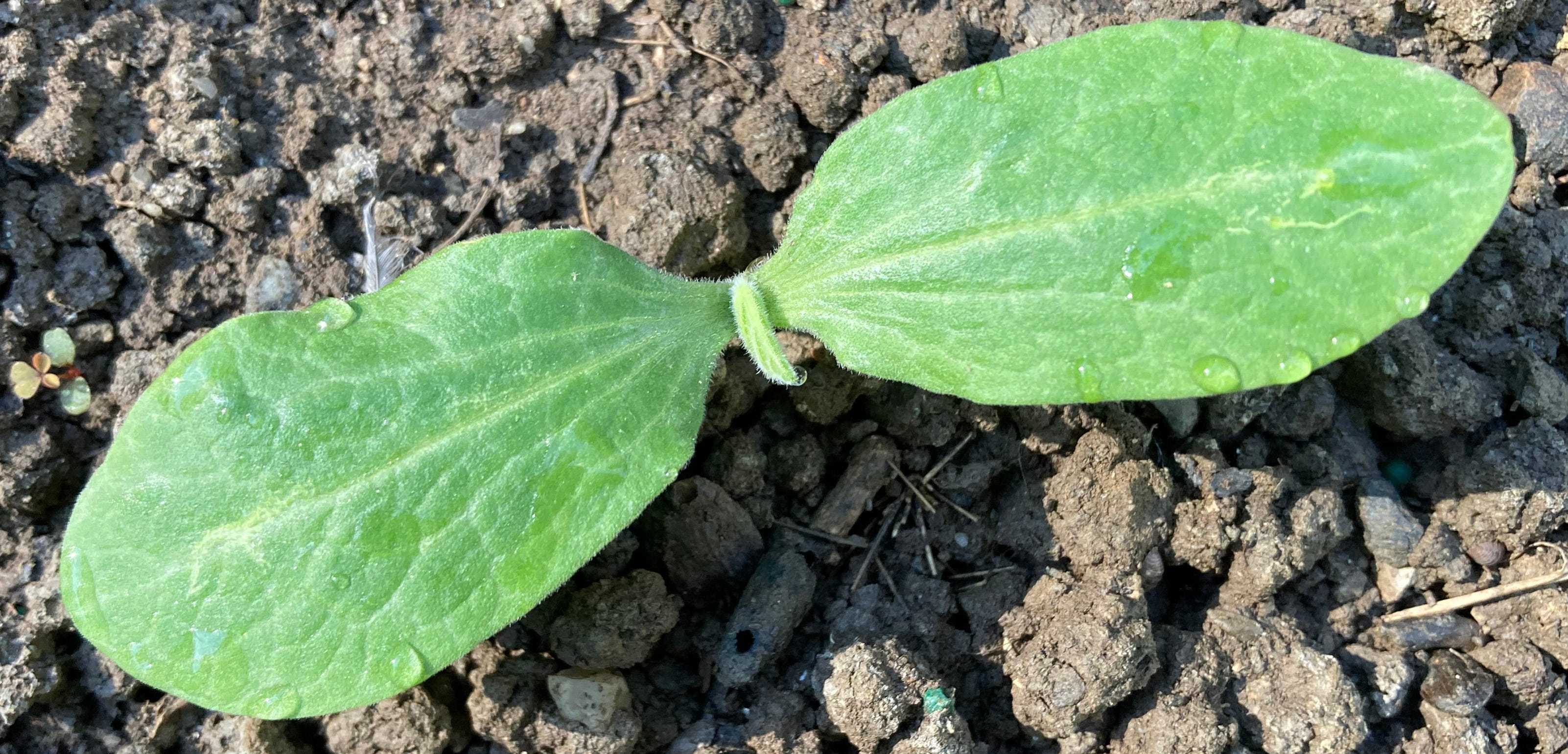
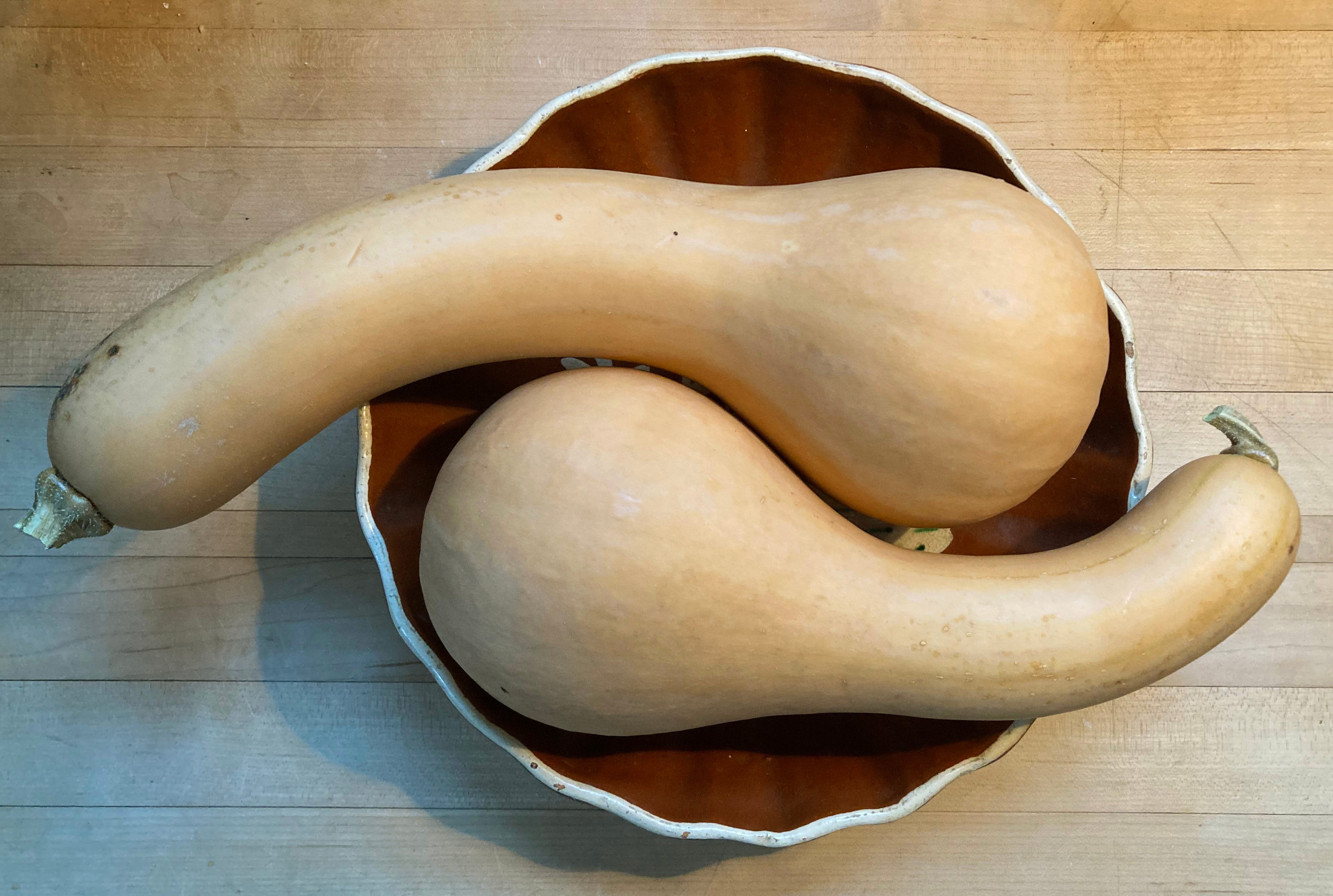
This year for the first time, I planted Black Futsu squash, a Japanese heirloom pumpkin small enough to grow on a trellis that is supposed to be exceptionally delicious. The fruit starts out a dark green and turns to an orange-tan color as it matures. It’s a Cucurbita moschata type, the squash species that includes pumpkins, butternut squash and crooknecks, including my favorite Canada Crookneck variety grown by the Haudenosawnee people before the time of European settlement.
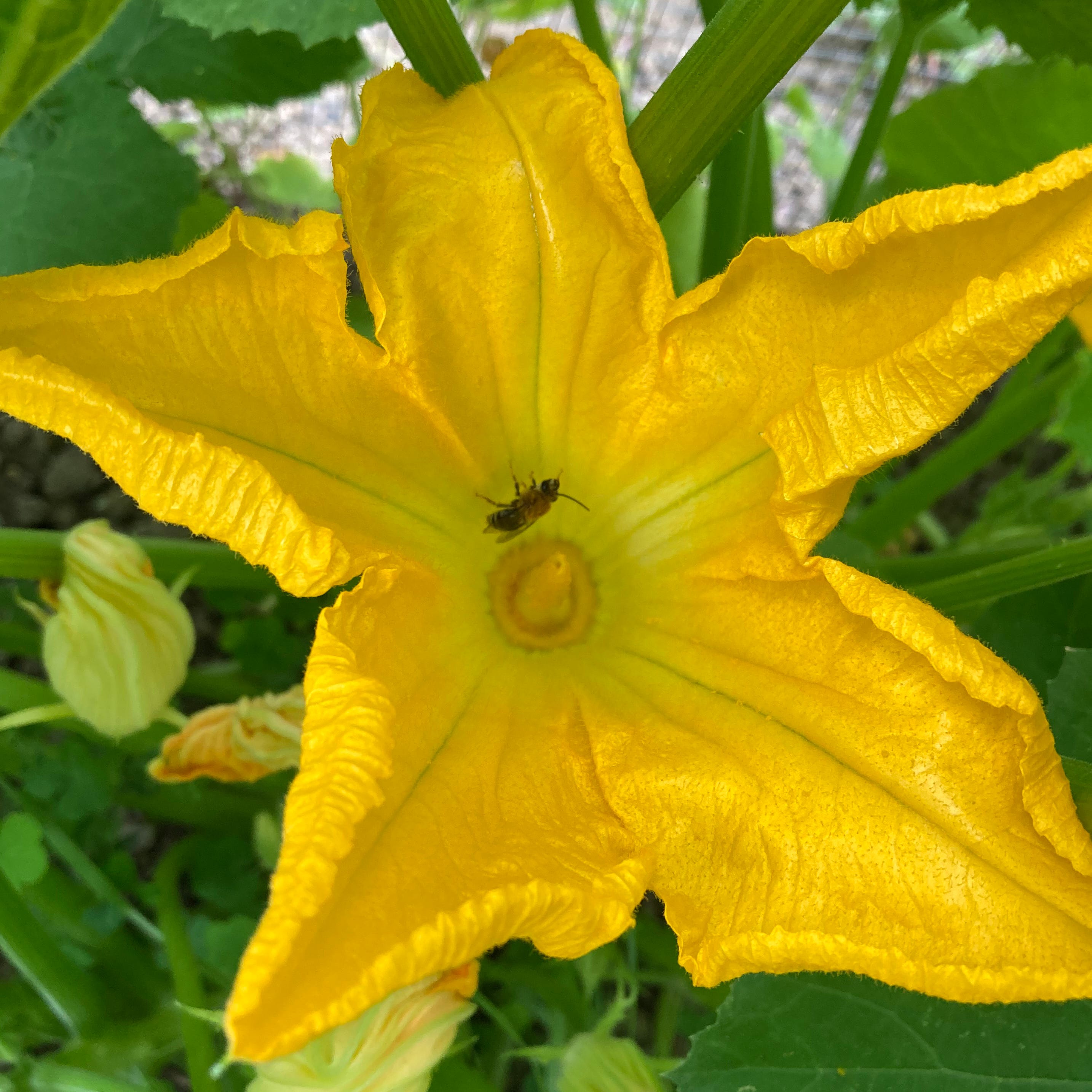
Zucchini and other summer squash belong to the Cucurbita pepo species, which also includes a few winter squashes, like acorn squash and some varieties of pumpkin. My husband loves zucchini, and unlike people who joke about secretly delivering bags of it to the neighbors after dark, I can’t seem to grow enough of it. Groundhogs and/or rabbits will eat the leaves, despite their prickly nature, so I grow it inside the garden fence. And it’s susceptible to powdery mildew, a disease that covers the leaves with pale spores and makes them wilt mid-season and stop producing fruit. Last year, I planted Black Beauty zucchini, an heirloom variety which performed beautifully in my garden even though it’s not said to be resistant to powdery mildew. So I’m planting it again this year. It’s pollinated by our native squash bees.
Muskmelons, commonly called cantaloupe, are in the Curcumis genus, along with cucumbers and other melons. Their sprouts look a lot like squash sprouts, but smaller. This year, I’m trying an experiment by planting a row of mixed beans and melons. Melons and squashes are heavy feeders, while beans are nitrogen fixers that add plant nutrients to the soil. Both pole beans, like the Grandma Nellie’s variety I’m trying this year, and muskmelons will climb, the pole beans by twining around supports, the melons with tendrils that cling to those supports. I’ll be interested to see how well they grow together.
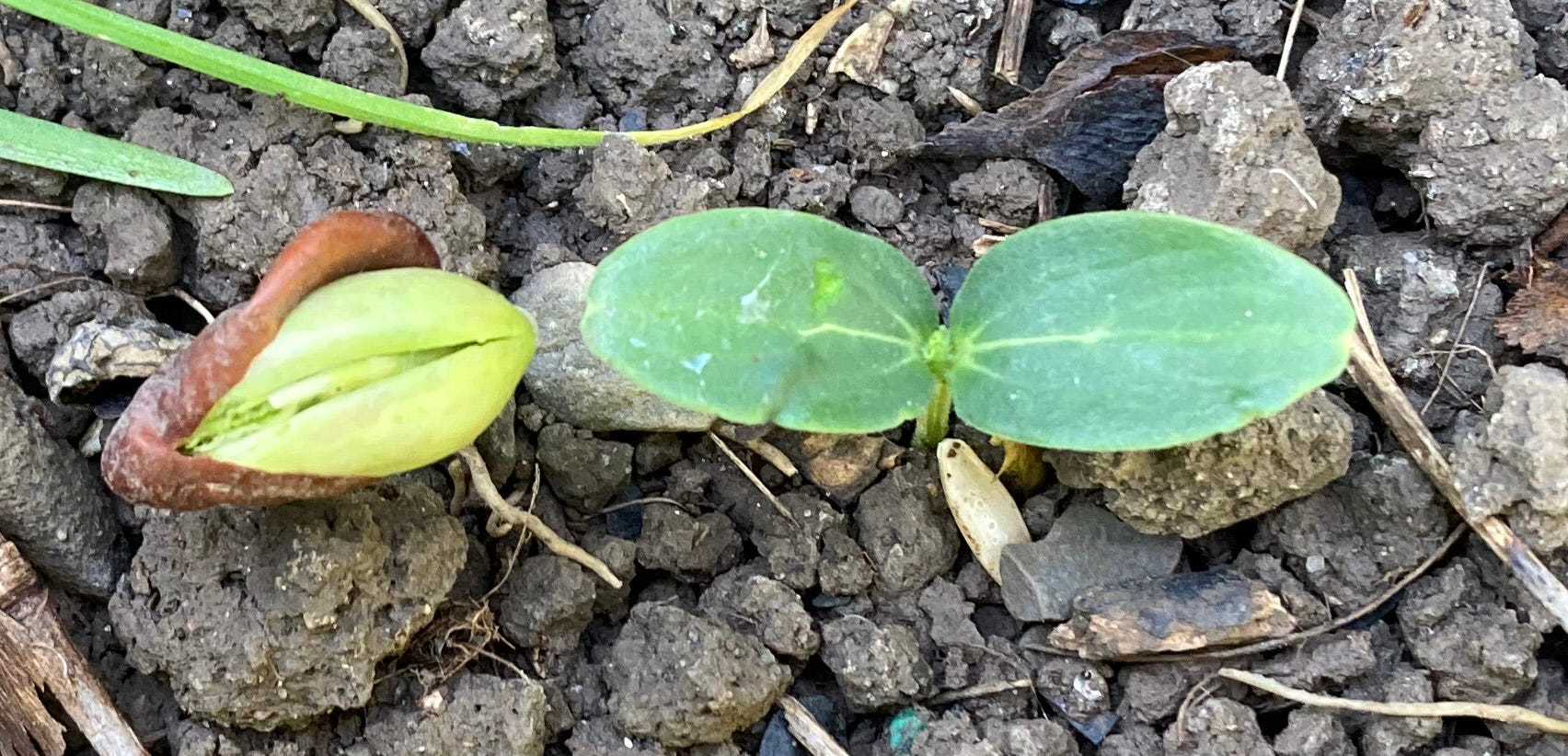
Another part of the experiment involves growing a mix of muskmelon seeds from melons grown by members of Going to Seed, a nonprofit organization dedicated to helping gardeners grow locally adapted, genetically diverse seed. I’ll keep the plants that grow best in my garden and save seed from the best-tasting melons to plant again next year (and contribute some to Going to Seed).
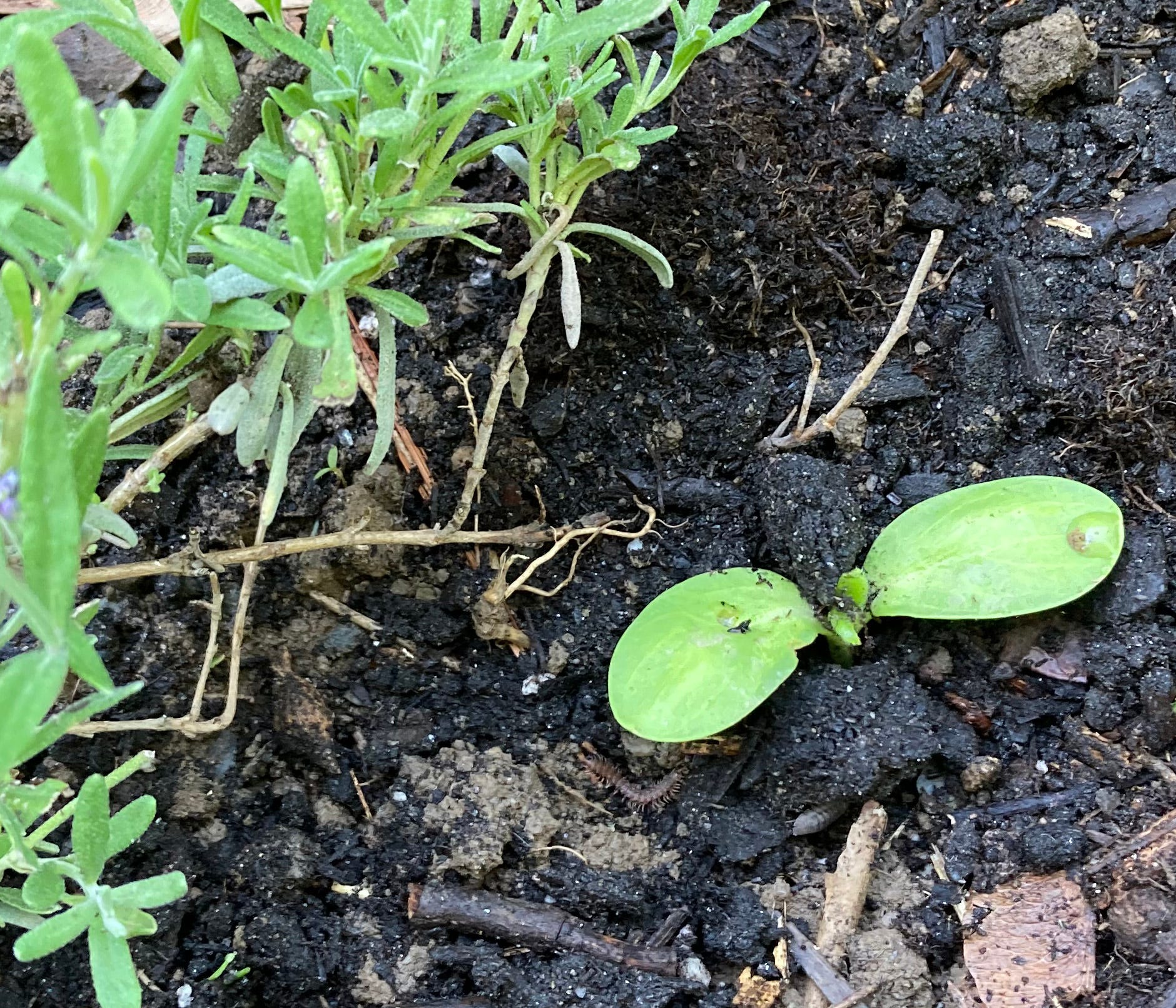
When I asked my five-year-old grandson what I should plant in my garden, he didn’t stop to think before responding: “Sunflowers!” So I’m planting three varieties of sunflower in three different areas of my garden: Peredovik, a variety commonly used for birdseed (known as “black oil” sunflower seeds); Mammoth Russian, an especially tall variety of the native American plant that was cultivated in 18th century Russia for larger seeds and then reintroduced to the U.S. by the 1880s; and a mix from Going to Seed that I hope will help me save seeds from plants less preyed upon by the chipmunks and/or squirrels that like to uproot young sunflower plants when they’re six inches to a foot tall.
The sprout that thrilled me most was not a vegetable. Last fall, I sowed a variety of seeds in containers and left them outside as a wintersowing project. Most of our native wildflowers need a period of winter cold before they will germinate, and my wintersowing project was a good success, even if some of the containers disturbed by squirrels did not produce sprouts. (Read about that in my April 6 column.) Some of our native wildflowers, inconveniently for us wintersowers, require two periods of winter cold before germinating. One of these is Jack-in-the-Pulpit (Arisaema triphyllum), an utterly charming woodland species that I would love to have in the shady part of our garden. It astonished me.
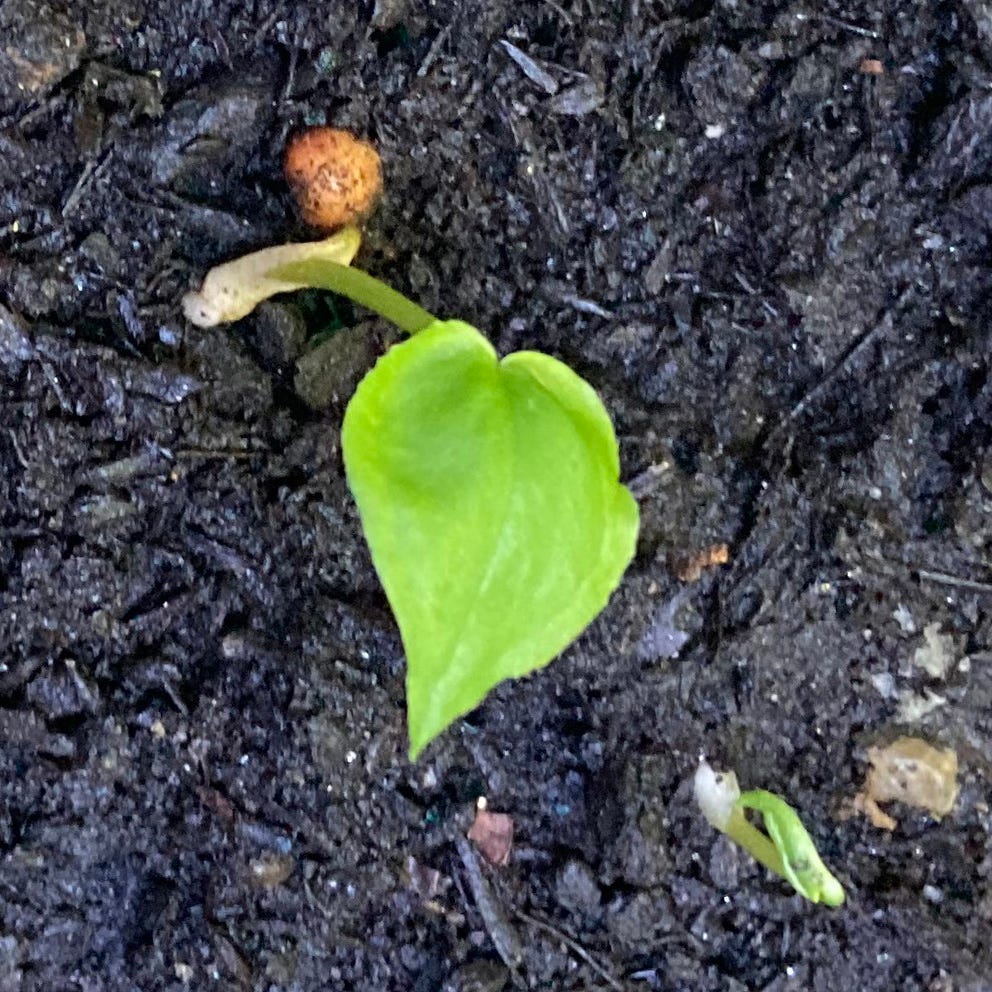
Two of the Jack-in-the-Pulpit seeds are sprouting, and the others may not be far behind. Our weird weather this spring may be why. We had several weeks of unseasonably warm weather in April, and then a hard cold snap that lasted unpleasantly long, at least for us humans. This may have tricked the Jack-in-the-Pulpit seeds to think they had been through two winters with a summer in between.
Did any of your seeds surprise or thrill you this year? Share your experience in a comment.