

Plant Spacing
How far apart to plant trees, shrubs and perennials

Advice on how far apart to space plants is easy to find. Whether to follow it is another question. Typically, the advice is to add up the mature width of each neighboring plant, divide by two, and plant them with their centers that far apart. So, for example, creeping Jacob’s ladder (Polemonium reptans) will grow to about a foot and a half wide, and hairy beardtongue (Penstamon hirsutus) to about a foot wide. A gardener would typically be advised to place them a foot and a quarter apart. I used to pay close attention to suggested plant spacings, but my experience growing native perennials now suggests a different approach.
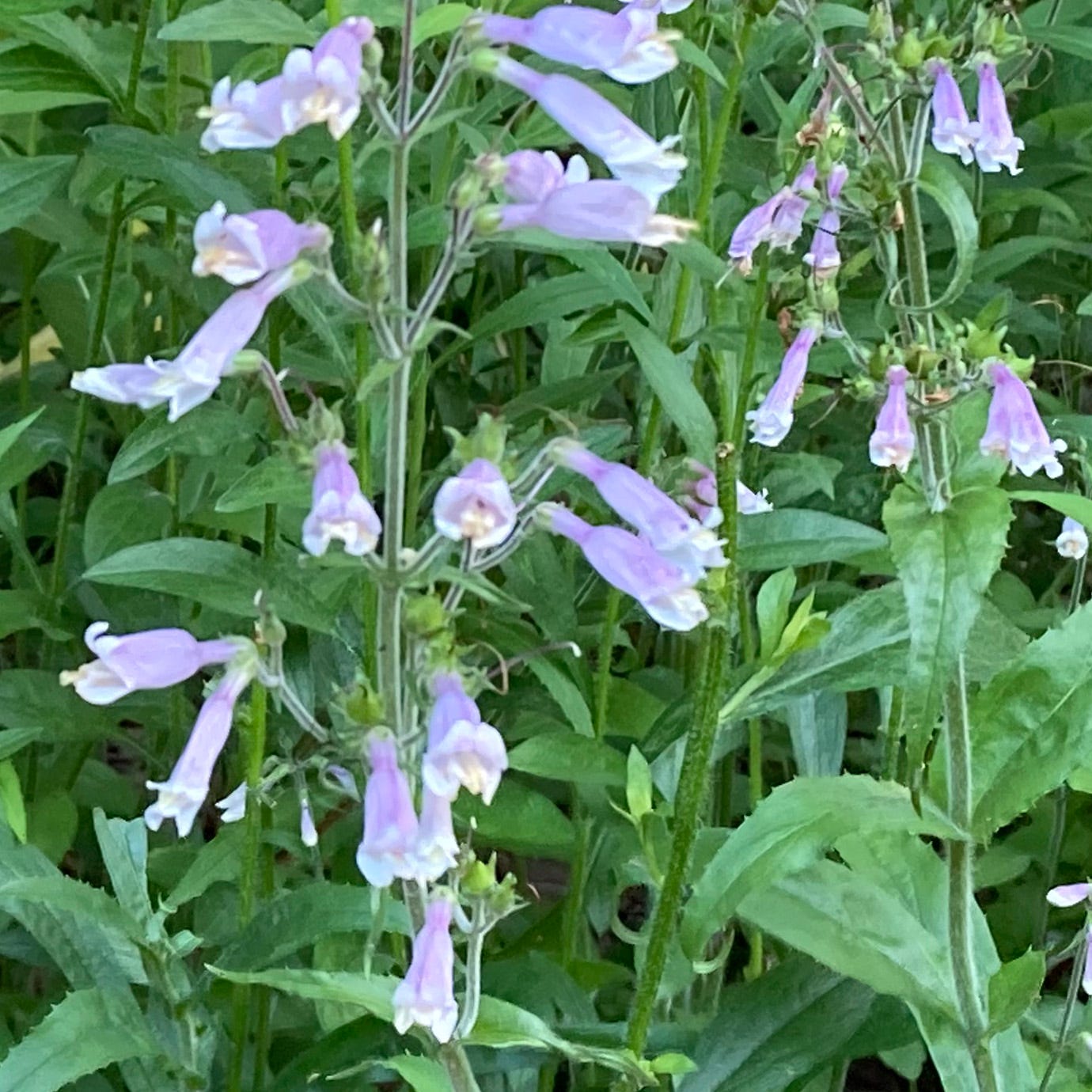
My hairy beardtongue (Penstemon hirsutus) has an upright habit and foliage that is not particularly dense. An easy plant to wintersow, it germinated promptly in early spring, producing masses of seedlings that were hard to separate without damaging the roots. I planted most of them in small clumps. They grew lustily in each others’ company and flowered abundantly.
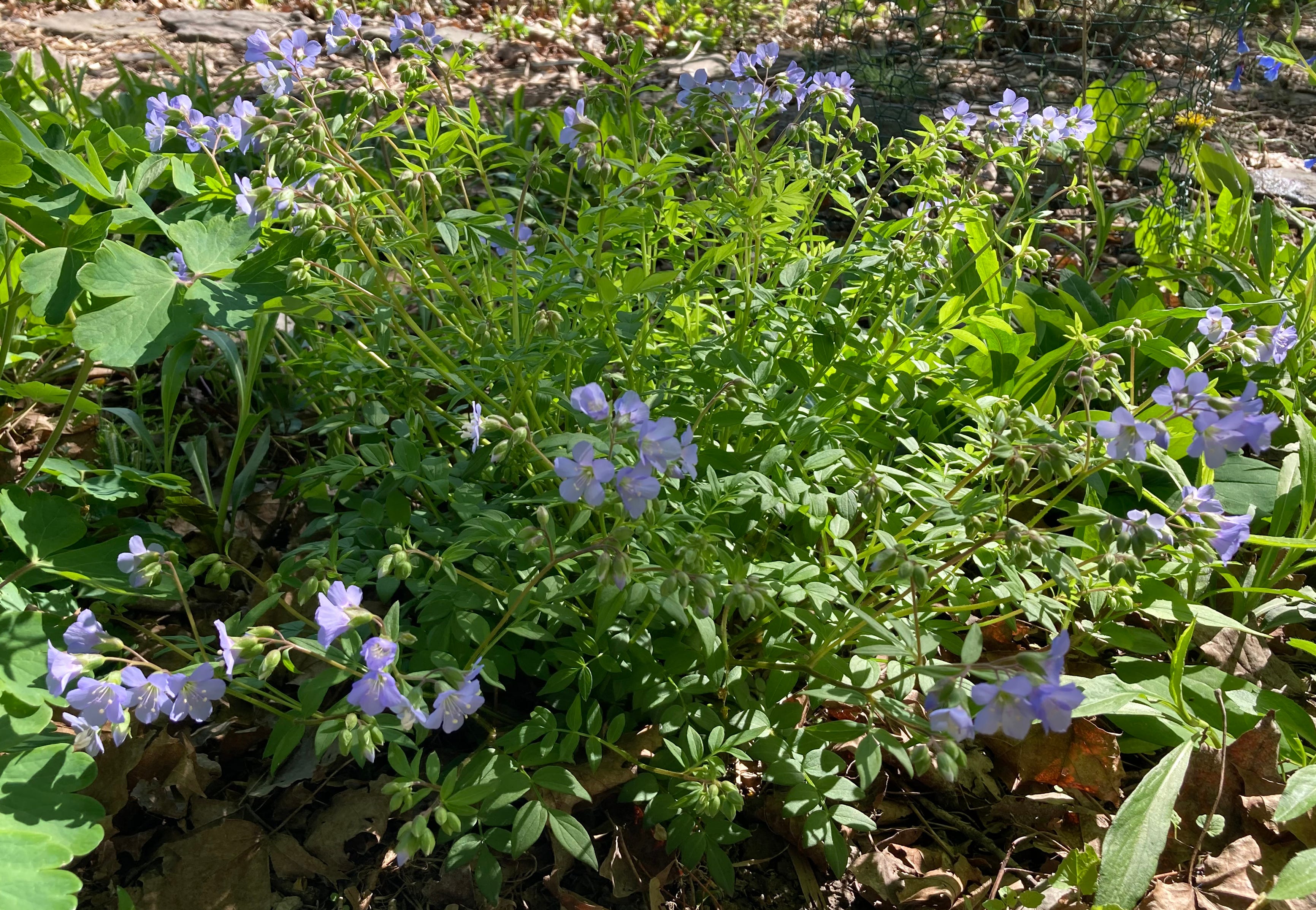
My Jacob’s ladder, on the other hand, is a sprawler. Today, if I were planting these two plants side by side, I would assume the Jacob’s ladder needed its full width to spread out, but I would put the hairy beardtongue at its edge, about nine inches from its center.
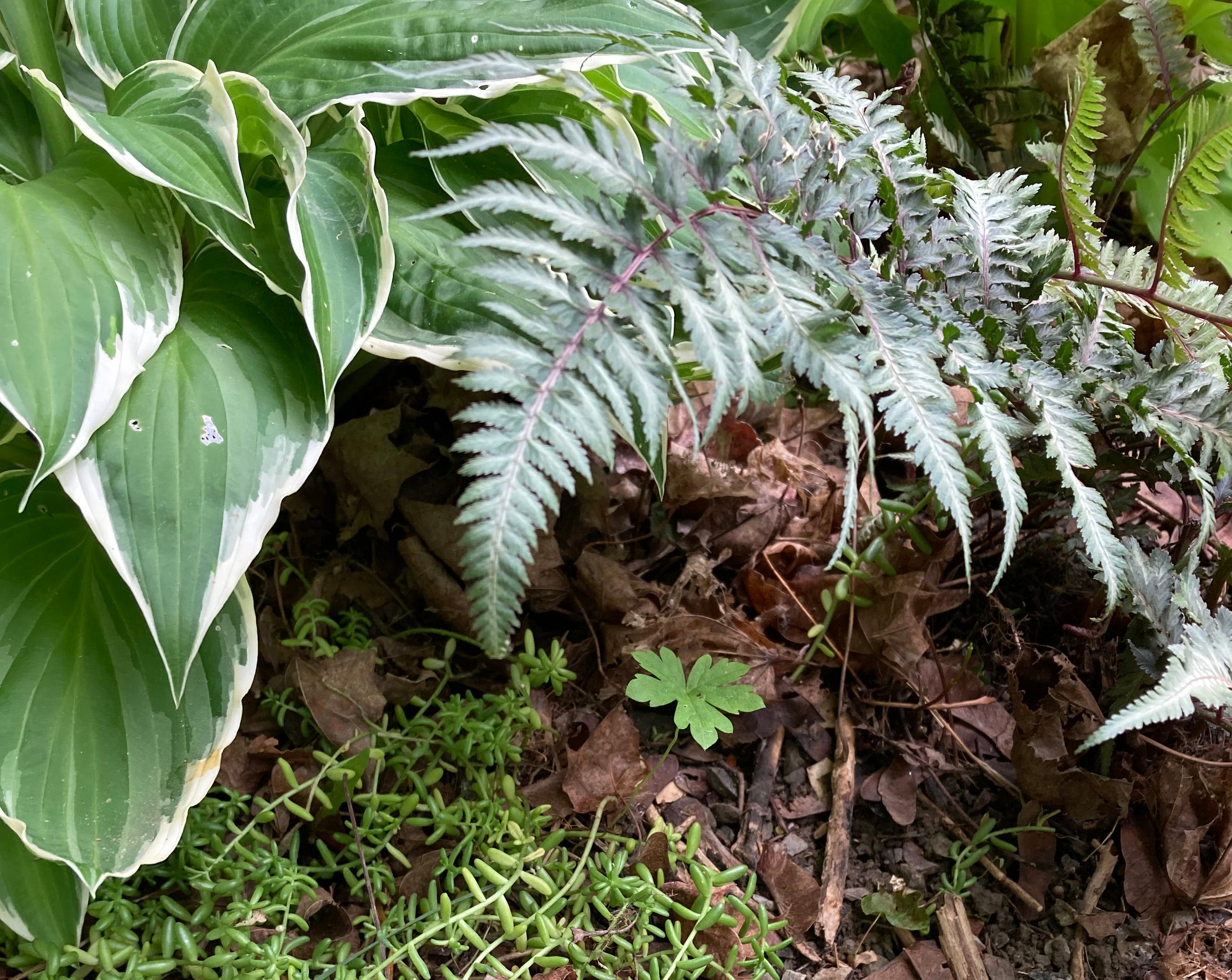
Plants in the wild grow wherever their seeds fall and find favorable conditions. Wild geranium (Geranium maculatum) seed pods burst open and can scatter seeds some distance away. I’ve found geranium seedlings growing a couple of feet away from the mother plant, but I’ve also found seedlings growing vigorously under the mother skirts. My wild geraniums are several years old now and big enough that their foliage overlaps.
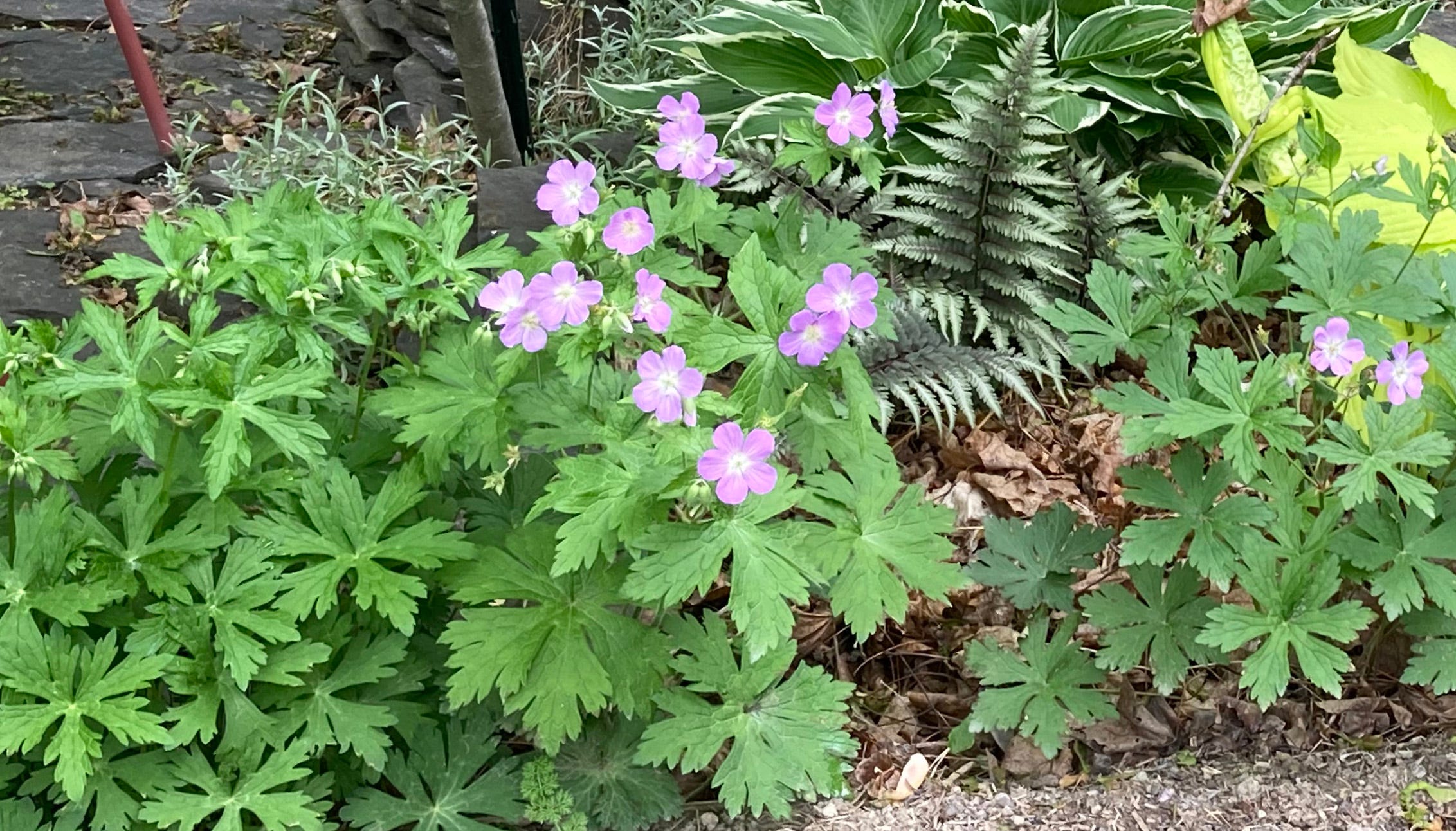
Last year’s new wildflower bed is now full of plants, but I’m disappointed to see so much bare soil. Bare soil attracts pioneer species, some natives like evening primrose, others invasives like garlic mustard. It also dries out faster than soil shaded by foliage, which means having to water more often.
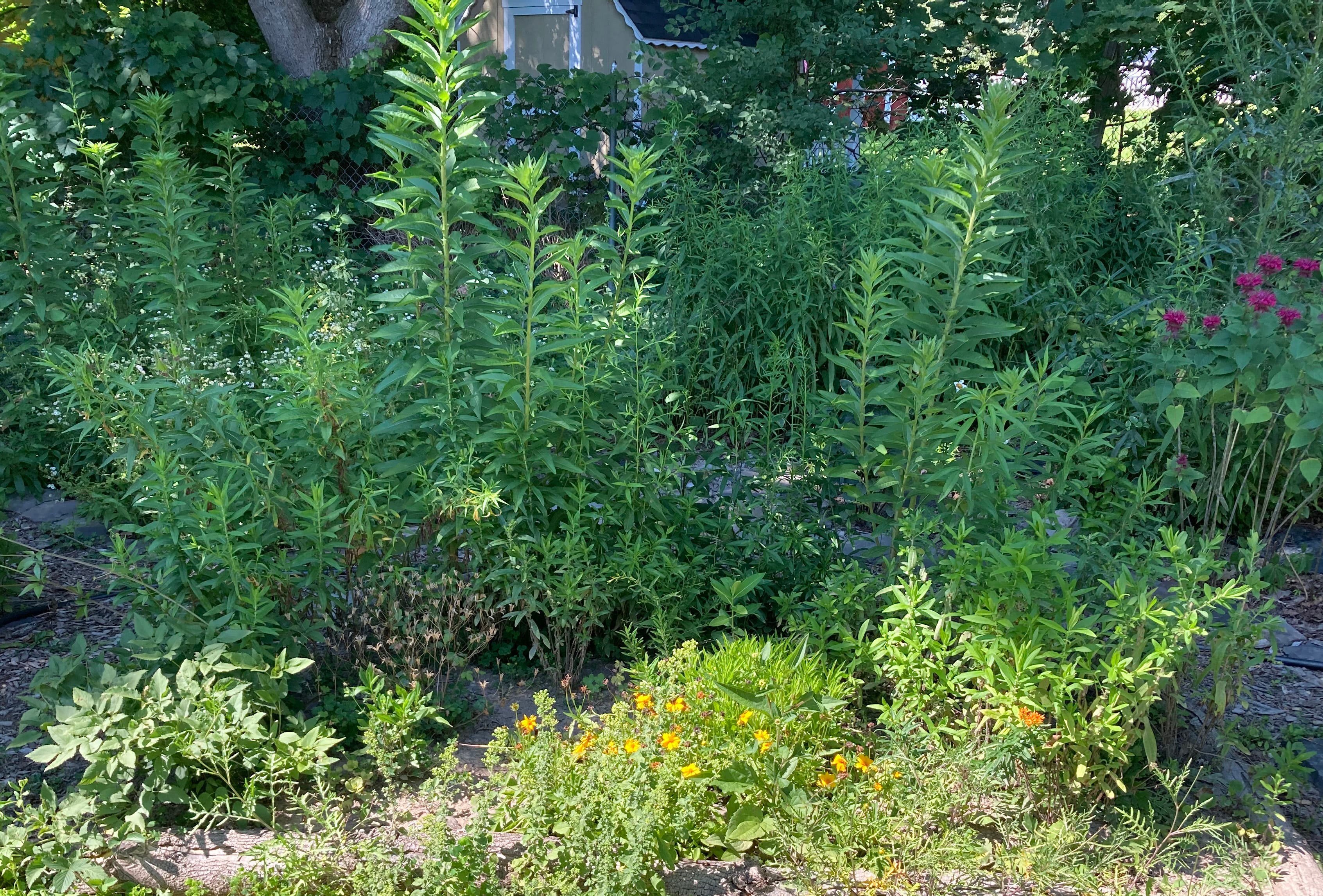
So I’ve added a few more plants that I hope will soon fill the bare spots: woodland stonecrop (Sedum ternatum), more red columbine (Aquilegia canadensis) and more golden Alexanders (Zizia aurea).
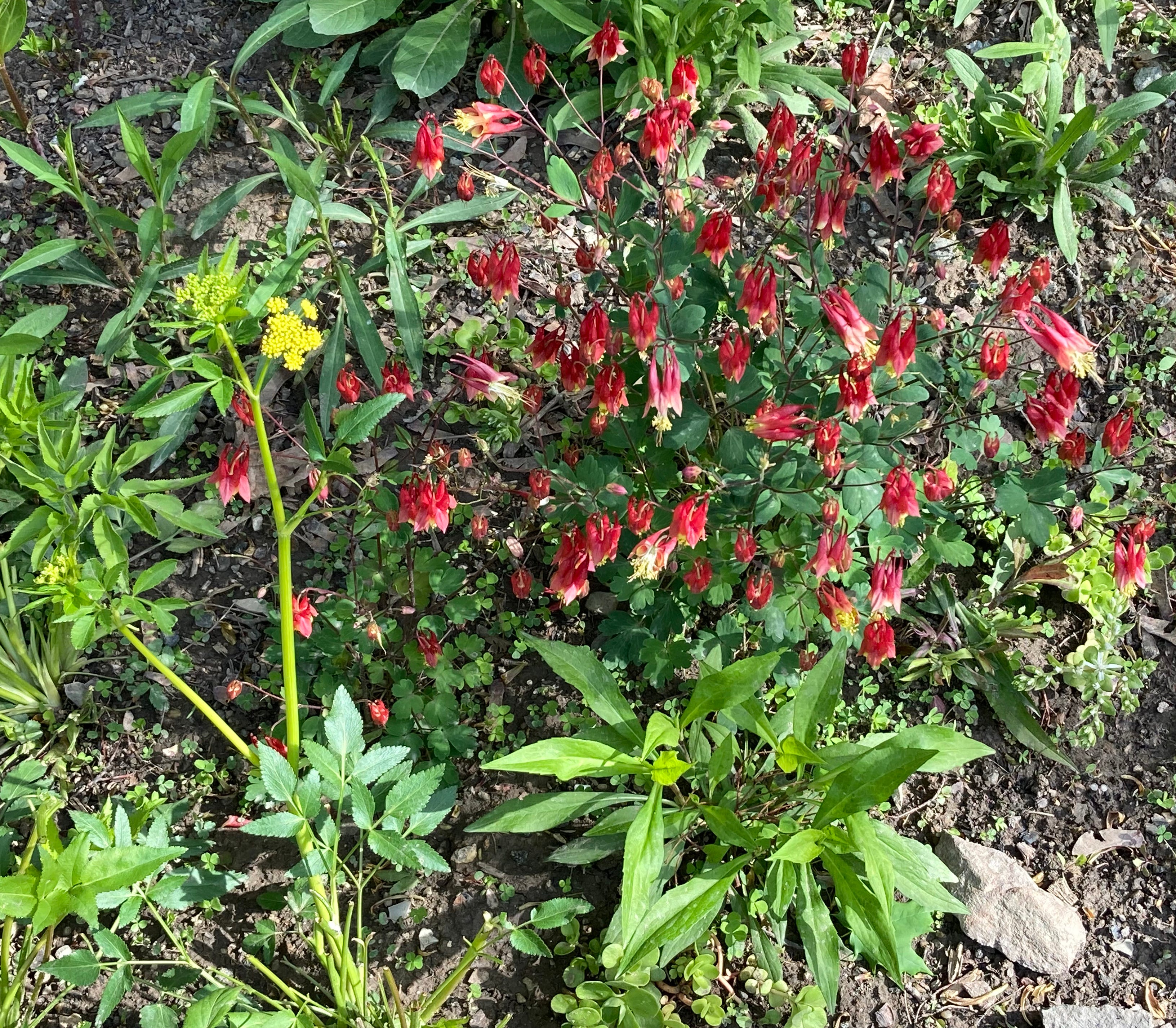
The new columbine plants, put in from plugs a few weeks ago, is struggling because the bare soil dries out so fast. The stonecrop, planted last fall, is growing beautifully. The golden Alexanders, wintersown in containers and planted out this spring, is also doing well. I hope these will fill in by next spring, so the bed will attract fewer weeds, conserve more moisture, and look full.
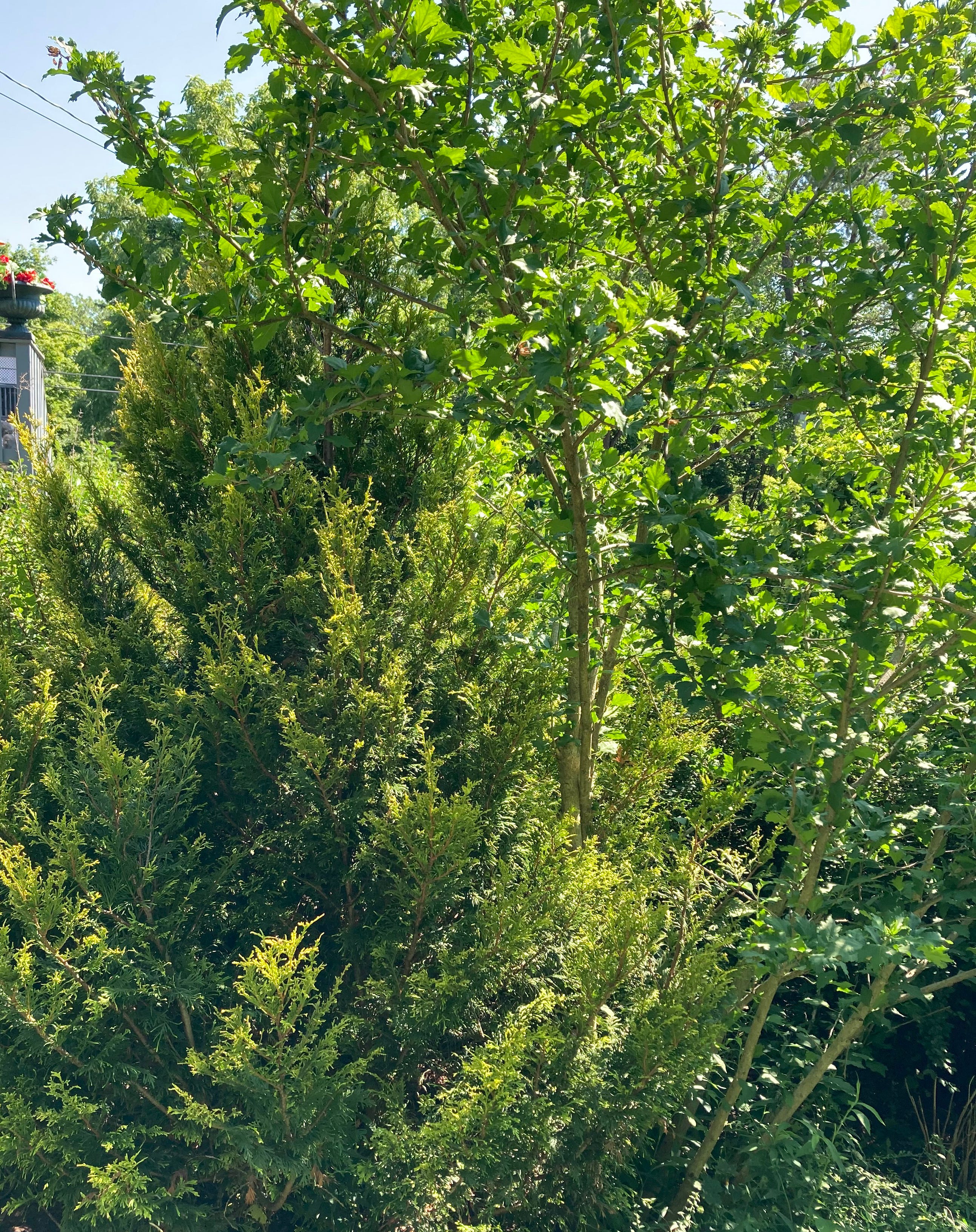
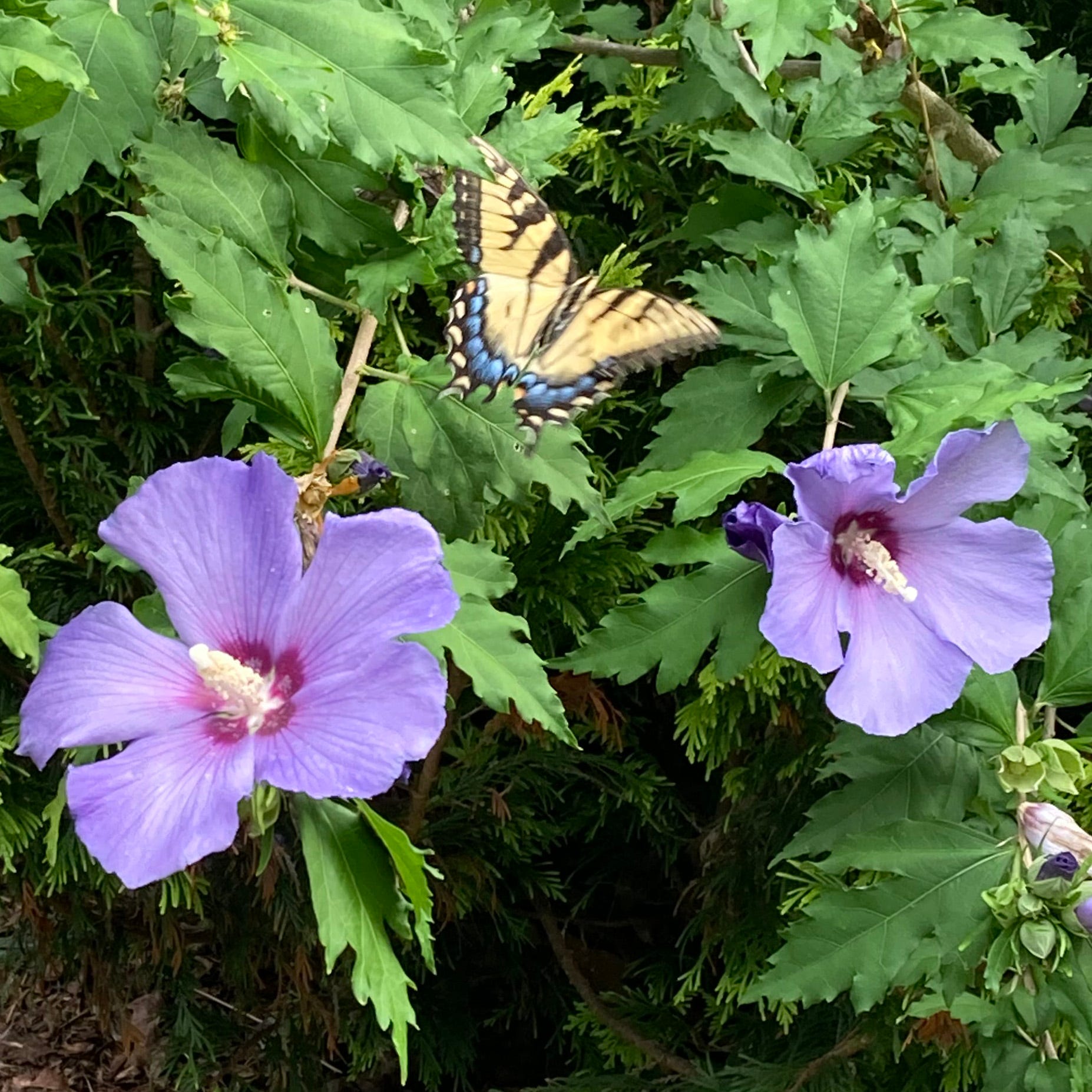
We learned the opposite lesson with some of the shrubs and small trees we’ve planted. It’s easy to misjudge what size these will be at maturity and plant too close together. A lovely rose of sharon (Hibiscus syriacus) is now growing into the conifer beside it and needs to be cut back drastically. Rose of sharon has invasive tendencies, seeding itself all over the yard, so that we discover new plants lodging themselves tenaciously in places where they are not wanted. I would take it out altogether if the flowers were not so beautiful.
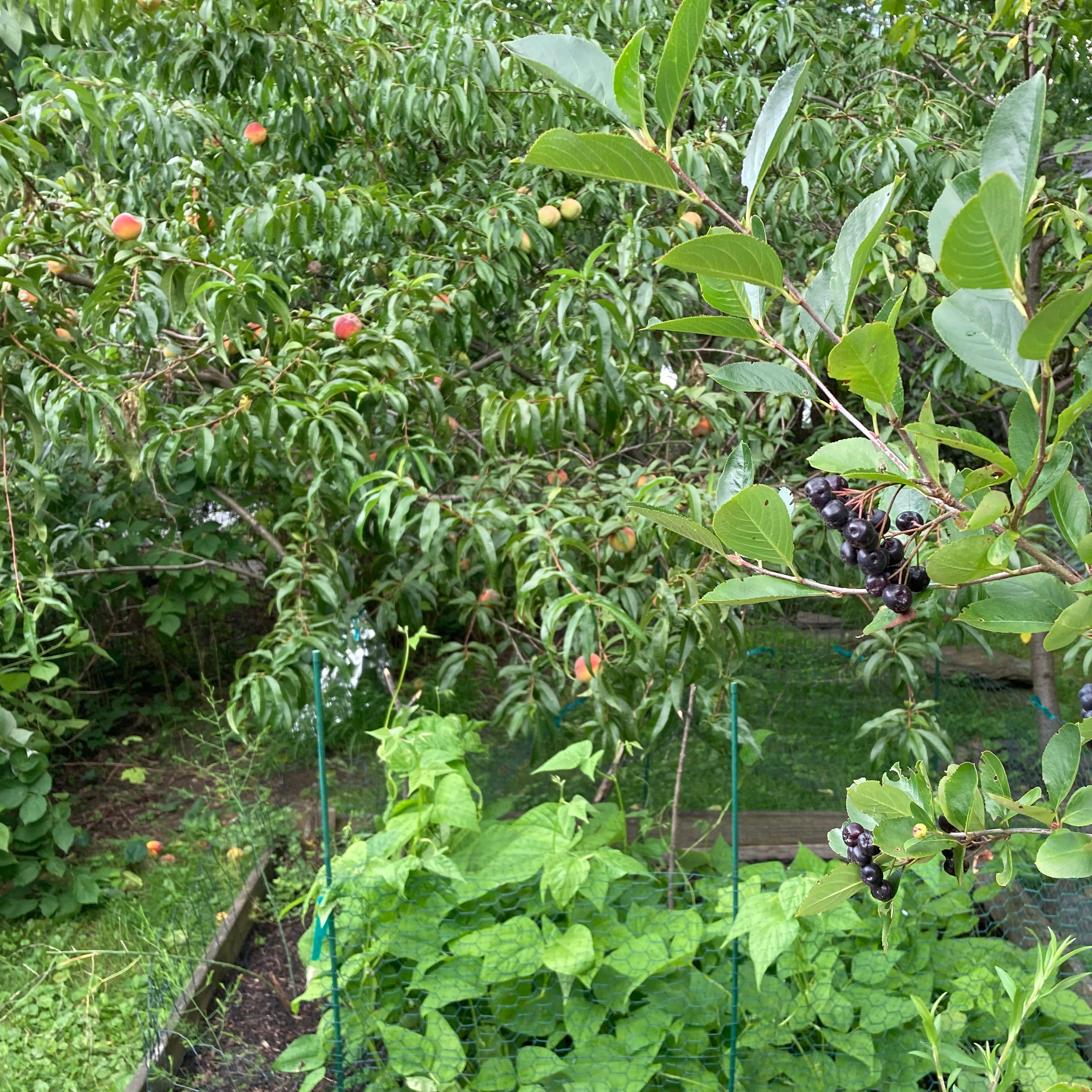
A quarter-acre lot like ours doesn’t have room for many large trees, but we’ve planted a surprising number of small trees. Several semi-dwarf fruit trees—two peaches, several apples, and an Asian pear—would give us a nice fruit harvest every year if the squirrels and deer would leave them alone. Last year we also planted some native fruit trees, which are naturally on the small side: a serviceberry, an American plum, and a couple of pawpaws. In the shade of our neighbor’s Norway maples, these will probably grow slowly and may never reach their full potential height.
On the other side of the house alongside the driveway (after checking with our neighbor to make sure she didn’t mind having them so close to the property line) we planted three small native trees last year: a dwarf chinkapin oak (Quercus prinoides), an eastern redbud (Cercis canadensis) and a fringe tree (Chionanthus virginicus).
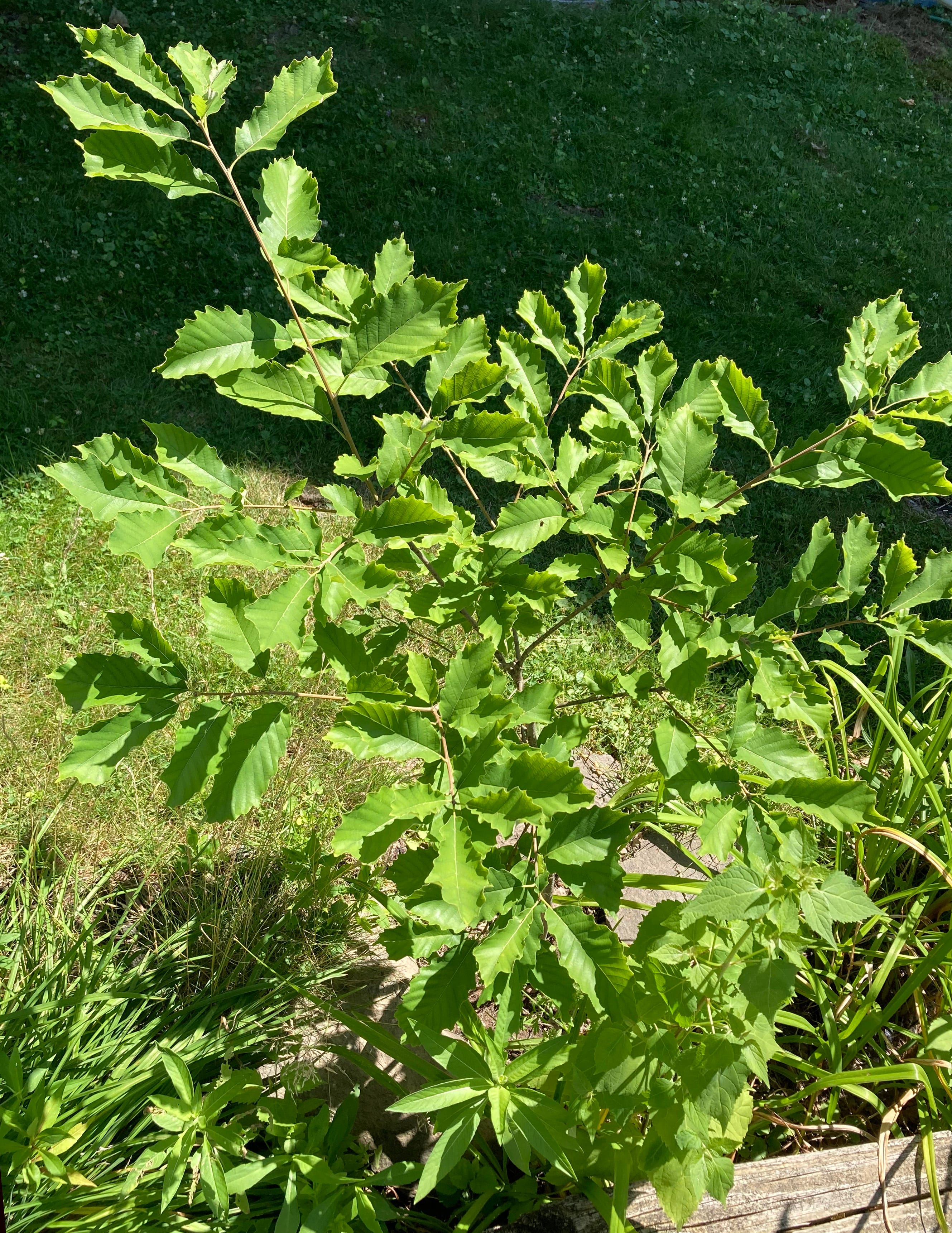
Most oaks will get too large to fit our garden space, but we wanted an oak to support caterpillars for the birds. The dwarf chinkapin will grow to about twelve feet high and wide, and we already see nibbles on some of the leaves. Since we haven’t seen caterpillars, the birds must have gotten to them quickly. Eastern redbuds put on a beautiful spring show and grow to about 20 feet tall and a bit wider at maturity. The fringe tree will grow to about the same height as the dwarf chinkapin oak, twelve feet.
We planted these trees about 10-15 feet apart. None are fast growers, so we probably won’t be around when they reach their full height, but they’re all putting out healthy growth, so we’re pleased. One day their crowns will mingle and cast a nice shade over the driveway.