

Demonstration Garden
A new pollinator garden inspires

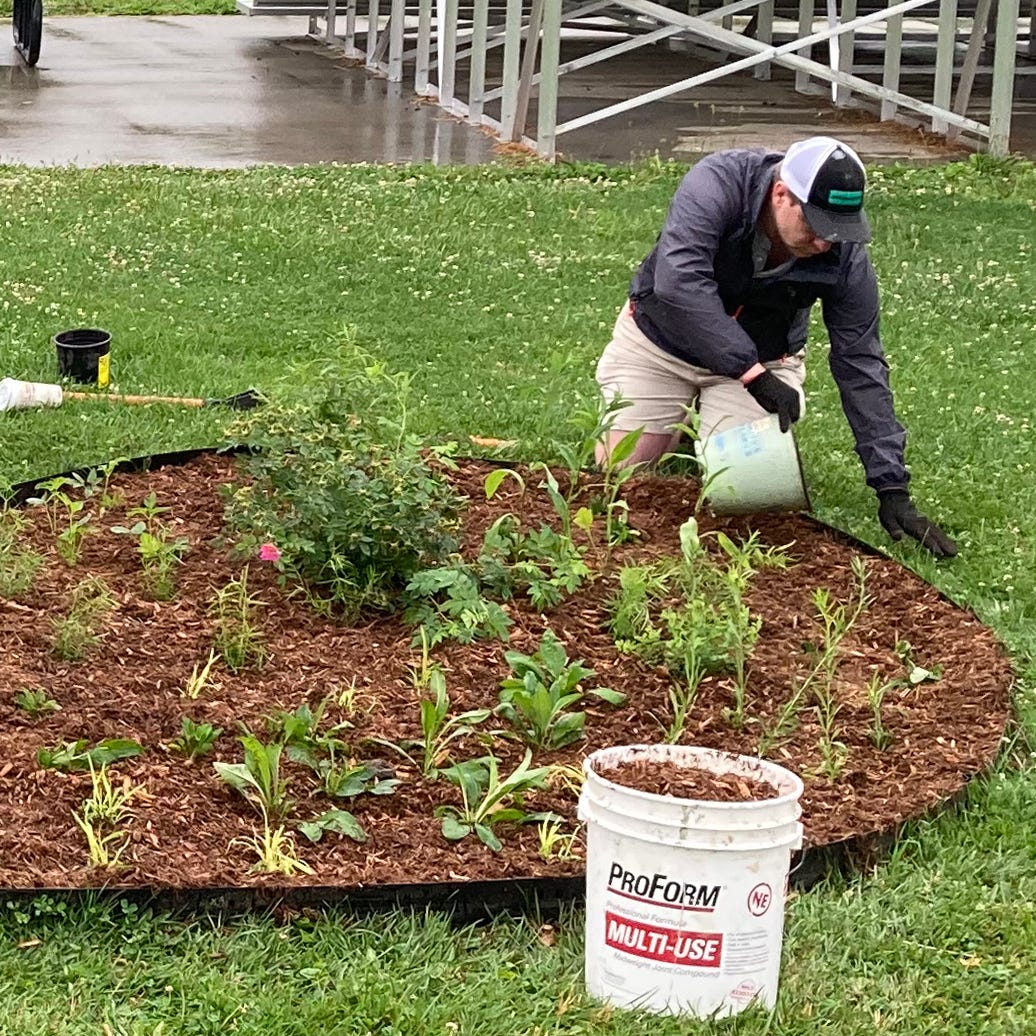
On a drizzly Monday morning, volunteers planted over a hundred plants in a new demonstration pollinator garden at Elliot Park in Catskill, New York. The Understory (formerly Partners for Climate Action), a nonprofit organization devoted to supporting ecological and social resilience in the Hudson Valley, provided expertise, design planning, compost and mulch, and a wide selection of native plants. The Catskill Climate Smart Task Force has been working with The Understory/PCA since 2022. With their help, the Village of Catskill received a bronze award from the New York State Climate Smart Communities program for its progress in becoming a more sustainable community.
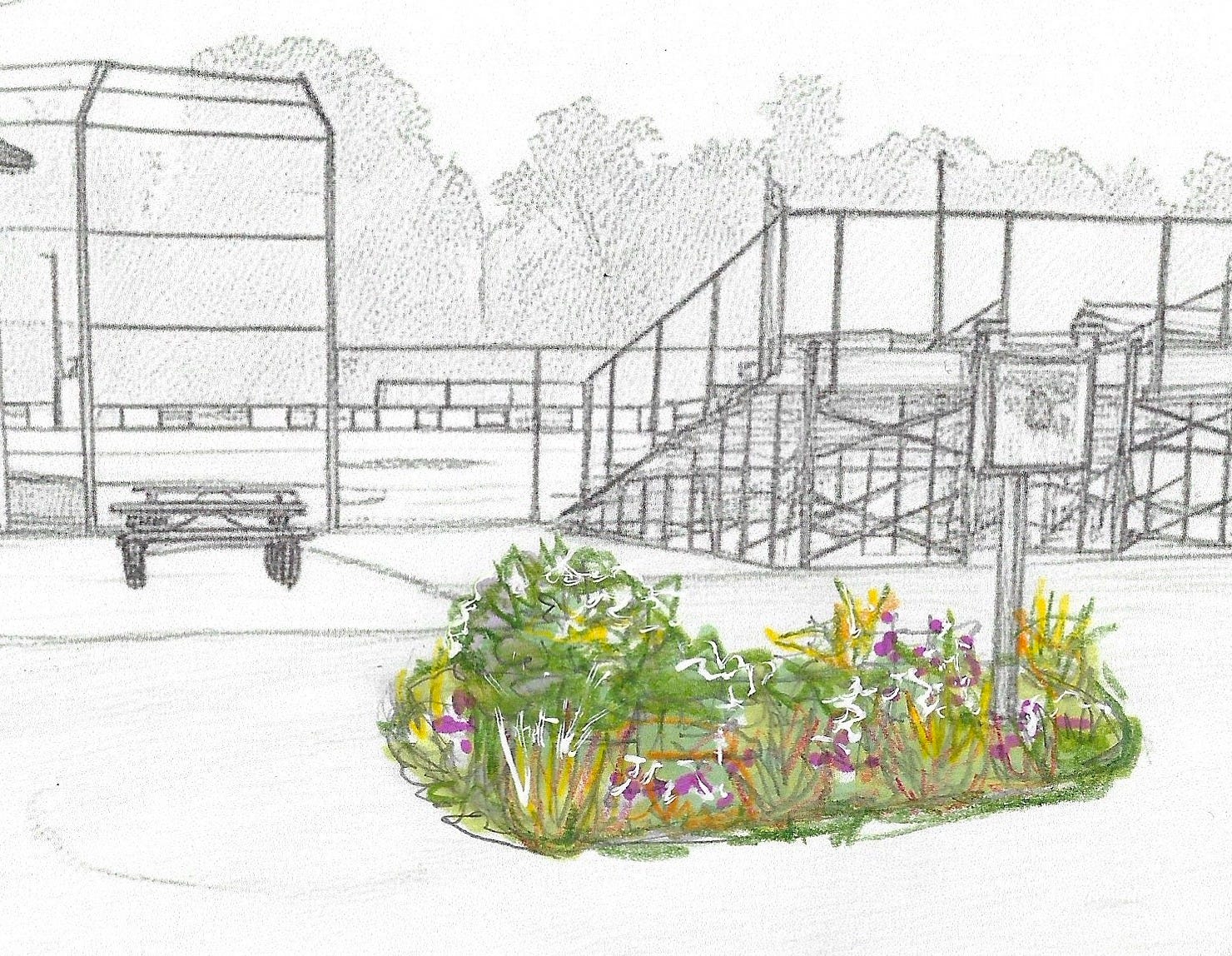
The project started with a design created by Ashley Gamell of Studio Hopeland Ecological Landscape Design in Rhinebeck.
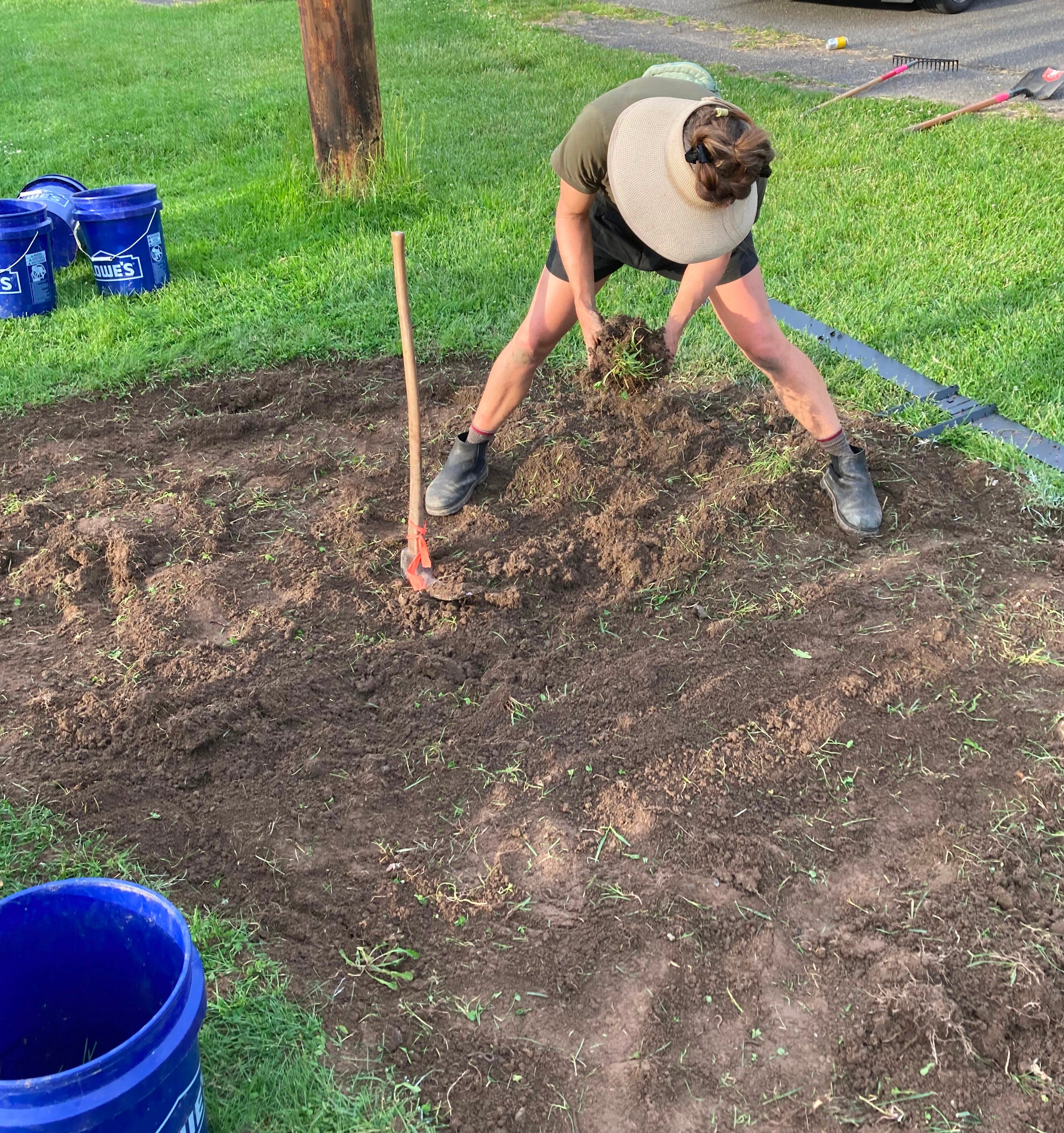
Dates were set for site prep and planting. On May 27, volunteers gathered at Elliot Park to remove lawn grass from the area Ashley had marked out for the garden bed.
With the turf removed, we installed a sturdy metal barrier around the edges of the bed, pounding in the stakes and barrier with mallets, to discourage grass from spreading into the garden bed.
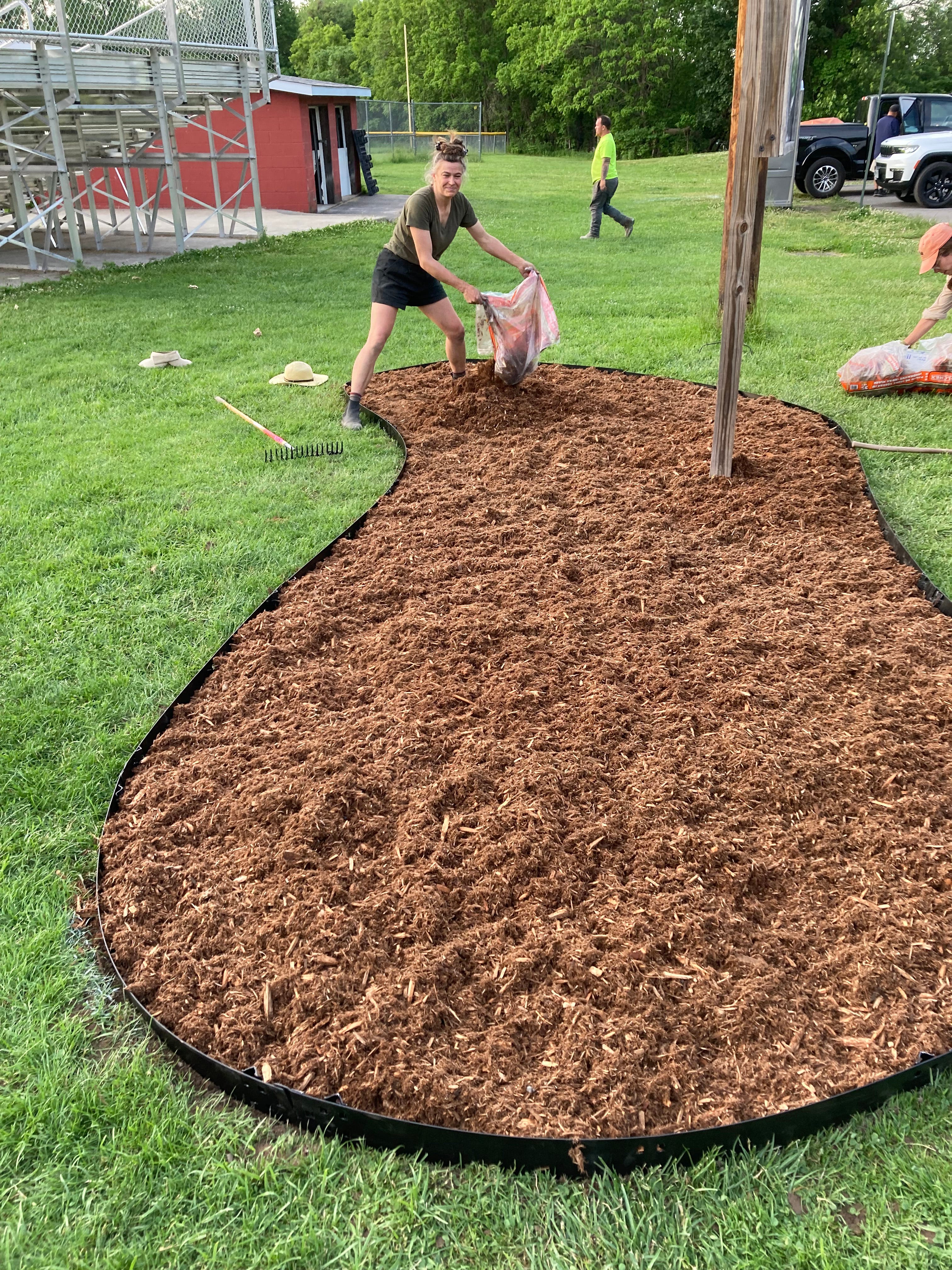
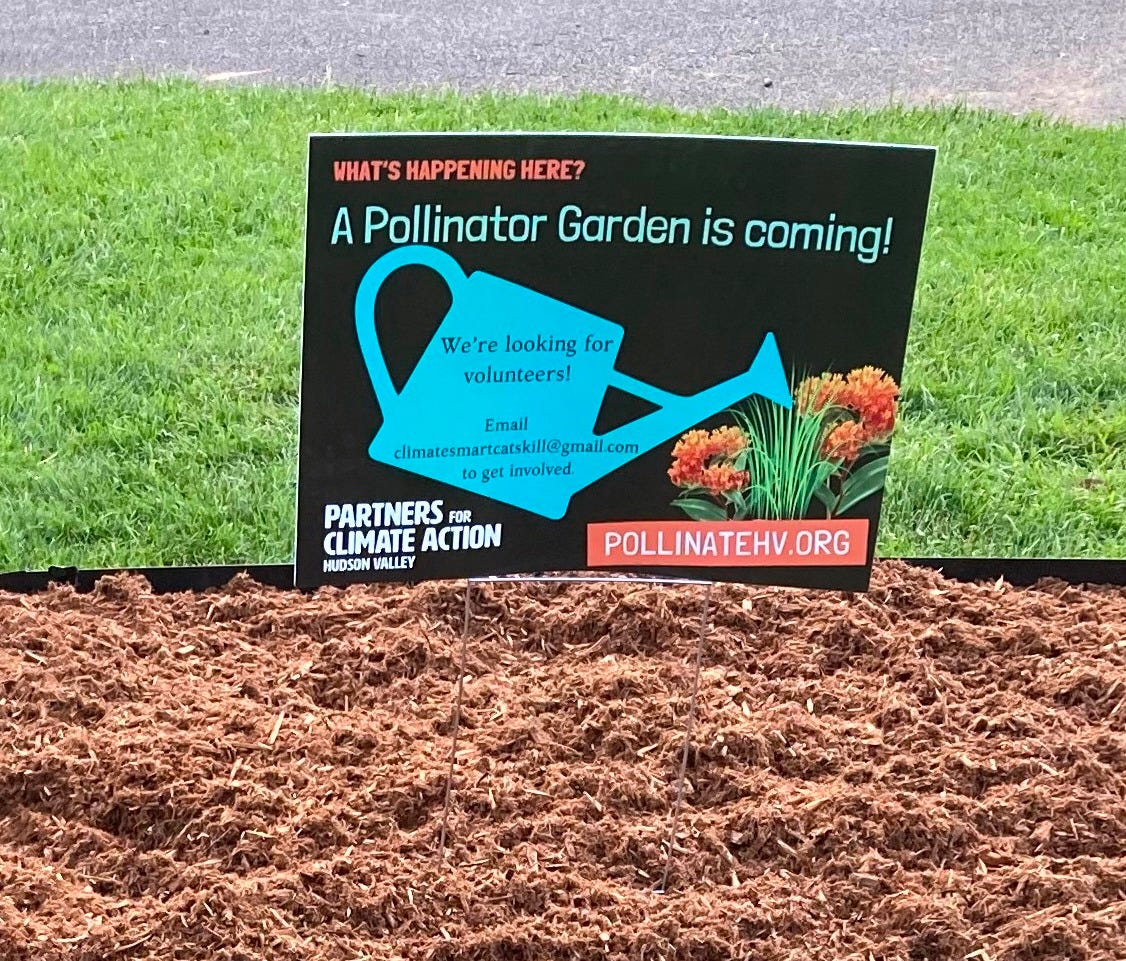
A layer of compost was spread, and a layer of shredded cedar mulch on top of that. The mulch will help the garden bed retain moisture and keep weed seeds from sprouting. We put up temporary signs to let people know a garden was on its way.
Originally, we had scheduled June 19 as our planting date, but a drenching rain the day before meant it was too wet to plant, so we had to reschedule. A few days later, the morning of June 22 in a light drizzle—good for the plants and not too discouraging for the volunteers—we were able to plant.
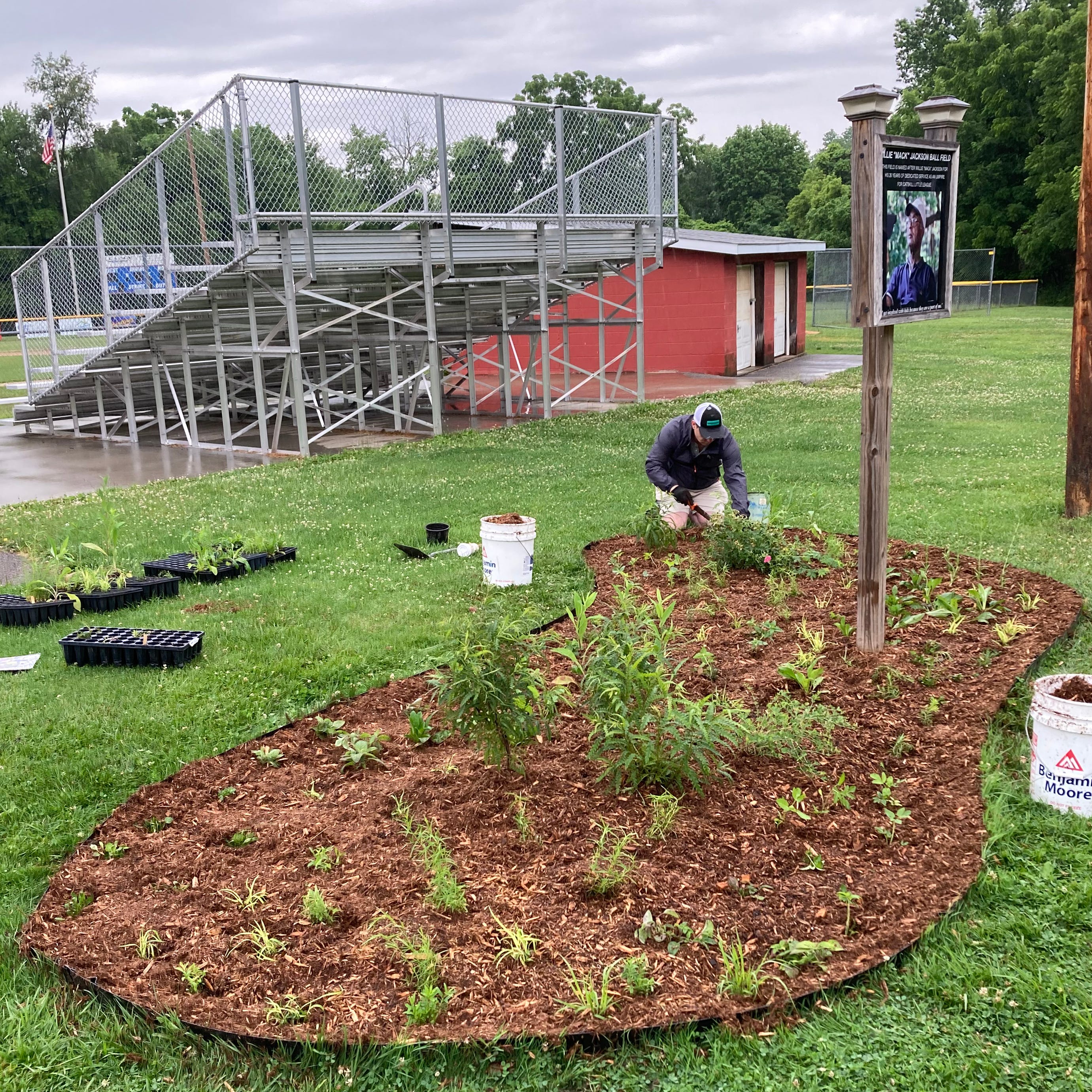
So many plants! A few gallon-sized pots went in, making the planting look like a real garden from the start. The native wild rose (Rosa virginiana) was already starting to flower. A group of sweet fern (Comptonia peregrina) and smooth blue aster (Symphyotrichum laeve) provided height near the center of the bed.
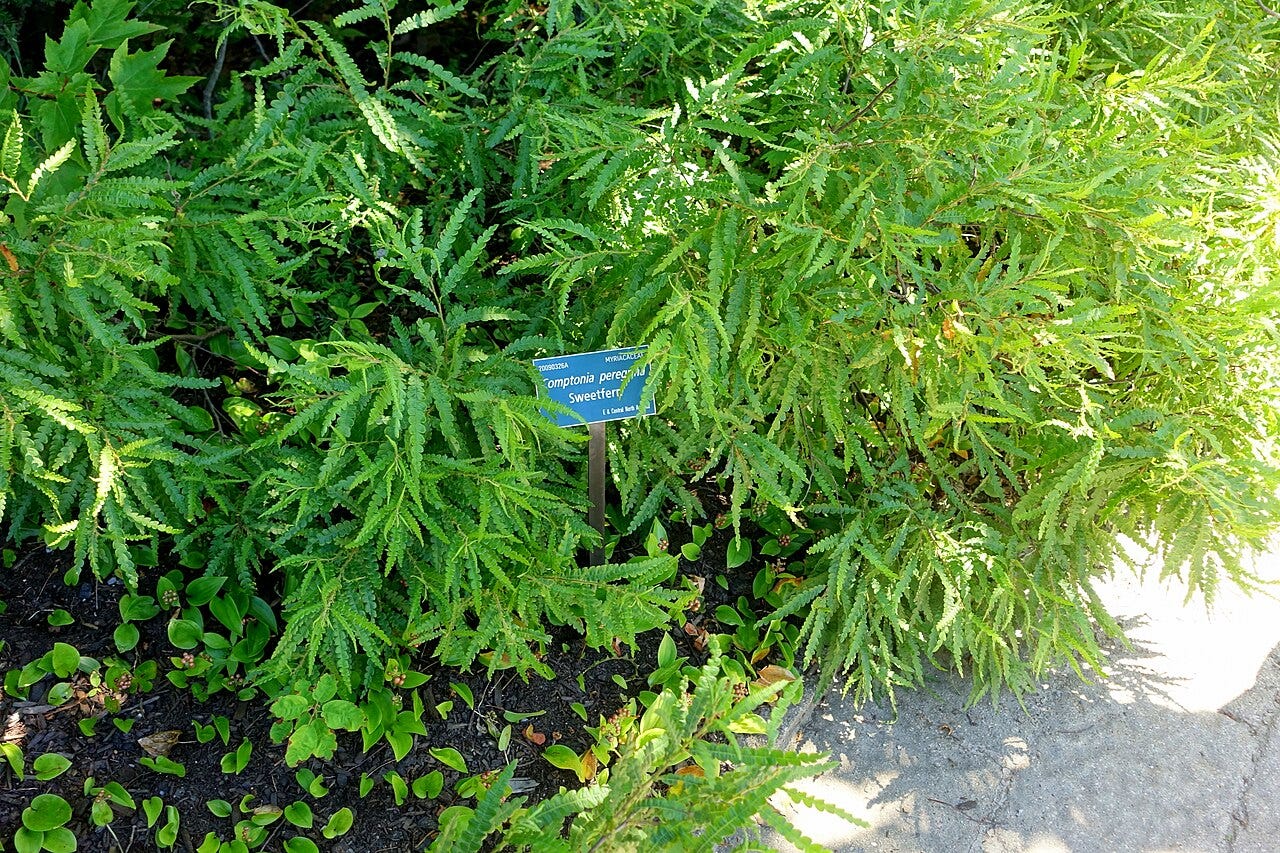
Sweet fern is actually a native shrub, not a fern, but it has fernlike leaves that give off a pleasant aroma when rubbed or crushed. Though it looks delicate, it’s a very tolerant plant that can thrive in both wet and dry sites in full- to part-sun. Mature plants grow from two to five feet tall and are not usually browsed by deer.
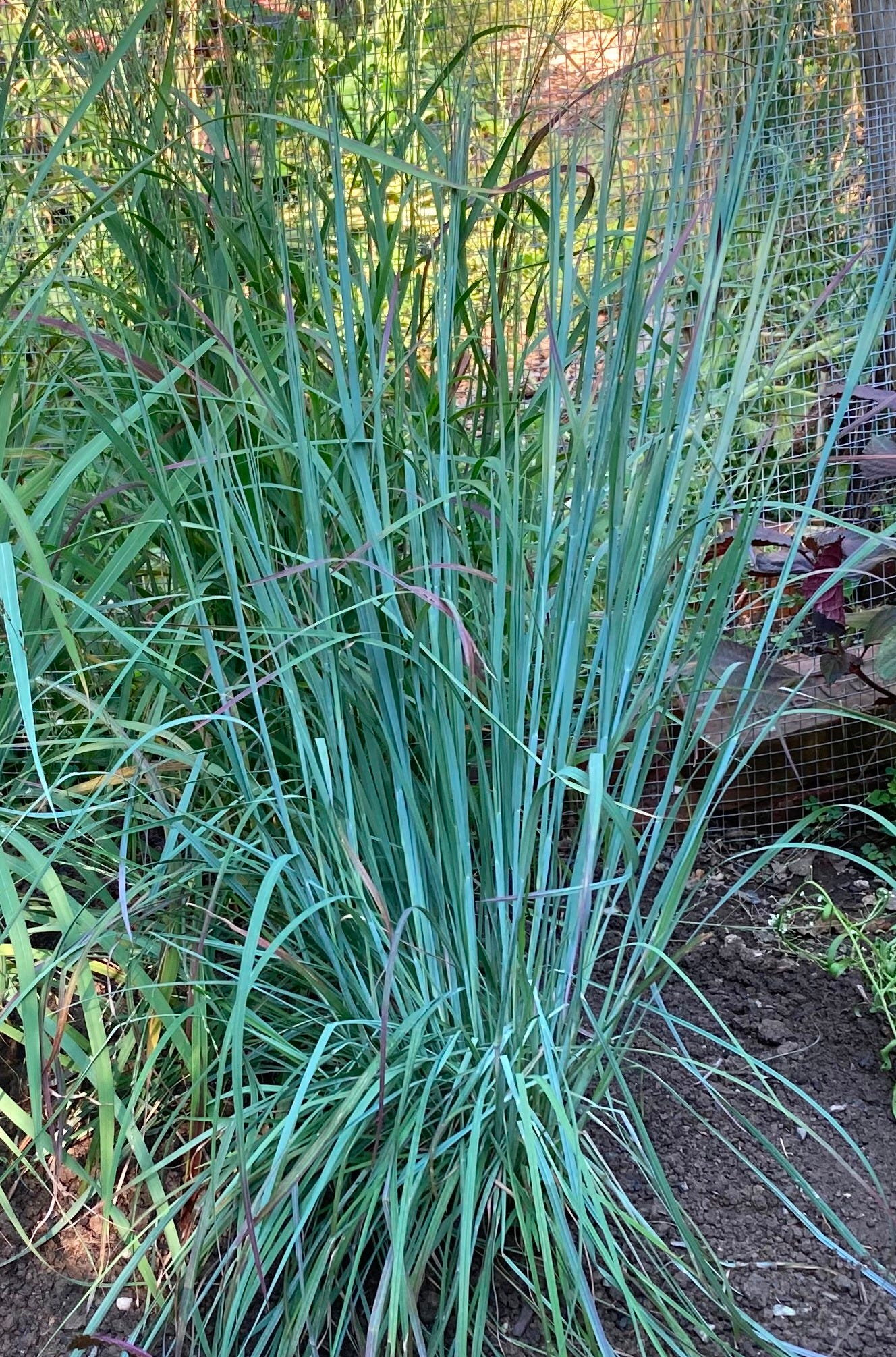
Groups of native grasses will also provide height and will move gently in the breeze when they reach their full height. Little bluestem (Schizachyrium scoparium) will grow up to four feet tall, with a blue cast to its leaves. Purple love grass (Eragrostis spectabilis) is shorter, one to two feet, and covers itself with a haze of rose-purple flowering stalks in July and August.
And, of course, we planted flowers for butterflies. Among the earliest to bloom will be golden Alexanders (Zizia aurea), a host plant for black swallowtail butterflies whose bright yellow flowers provide nectar for several tiny miner bees that are at risk of declining if not supported by gardens like this.
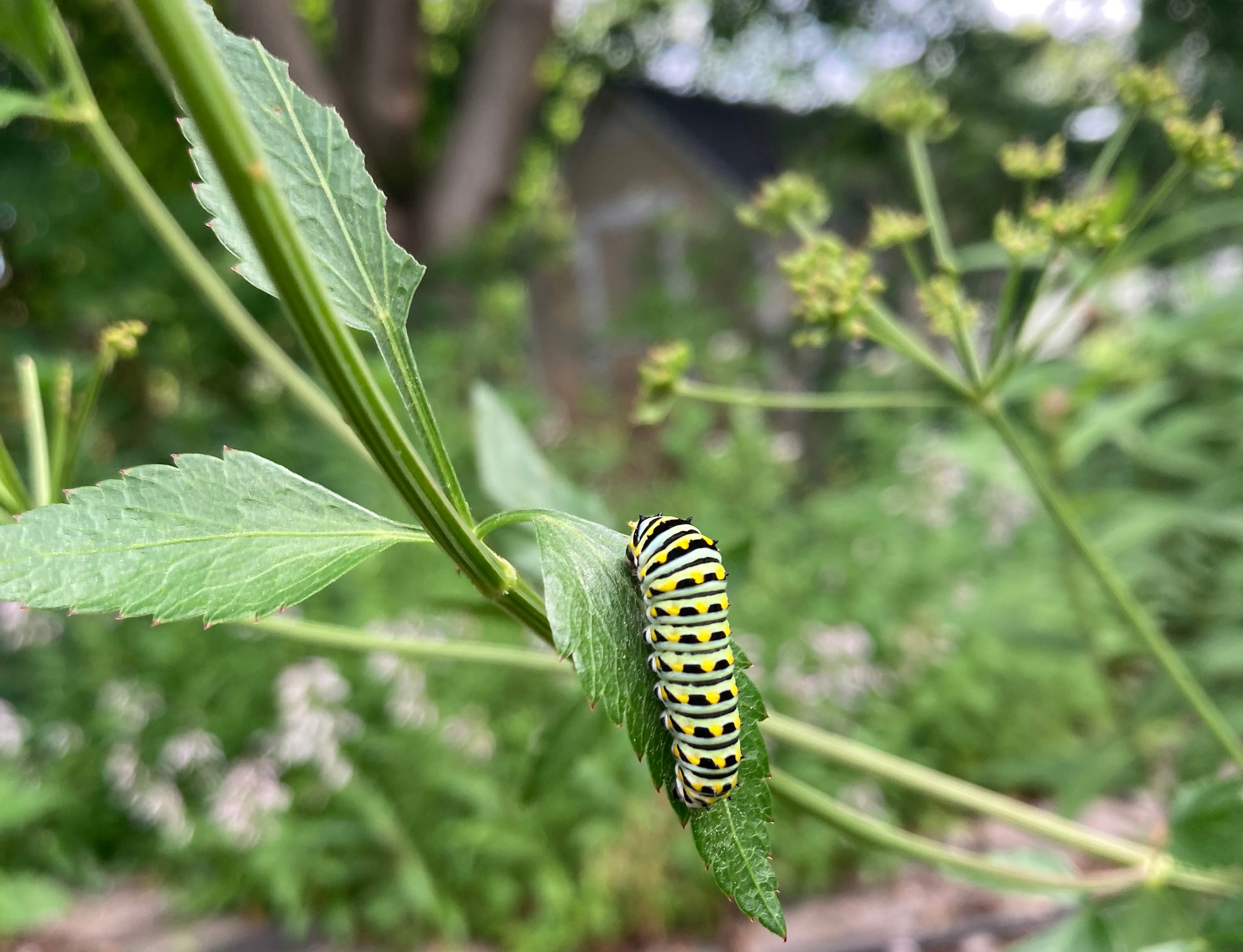
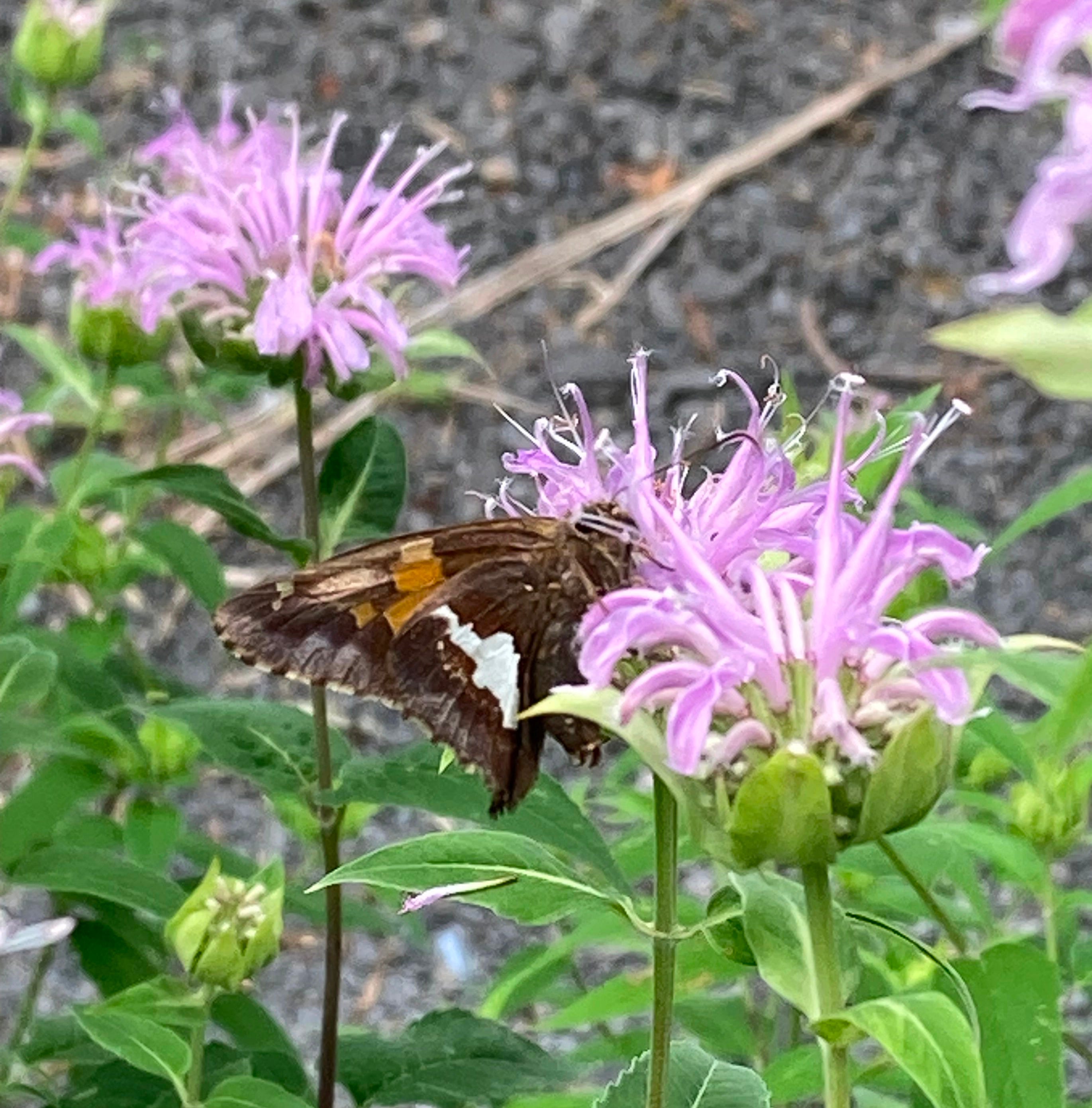
Summer bloomers include narrowleaf mountain mint (Pycnanthemum tenuifolium) and wild bergamot (Monarda fistulosa). The wild bergamot in my garden at home is just about to bloom and is always being visited by butterflies, bumble bees and other pollinating insects.
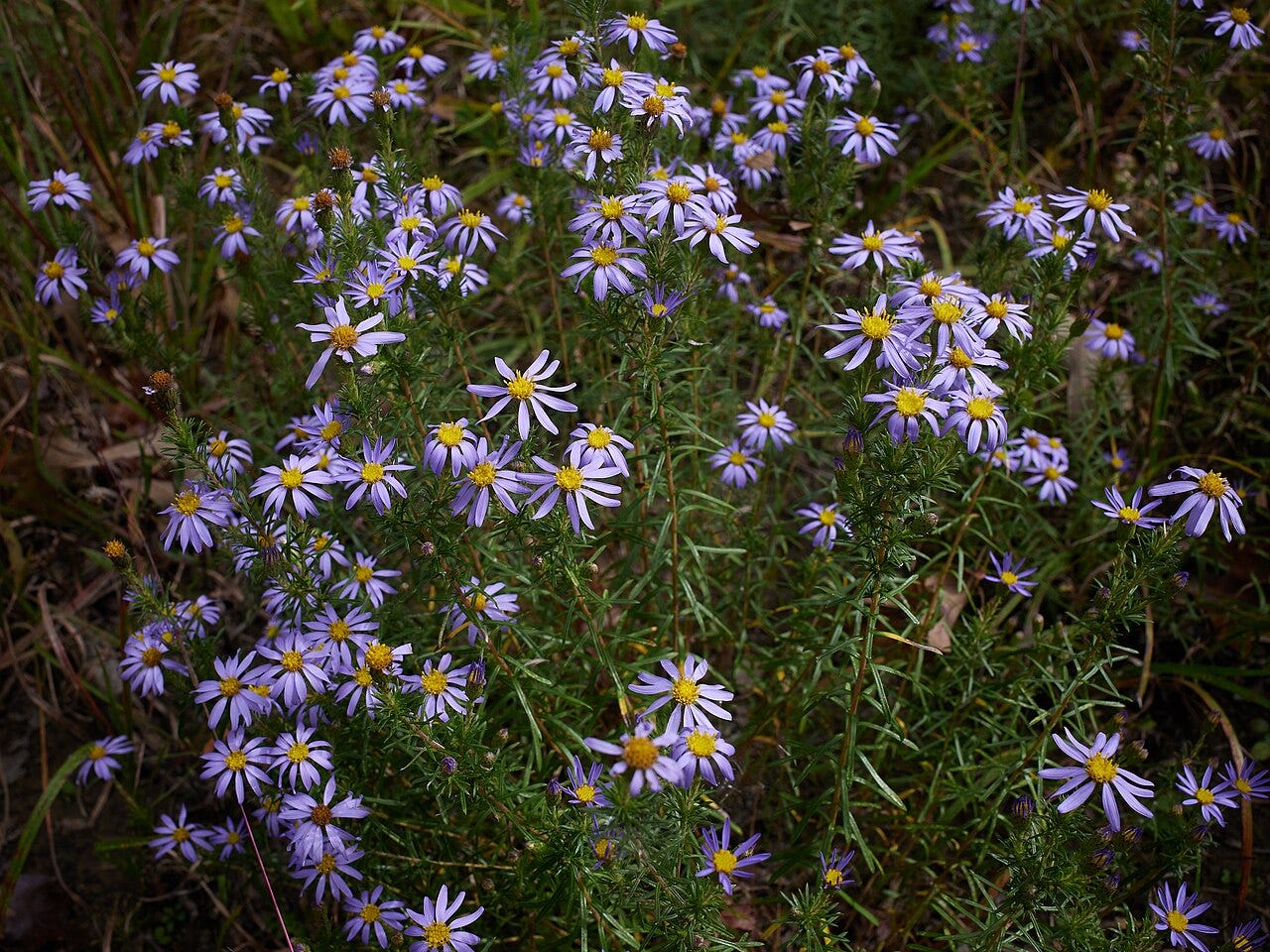
Fall bloomers include one of our most well-behaved goldenrods, showy goldenrod (Solidago speciosa) which will not take over the garden with runners but will delight butterflies with its bright gold blooms. Several species of asters will stay in bloom late into the fall, so bumble bees will have something to sustain themselves when winter comes. Low-growing stiff aster (Ionactis linariifolia), with one to two foot sprawling stems, has pale blue-violet flowers with yellow centers and is drought tolerant when established. I’m going to try this plant in my parking strip, with its challenging soil, hot, dry and sandy.
It will be exciting to watch this garden mature. It has already inspired me to try stiff aster, and will no doubt inspire other gardens in Catskill and nearby communities.
Sounds fantastic - the pollinators will love it!