

Black-eyed Susans
And some of their Rudbeckia cousins

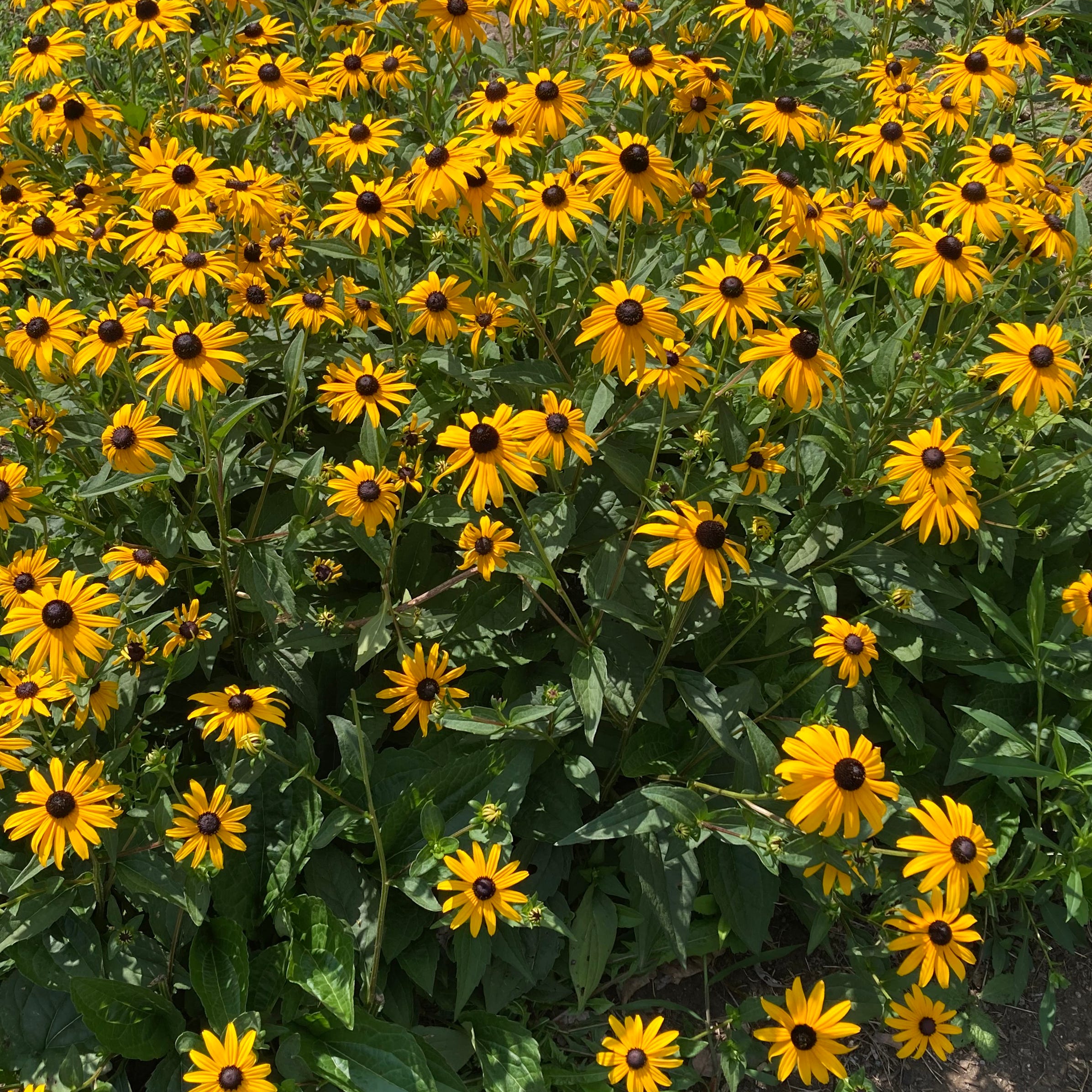
Black-eyed Susans and their relatives put on one of the brightest and longest lasting summer displays of any native plant in North America. They will self-seed, expanding the show year after year. Sun-loving, unfussy about soil, and and are drought tolerant once established.
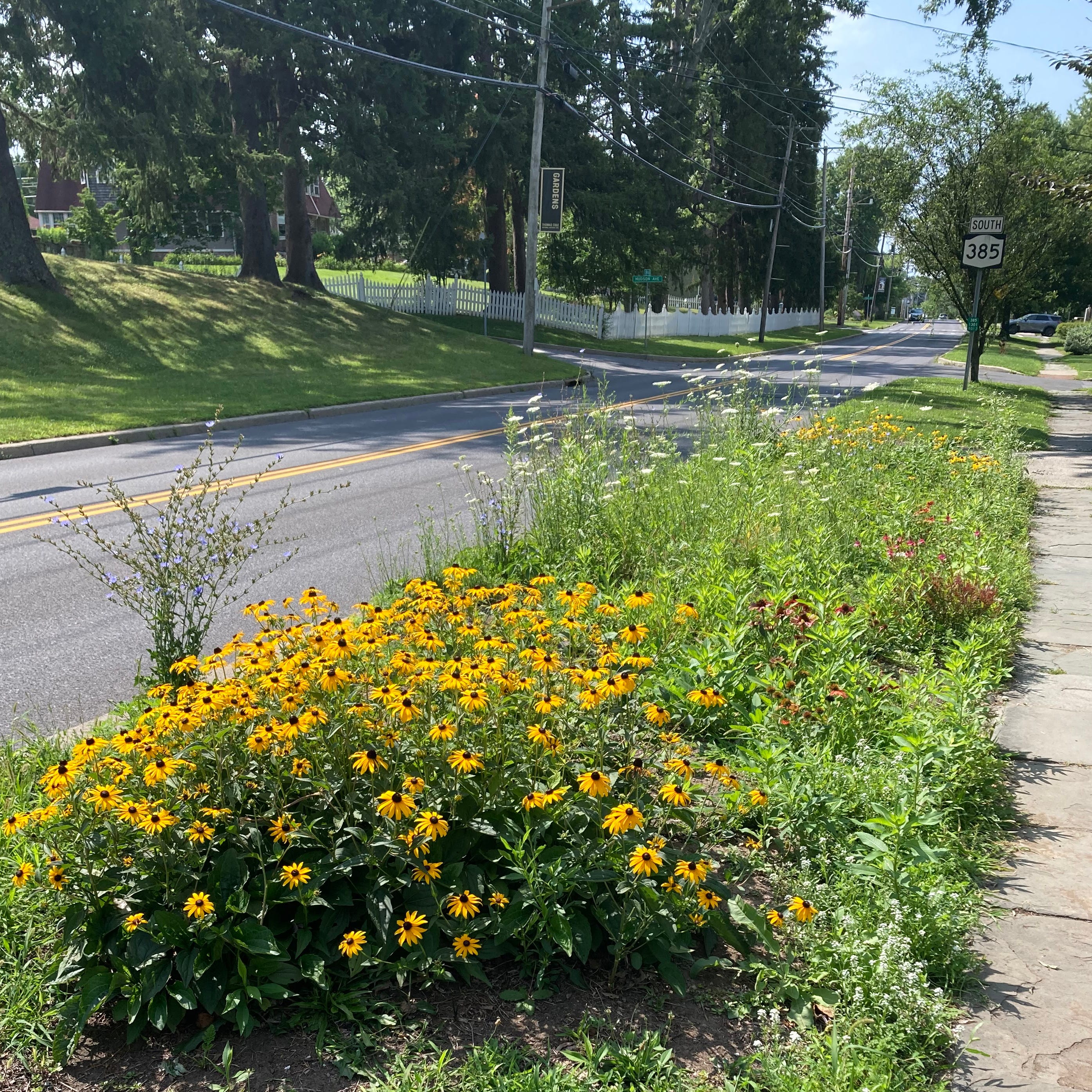
Black-eyed Susans will thrive even in the unforgiving environment of an urban “hellstrip” between sidewalk and street. I’m perpetually behind on my weeding responsibilities, but they do a wonderful job of crowding out weeds. They will even come up vigorously among the Virginia creeper that shades out most other plants and is also helping reduce the weed population.
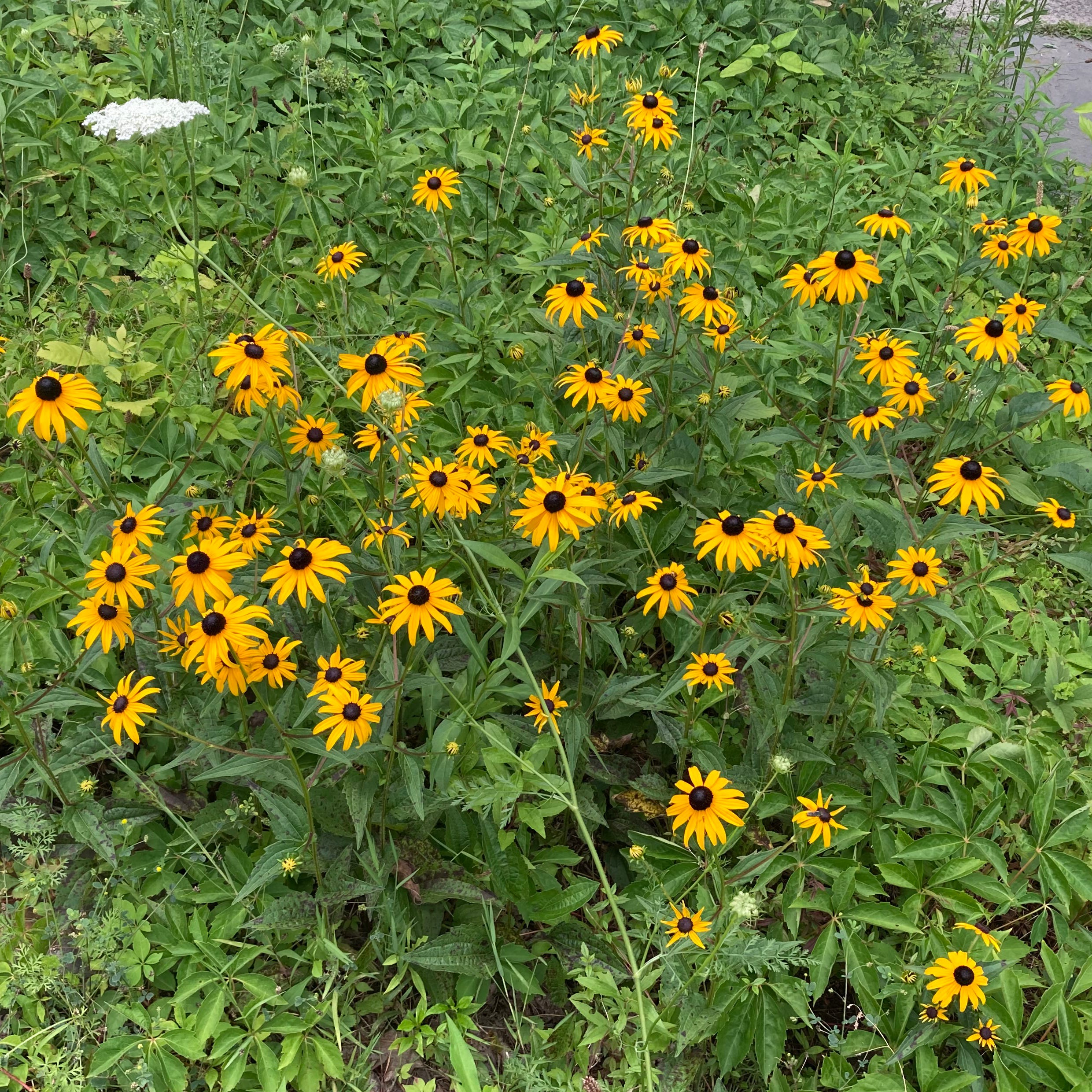
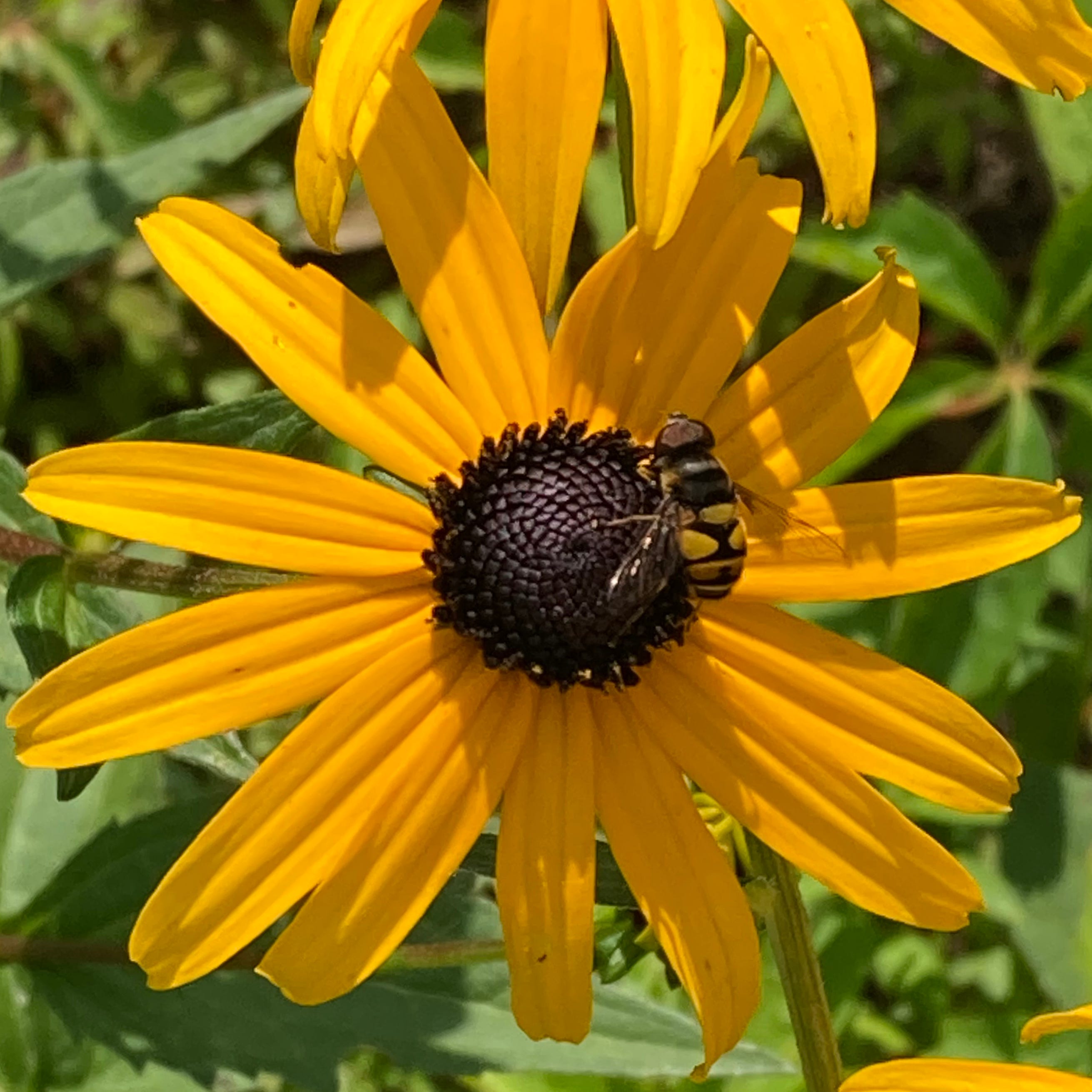
Deer, rabbits and groundhogs will generally let these plants be, finding their tough, hairy leaves unpleasant to eat. Pollinators love them, though, and songbirds enjoy their seeds in fall and winter.
The black-eyed Susans in my garden are Rudbeckia fulgida var. sullivantii, one of many wild variants of Rudbeckia fulgilda. This is the plant a German apprentice horticulturalist, Heinrich Hagemann, discovered in the Schütz Brothers nursery in Czechoslovakia in the late 1930s. Seeds from the wild plant had been brought from the US to the University of Graz Botanical Garden in Austria, from which Schütz Brothers acquired the plant. According to Allen Lacy in his 1990 book The Garden in Autumn, Hagemann “smuggled a few over the border in his backpack” and brought them to his employer, nurseryman Karl Foerster. After growing the plant in his test gardens, Foerster was impressed with its close-packed flowers and gave it the name “Goldsturm,” meaning “storm of gold.” World War II delayed its arrival in other countries, but by the 1960s and 1970s, gardeners were planting it elsewhere in Europe and in the US. It won the Royal Horticultural Society’s Award of Garden Merit of in 1993 and the Perennial Plant of the Year Award from the Perennial Plant Association in Raleigh, North Carolina, in 1999.
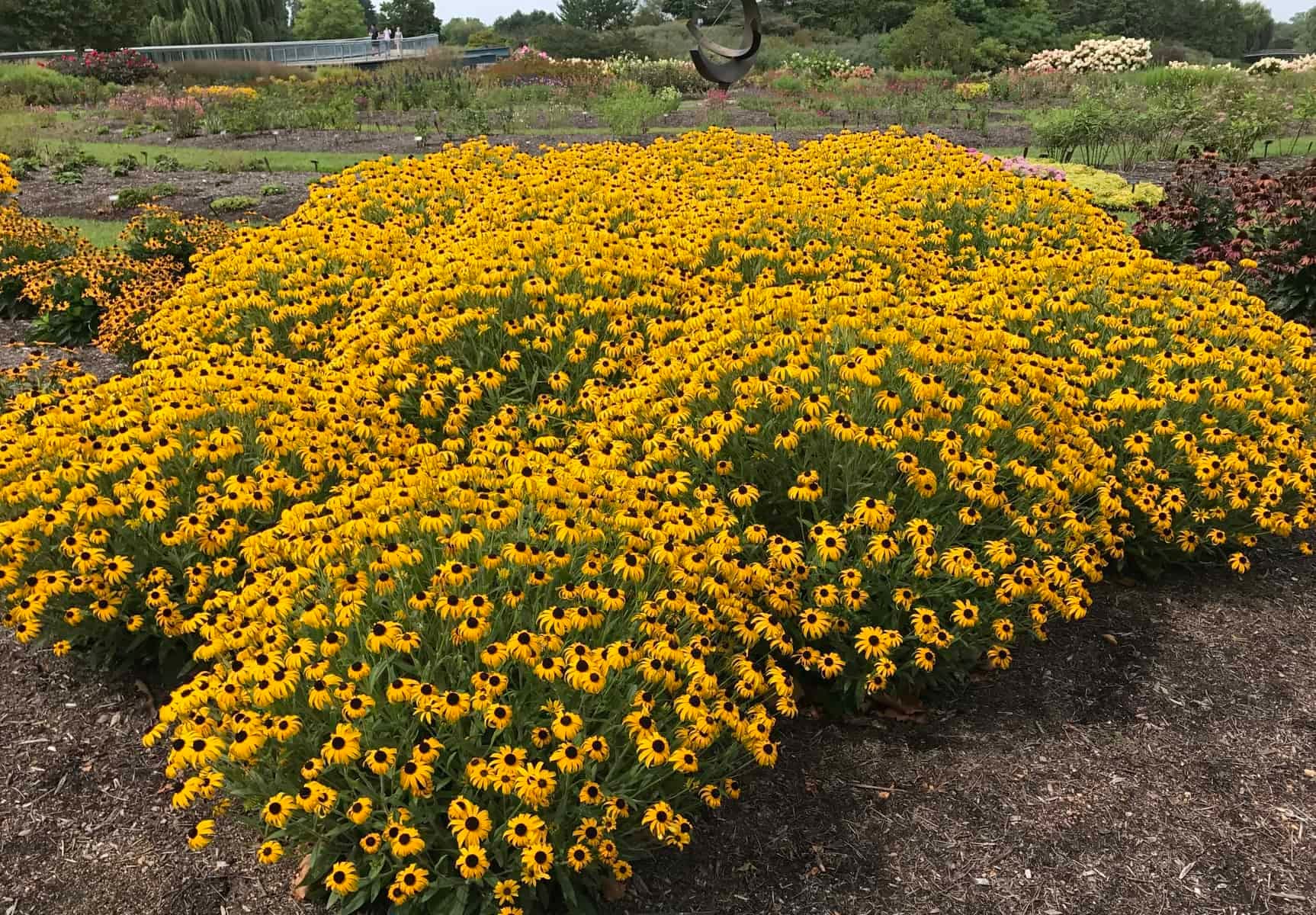
More recently, in 1923, another black-eyed Susan, Rudbeckia fulgida var. deamii “American Gold Rush,” won the Perennial Plant of the Year award. American Gold Rush is a shorter plant with more disease resistance than Goldsturm (although my plants have always been robustly healthy). According to breeder Brent Horvath, “It started as an open pollinated seedling among several other related seedlings but quickly distinguished itself with clean disease free foliage, a naturally compact and rounded habit and beautiful presentation in a container over an extended bloom period.”
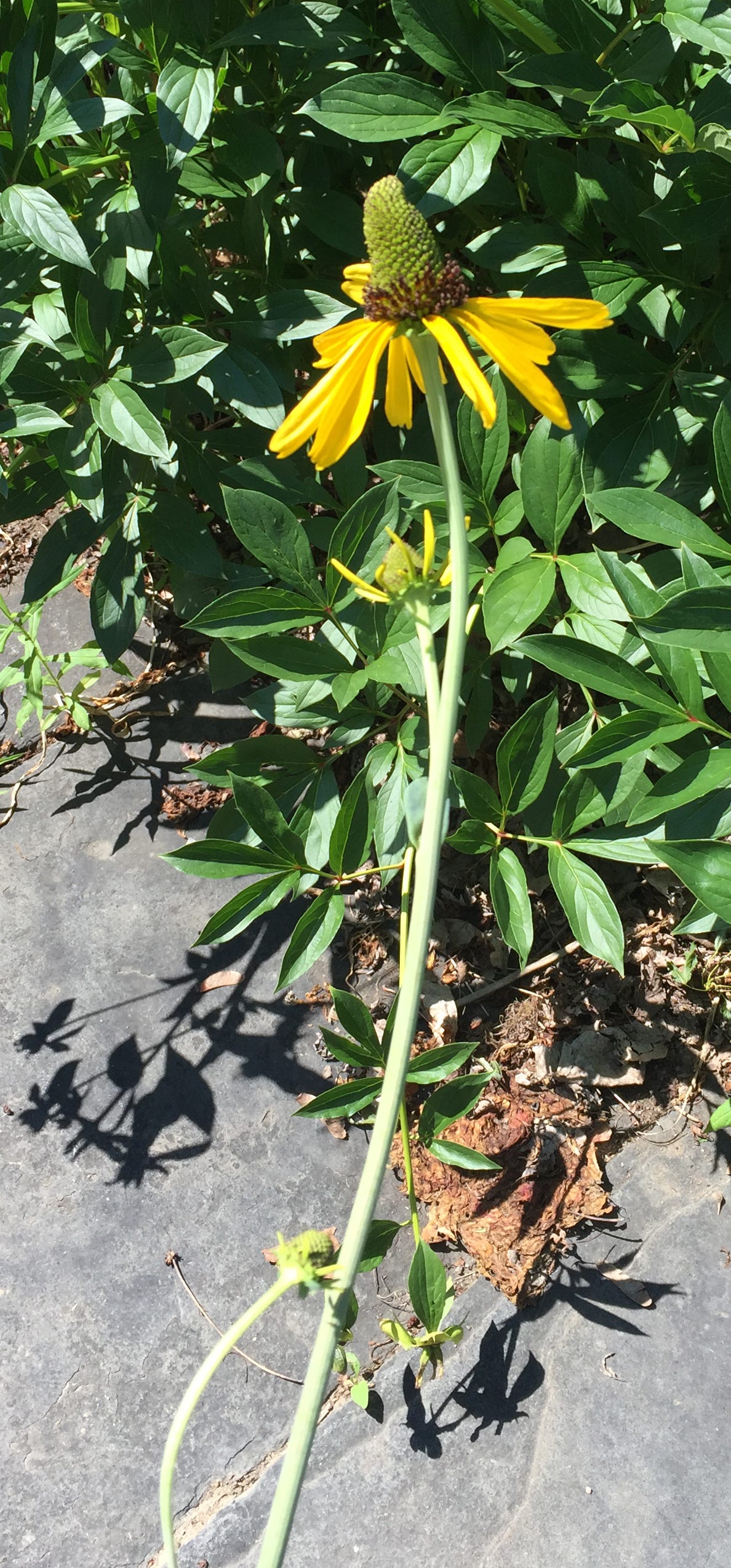
Another rudbeckia I’ve grown is the statuesque Rudbeckia maxima, which popped up in my garden as a volunteer, although its native range is well south of New York, in East Texas and neighboring parts of Louisiana and Arkansas. Amazed by its height, its dramatic flower, and it’s substantial blue-green leaves, I asked a gardening group on Facebook if anyone recognized this flower with the cabbagey leaves—and got the response cabbage-leafed coneflower, which is indeed one of its common names. One of the group members expressed envy because she had been trying to grow it in her garden without success. Alas, it didn’t survive more than a couple of years in my garden either, but it was a thrill while it lasted.